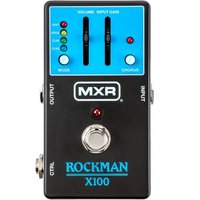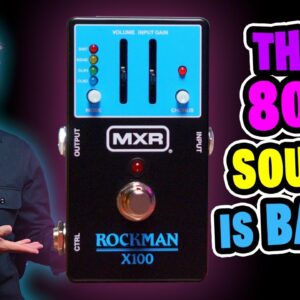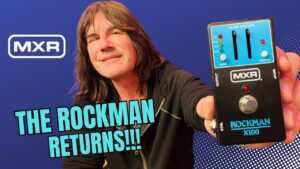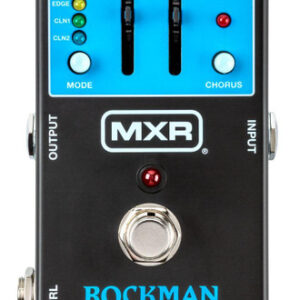

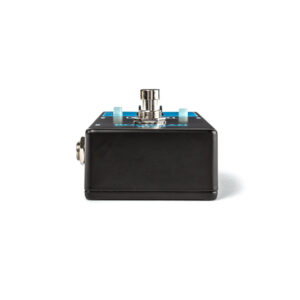
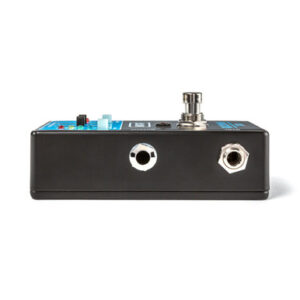
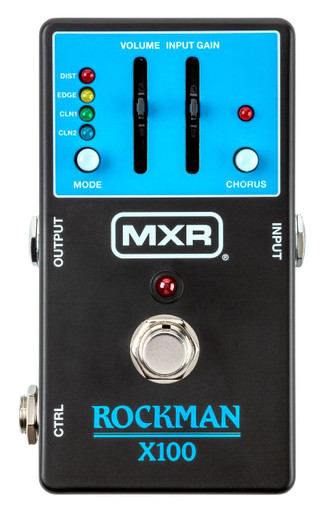
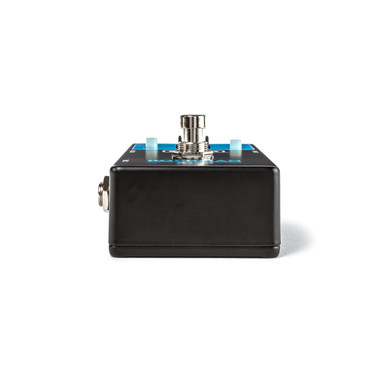
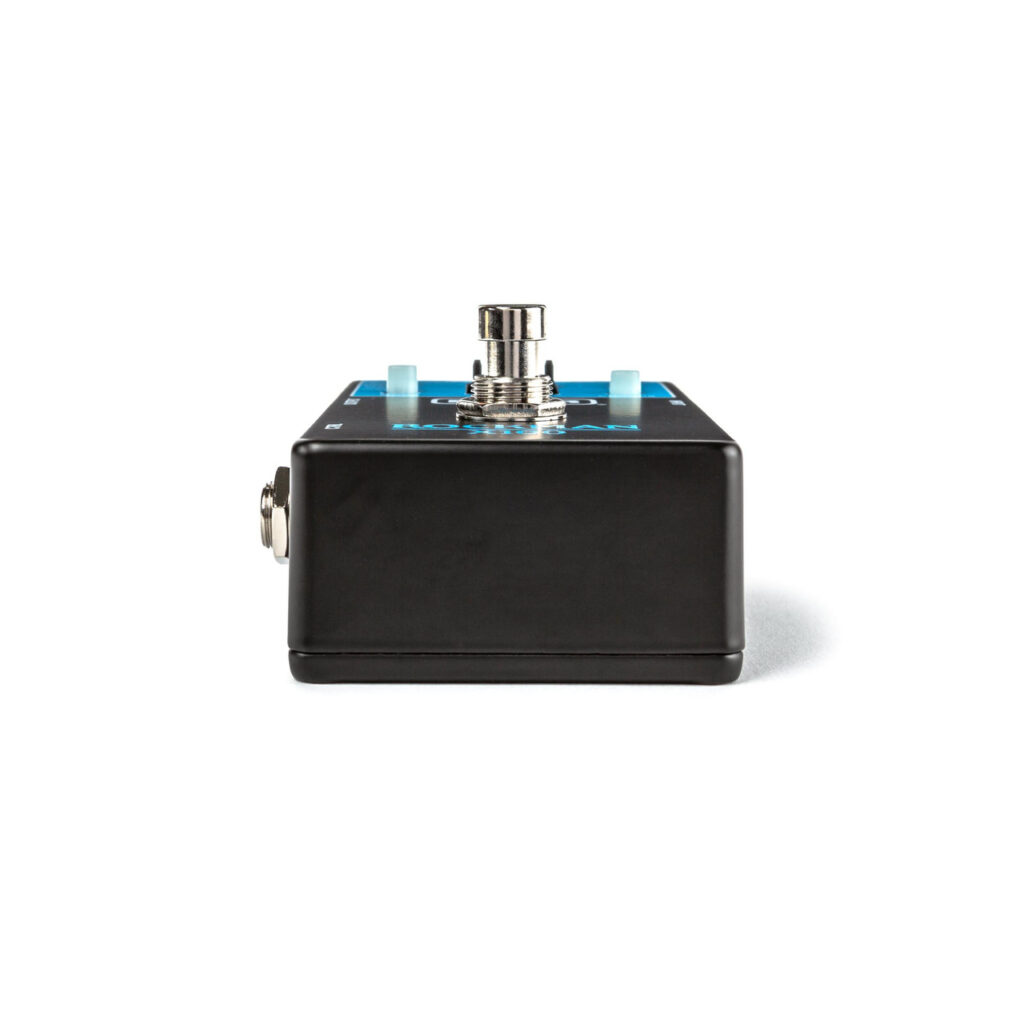
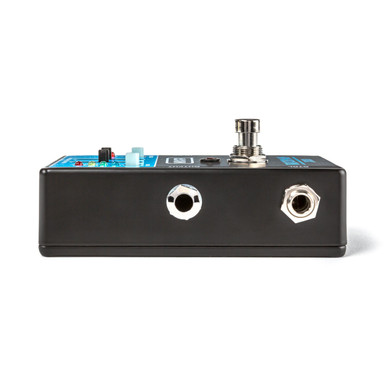
Experience chorus-laden sound of 1980s arena rock originally found in the original Rockman X100 Headphone Amp, now in pedal form! Dial in a blend of crystalline cleans, crunchy harmonics, and shimmering modulation with four tonal presets just like the original, carefully calibrated compression, and bucket-brigade chorusing. This all-analog recreation also features both mono and stereo modes and optional external mode switching for an enhanced user experience.
Key Features
- Instant Analogue Arena Rock Sound – Press the Chorus button for instant analogue arena rock sounds thanks to the MN3007 bucket brigade chip originally used in the X100 Rockman Headphone Amp!
- The Original Four Presets – Choose from two clean modes & two gritty, dirty modes for fluid lead tone.
- Tactile Interface – Dial in the exact amount of tone needed thanks to the simple, yet effective interface – get stuck in using the sliders to feel the difference.
- Built-In Compression – Tuned for a slow release on clean modes and a fast release on dirty modes, the complex compression circuit keeps your sound controlled at all times.
- Mono or Stereo – Featuring both mono and stereo modes and optional external mode switching for an enhanced user experience.
The Original Four Presets
Like the original, the Rockman X100 Analog Tone Processor features four different presets, selectable via the MODE button. What you get is two differently equalized clean modes with high-power sustain and two distinctively gritty dirty modes. The default setting, CLN2 mode, provides a clean, crystal clear tone, while CLN1 mode offers a mid-focused EQ curve for a tight, punchy sound.
On the dirty side, Edge mode boasts moderate clipping that’s highly sensitive to Input Gain adjustments and cleans up nicely at low guitar volume levels. Distortion mode delivers high-energy overdrive and sustain that’s perfect for easy, fluid lead tones.
Simply Dial In Your Tone With Sliders
Tailoring your levels is simple with dedicated Input Gain and Volume sliders. Input Gain adjustments affect how your incoming signal interacts with the X100 Analog Tone Processor’s four modes. (especially the Edge setting) while Volume sets the level going to your amplifier.
Re-compressed
A key component of the original X100’s sound was a complex compression circuit for keeping the signal clear whether clean or dirty. The MXR Rockman X100 Analog Tone Processor comes equipped with the same circuit, tuned for a slow release on clean modes and a fast release on dirty modes. The overall amount of compression is tied to the Input Gain level—more input gain means more compression.
The Bucket Brigade
Equipped with the same classic MN3007 bucket brigade chip found in the original headphone amp, the Rockman X100 Analog Tone Processor will infuse every riff and lick with bucketfuls of expansive, shimmering chorus with a simple push of the Chorus button.
The Story of the Rockman X100
In 1982, Tom Scholz from the legendary hard rock band Boston designed and released the Rockman X100 headphone amp through his electronics company Scholz Research & Development (SR&D).
The X100 was more than just a headphone amp! Built with recording console connectivity and several tone tweaking features and built-in effects, the X100 became the secret weapon in the studio that would go on to define the polished, chorus-laden sound of 1980s arena rock. Aided by veteran MXR engineer and SR&D alum Bob Cedro, the MXR design team captured the same crystalline cleans, crunchy harmonics, and shimmering modulation as the original.