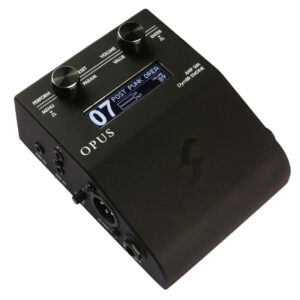
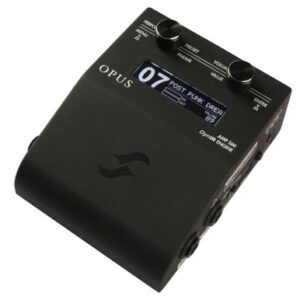
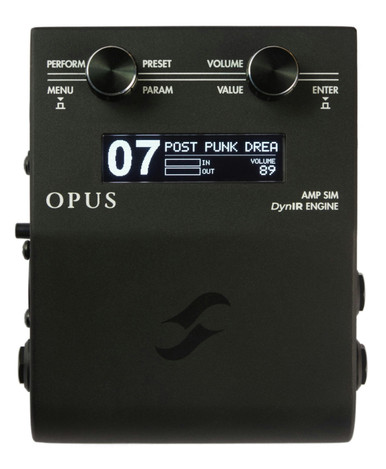
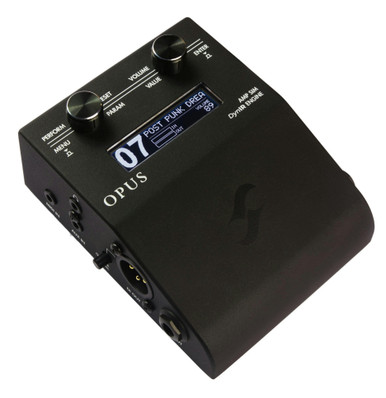
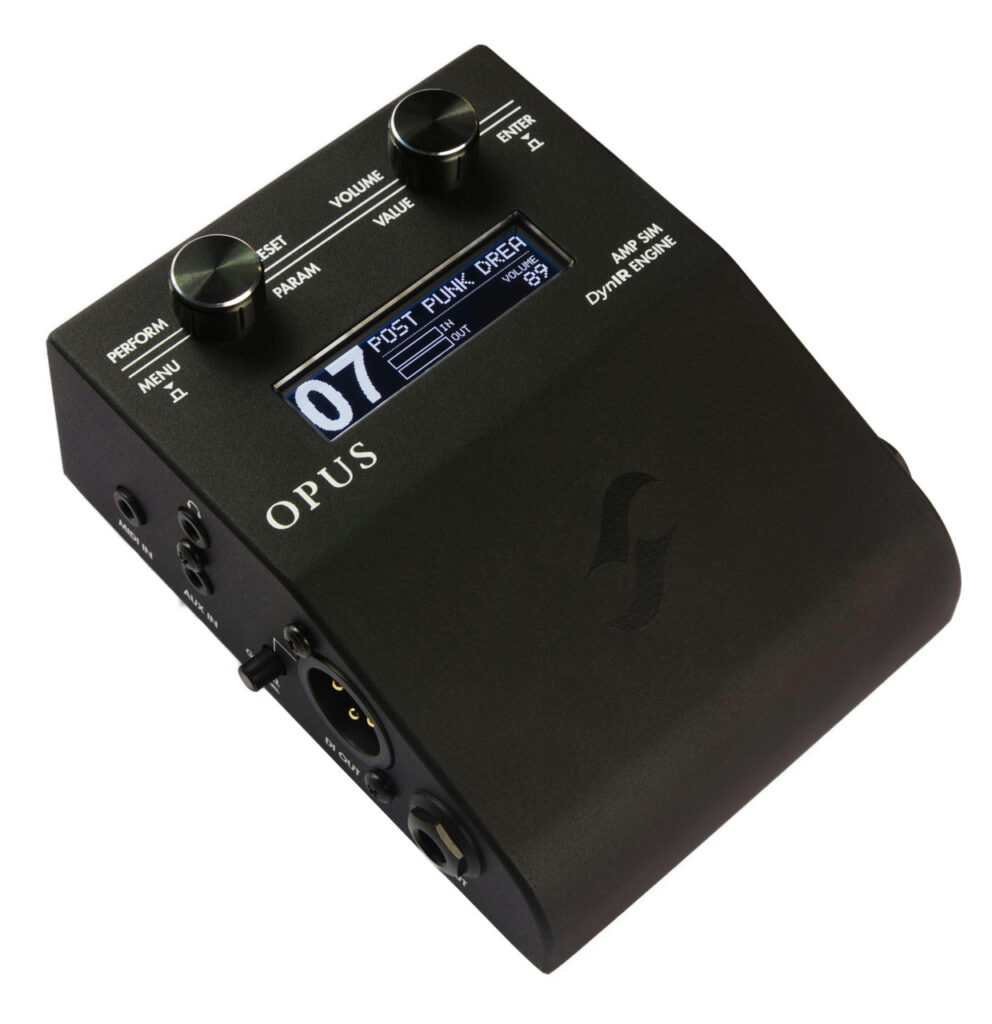
Two Notes OPUS Multi-Channel Amplifier Simulation & DynIR Pedal

£219.00

This is the Two Notes OPUS Multi-Channel Amplifier Simulation & DynIR Pedal from Two Notes, listed in Specialist Effects Pedals on Just Pedals. Read More below.

View Just
more
and , , ,

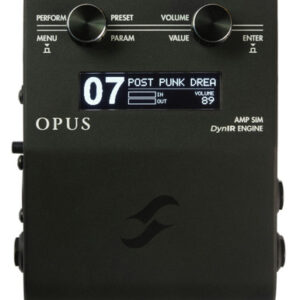
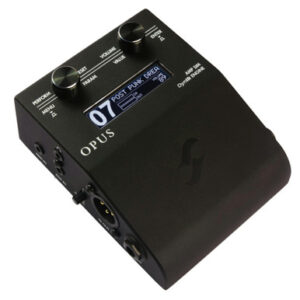
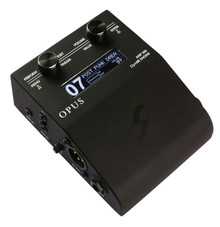
The Two Notes OPUS is the ultimate pedal platform for amplifier simulations and dynamic impulse responses powered by tube-stage modelling technology, all in a compact & ultra-portable rugged metal chassis. The pedal comes with 10 pristine TSM (tube stage modelling) preamp emulations, with 10 total slots for future preamp models via free firmware updates.

Use the MIDI input for seamless assimilation into existing set-ups, with the included MIDI breakout cable. The pedal has USB-C connectivity for quickly transferring your data.

The OPUS now comes with three additional Preamps when registering! Try the AVIATOR, Tanger and eldorado. All you need to do is connect the OPUS to your desktop, and the Torpedo Remote program and accept the firmware update prompt.

Simulations

  • Exquisite TSM Power amp simulation with 4 tube amp models (6L6, EL34, EL84 and KT88), Pentode / Triode, Push-Pull (PP) ‘Class AB’, or Single Ended (SE) ‘Class A’ power amps
  • On-board DynIR Engine for class-leading cabinet simulation with dual-miking facilities, 8 microphones per cabinet and 12 room emulations
  • Pro-grade suite of essential DSP-powered processors and effects including an EQ, Enhancer, Noise Gate and Reverb
  • Dual Static IR Loader and Acoustic DI with 40+ premier Acoustic Impulse Responses included.

Pre-Loaded Cabinet Simulations

Pre-loaded with the OPUS-Series DynIR Cabinet Collection featuring 32 Cabinets including captures from Steve Stevens, Dave Friedman, Pete Thorn, George Lynch and Phil X.

Preset Locations

The pedal has 99 preset locations and an exclusive collection of 40+ artist-series presets from the likes of Pete Thorn, Michael Nielsen, Jack Gardiner, Tom Quayle, Adam Steel, John Browne, Jay Leonard Jay and many more!

Wireless Integration with the Torpedo Remote App

Wireless Bluetooth and USB integration with Torpedo Remote (iOS, Android, MacOS, Windows) for expert-level tone shaping, preset management and real-time auditioning of 500+ DynIR Cabinets.

Built-In Preamps & Poweramps

OPUS renders conventional connectivity restraints a thing of the past; a slew of hook-up options facilitated via complete command of the built-in Pre- and Power-amp emulations makes this the most versatile Torpedo-series solution to date.
Brand

Two Notes

Two Notes is a French company that specialises in advanced audio solutions, particularly for musicians who require high-quality sound processing tools. Known for their pedalboard-friendly and versatile products, Two Notes’ offerings are designed to meet the needs of both live performances and studio recordings. Their popular product lines include cabinet simulators, such as the Torpedo series, which allows musicians to use virtual cabinets and microphones, with control over mic placement and sound shaping. This flexibility is a key feature of Two Notes pedals, providing musicians with an array of tones and effects without the need for physical amplifiers or cabinets.

Two Notes’ products, such as the Torpedo C.A.B. M+ and ReVolt Guitar, integrate seamlessly with their software ecosystem called GENOME. This software suite allows users to customise their tones with a wide selection of virtual cabinets, microphones, and effects, offering an unprecedented level of control and tonal flexibility. The company also offers the Torpedo Remote software for easy

Category

Specialist Effects Pedals

Specialist effects alter the signal in ways that do not sit cleanly inside one established family. They may use granular processing, frequency shifting, resonators, freeze or sustain, bit reduction, ring modulation, feedback networks or combinations of several techniques. The relevant distinction is the underlying process, its tracking or latency, and how completely the dry signal can be blended or replaced.

Tags

Acoustic

Voiced for the wider dynamics, strong transient detail and pickup characteristics of acoustic instruments. High input impedance, phase reversal, notch filtering and restrained processing help preserve body resonance while controlling piezo harshness and feedback. Balanced outputs may also carry the corrected signal directly to a mixer or interface.

IR Loader

Convolves the signal with an impulse response, a captured measurement of a cabinet, speaker, microphone, room or other linear system. File length, sample rate, latency, storage and routing determine the detail of the captured response and how flexibly it can be combined.

MIDI

Sends, receives or responds to Musical Instrument Digital Interface messages rather than carrying the instrument audio itself. Program changes recall presets, continuous controllers move parameters, and MIDI clock or transport messages synchronise timing between devices.

USB

Provides a Universal Serial Bus connection for power, audio, MIDI, firmware or editing data. The supported USB class and connector do not by themselves show its purpose; channel count, sample format, host compatibility and power demand define the actual function.