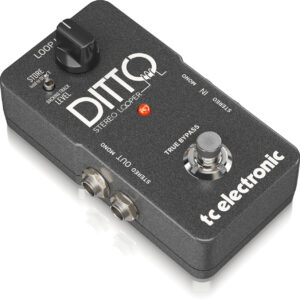
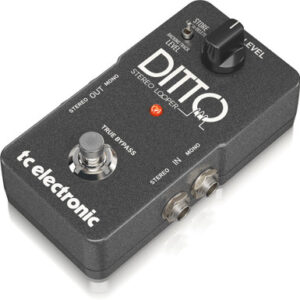
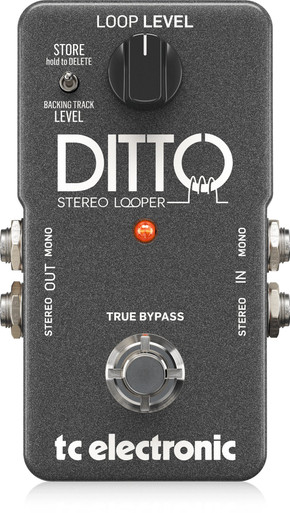
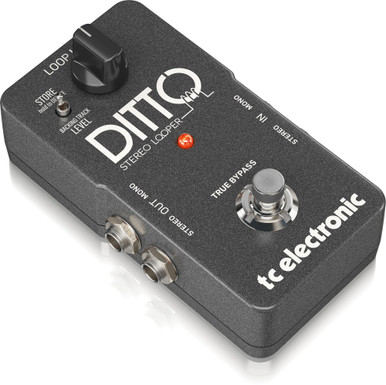
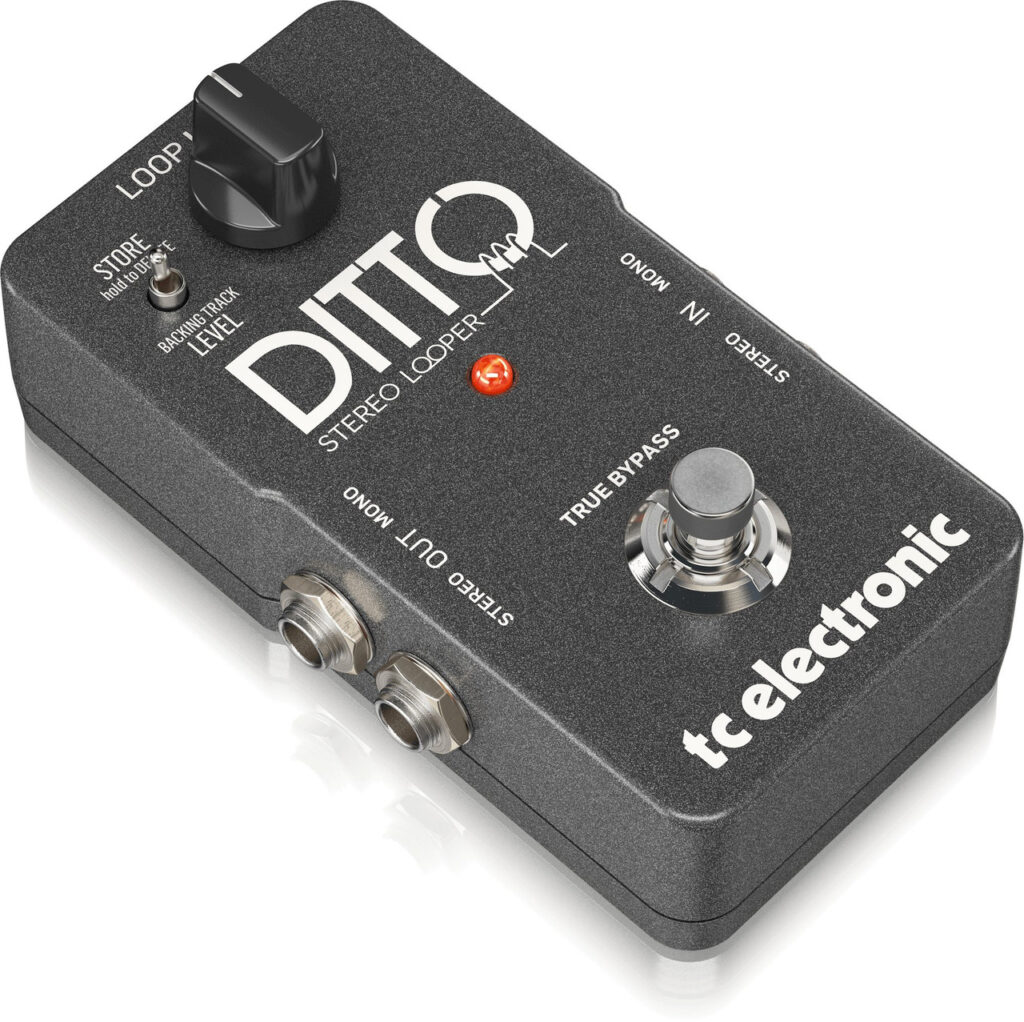
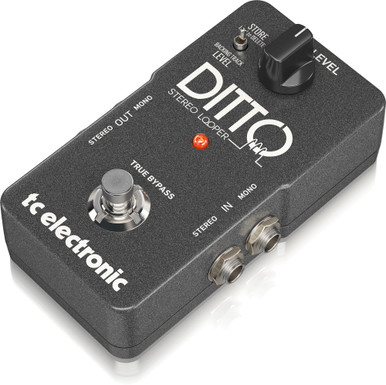
TC Electronic Ditto Stereo Looper Pedal

£89.99

This is a New TC Electronic Ditto Stereo Looper Pedal from TC Electronic, listed in Looper Pedals on Just Pedals. Read More below.

View Just
more
and , ,

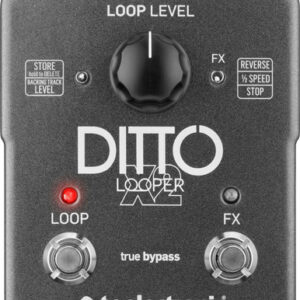
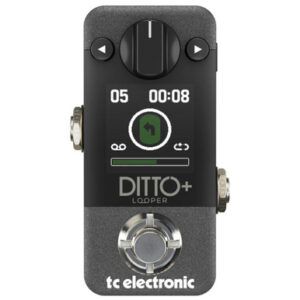
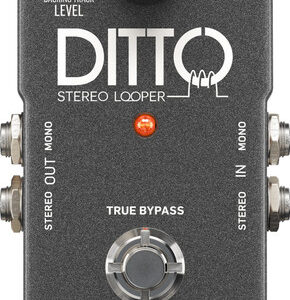
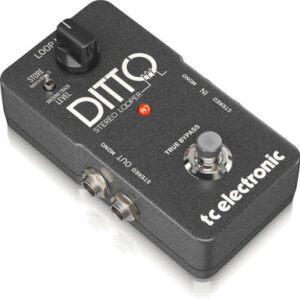
The original Ditto looper from 2013 has become one of the best selling guitar effects pedals in the world. Now after a couple of years of updates the Ditto Stereo looper is here which mixed the best features of the Ditto X2 into a smaller single pedal package. If you have not got a looper pedal yet, now is the best time with a TC Electronic Ditto for every kind of player.

Expanding On The Original

While the original mini Ditto Looper is amazing there were always a couple of things missing. Now with full stereo support as well as the ability to not only create and store your own backing tracks but also download loops from some of the best guitarists in the world. These new options are built on top of the already incredible signal quality and unlimited overdubs that made the Ditto so popular.

High Quality Signal

The Ditto looper became so popular over other loopers thanks to its ease of use and pro grade quality. With the same 24 bit uncompressed recording and playback with up to 5 minutes of loop time all of your loops still sound great. If that wasn’t already good enough you already have completely analogue dry-though circuitry so that whatever you are playing is not converted to digital and back again.

From The X2

Some of the best features of the incredible X2 have made their way down to the Ditto Stereo including USB import and export for loops, backing tracks and full access to Starjam loops. This means you can quickly load up a jam track from some of the best guitarists in the world and get practicing along with them.

Specifications

  •  Super Intuitive – made by guitarists for guitarists
  •  Loop Import/Export, Backing Track and StarJam
  •  Stereo I/O
  •  Compact Design
  •  True Bypass and Analog Dry-Through
  •  Runs on 9V batteries or optional PSU

Related videos

Brand

TC Electronic

TC Electronic are known for innovative, studio-quality effects that combine great tone with modern technology. Founded in Denmark, they’ve shaped the sound of countless players with classics like the Hall of Fame Reverb, Flashback Delay, and Ditto Looper. Their gear is built for reliability and ease of use, offering a range of features that include lush ambient effects and precise tone shaping. Whether on stage or in the studio, TC Electronic deliver professional sound and creative flexibility trusted by musicians worldwide.

TC Electronic’s product lineup includes a wide range of guitar effects pedals known for their pristine sound quality, versatility, and cutting-edge features. From classic effects like delays, reverbs, and choruses to more experimental and unique pedals, TC Electronic offers a comprehensive selection to suit a wide range of playing styles and preferences.

Category

Looper Pedals

Looper pedals record a phrase and play it back while allowing overdubs, undo, redo and hands-free stop or start commands. Track count, loop memory, quantisation, fade modes and the treatment of effects on the recorded signal determine whether a unit suits practice, writing or live performance. Some loopers add drums, MIDI clock, synchronisation, one-shot playback or multiple outputs, while simpler designs concentrate on immediate capture. Check whether loops persist after power-down, how overdubs are erased and where the looper sits in the chain; a good workflow matters more than a long feature list.

Tags

Analogue

Uses continuous analogue circuitry for some or all of the audio path, so clipping, filtering or modulation arises from physical components rather than sampled algorithms. Check the exact signal path.

Digital

Uses digital conversion and processing to create, store or control the effect. This can provide presets, complex routing and repeatable algorithms, but latency, conversion and power requirements depend on the design.

Stereo

Processes, creates or passes two audio channels. True stereo preserves separate left and right inputs, while mono-to-stereo effects generate spatial differences internally; routing, phase behaviour and whether trails remain stereo determine the resulting image. Some outputs sum to mono when only one socket is connected, which can change level or modulation depth.