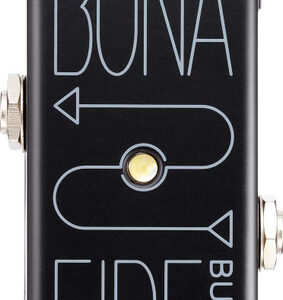
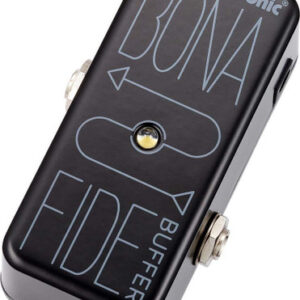
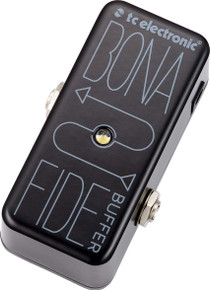
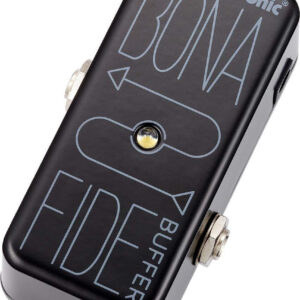
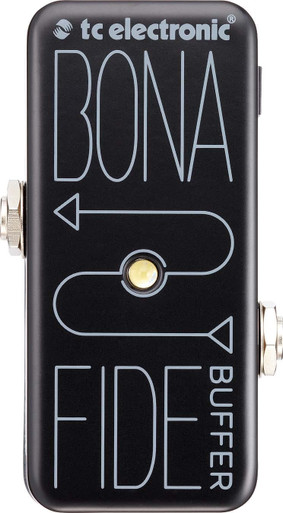
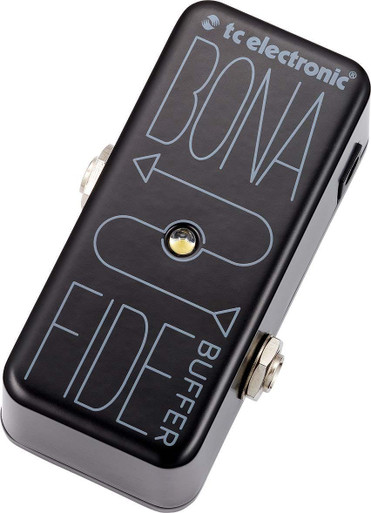
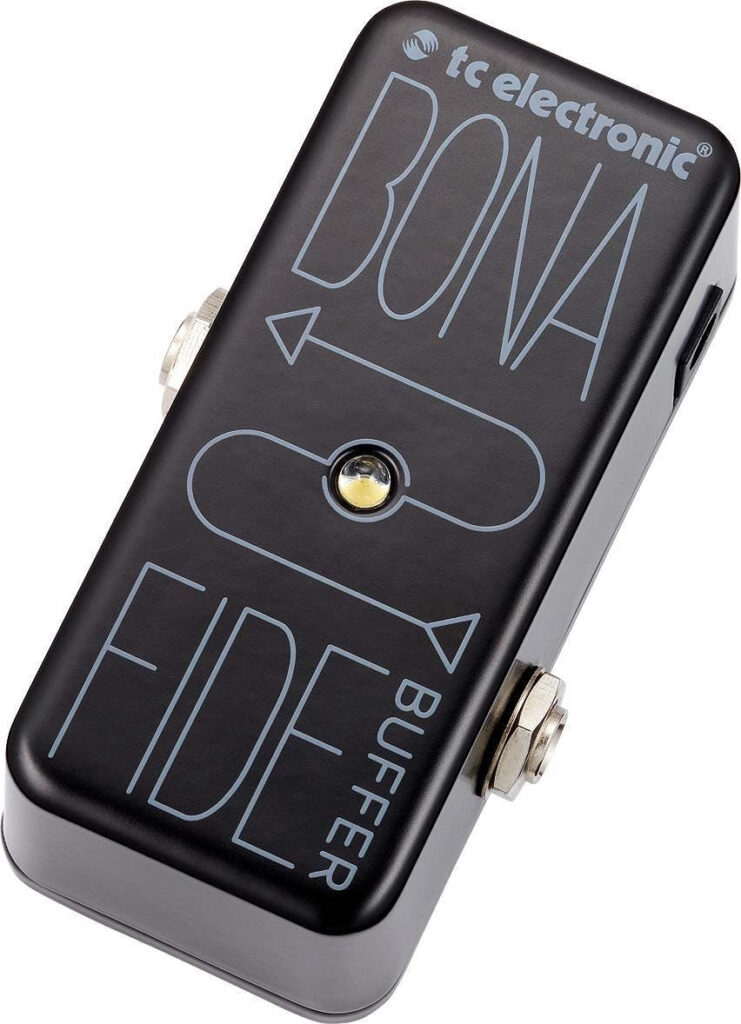
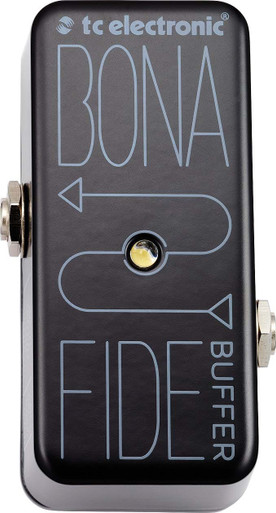
TC Electronic Bonafide Buffer Pedal

£34.99

This is a New TC Electronic Bonafide Buffer Pedal from TC Electronic, listed in Utility Pedals on Just Pedals. Read More below.

View Just
more
and ,

If you are fan of using a large quantity of pedals or you need to use long cables on stage, you probably have noticed what is commonly known as tone sucking. As your guitar travels through more pedals and more cables you get a lot of high end rolloff which just ruins your bright and powerful tones. If you are experiencing that then you need a high quality buffer like the small and mighty TC Electronic Bonafide Buffer.

Key Features

  • Pure, Simple Tone – The best buffer in the world is the one you don’t even notice is there. By transforming your high impedance guitars signal in to a stronger low impedance signal you don’t suffer that annoying high end rolloff that ruins your perfectly crafted tone. 
  • True/Buffered Bypass – The bonafide buffer has both a buffered and true bypass switch built in however meaning that when the power is cut it instantly switches to true bypass mode so your signal can continue to get to the rest of your pedalboard.
  • Salvage Your Sound – By turning your guitar’s high impedance output into low impedance, BonaFide Buffer opens up the tonal floodgates, so your tone can flow strong and freely through your entire signal chain.
  • Simply Spec(s)tacular – BonaFide Buffer’s 1M ohm input and 100 ohm output secures exactly those goals and enables you to have obscenely long cable runs, while still maintaining optimum signal strength. 
  • Failure Is Not An Option – BonaFide Buffer has a built-in intelligent bypass relay, which automatically switches it from buffered to true bypass if its power suddenly gets cut. 

Here’s what TC Electronic say about the Bonafide Buffer:

BonaFide Buffer is the sonic remedy that will free your tone of any treble-sucking constraints put upon it by long cable runs. Just slam this high-quality, no-nonsense tone tool on your pedalboard and get ready to bask in your tone as it was meant to be. Transparent, crisp, alive and all you!

  • High-Quality analogue buffer
  • Run long cables without any signal degradation
  • Power failure mode – Automatically switches to True Bypass if power gets cut.

Specifications

  • Superior analogue buffering turns 1 MΩ guitar output into a tone-saving 100 Ω low impedance and low noise signal
Related videos

Brand

TC Electronic

In the current JustPedals catalogue, TC Electronic is represented by Delay Pedals, Reverb Pedals and Looper Pedals. Current listings include DC30 Preamp, Plethora X1 and V550 Pre-Amp. That makes the range relevant to players looking for drive, gain and clipping, plus time-based effects and ambience. Check each model for its exact circuit or processing platform, controls, power requirements and connections, particularly where the catalogue includes both pedals and supporting gear.

Category

Utility Pedals

Utility pedals perform practical signal, power or control jobs rather than one conventional musical effect. They may provide switching, buffering, routing, mute, gain, impedance conversion, noise management, tap control or connection between different pieces of equipment. Their value depends on the details: check the signal level, input and output format, bypass behaviour, power requirement, control assignment and whether the unit is intended for instrument or line-level use. A small utility can solve a board problem, but the wrong routing can add noise or incompatibility.

Tags

Buffered Bypass

Buffered bypass keeps an active buffer in the signal path when the effect is bypassed. This can help drive long cable runs and high-capacitance boards, but the buffer’s input and output loading may also change the feel or frequency response. It is not the same as true bypass. Check the buffer behaviour, output impedance, placement around fuzz and the number of other buffers already in the chain before deciding whether it suits the rig.

True Bypass

True bypass removes the effect circuit from the audio path when bypassed, usually by mechanical, relay or switching circuitry. This can preserve the direct signal but does not automatically solve long-cable loading, and it may create a pop or leave no buffer for the rest of the board. Check the actual switching method, trails or spillover, input and output loading and the number of other true-bypass pedals in the chain.