Brand
M-VAVE is a music-gear brand of Shengke, whose official company history describes a move from consumer wireless audio into instrument products using wireless transmission and digital signal processing. The current range mixes compact single-effect pedals, multi-effects processors, headphone tools and wireless systems. JustPedals listings include the Mini Universe digital reverb, Tank multi-effects, H8 headphone amplifier and pedal tuners. TANK-G adds amp modelling, USB audio and recording features, while Mini Universe is a compact dedicated reverb. Check the product type before comparing M-VAVE listings, as the brand covers both stompboxes and supporting equipment.
Category
Delay and reverb are combined here because both create a sense of time and space but do so differently. Delay produces distinct repeats; reverb builds a dense field of reflections around the note. Dual-effect designs may run the sections in series or parallel, synchronise them to tempo and allow separate routing, so the interaction can range from a short room with a single echo to long, evolving ambient trails.
Tags
Converts the signal or control process into numerical data for algorithmic processing. Digital designs can provide precise timing, long memory, complex routing and repeatable presets; sample rate, conversion, internal resolution and latency influence fidelity and response.
Processes, creates or passes two audio channels. True stereo preserves separate left and right inputs, while mono-to-stereo effects generate spatial differences internally; routing, phase behaviour and whether trails remain stereo determine the resulting image. Some outputs sum to mono when only one socket is connected, which can change level or modulation depth.
Provides a Universal Serial Bus connection for power, audio, MIDI, firmware or editing data. The supported USB class and connector do not by themselves show its purpose; channel count, sample format, host compatibility and power demand define the actual function.

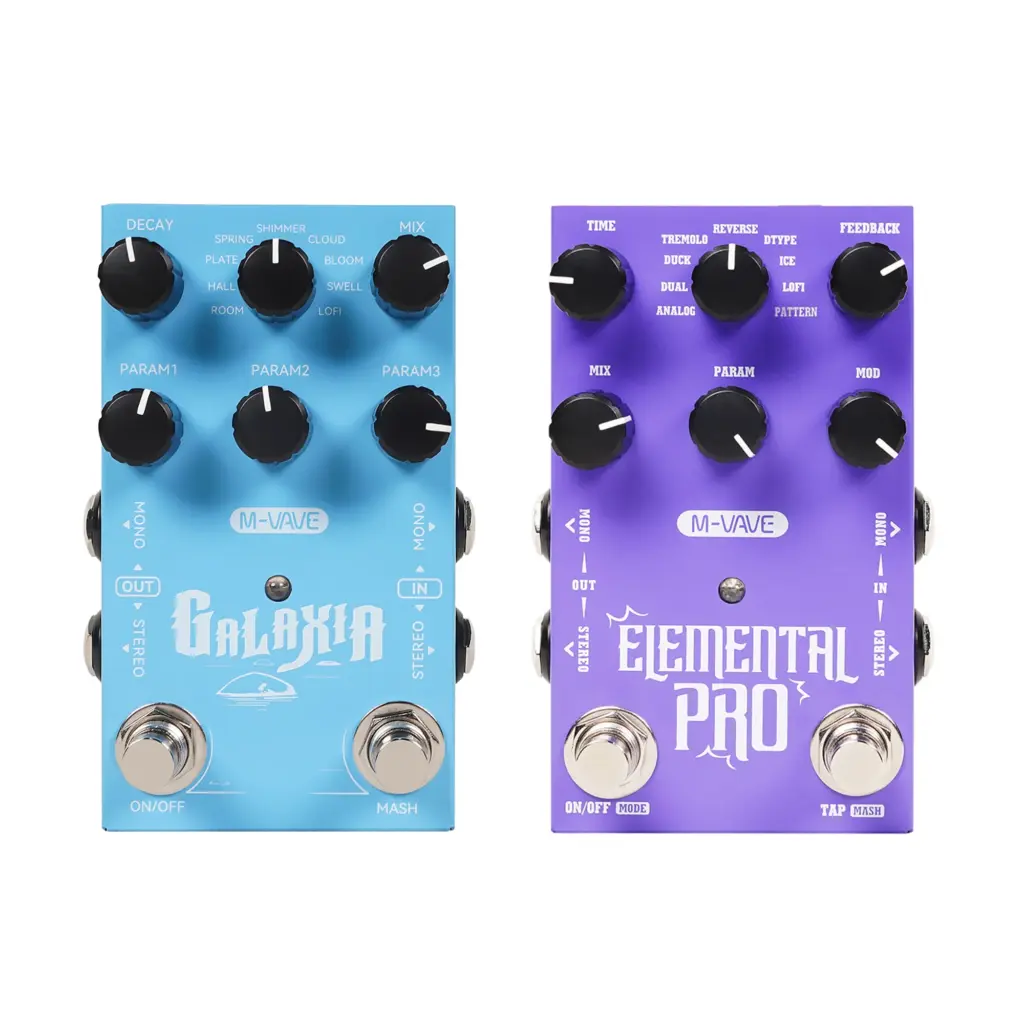
 In Stock M-Vave Elemental Pro Electric Guitar Delay Pedal Stereo Delay Effect 9 Modes 100 1200ms Time For Guitar Performance
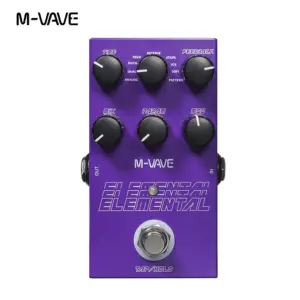 M-VAVE Elemental Digital Delay Pedal 9 Different Delay Guitar Effect Delay Pedal Supporr For HOLD TAP Mode Guitarra Accessories
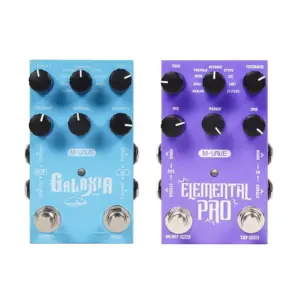 M‑VAVE GALAXIA Guitar Multi‑Effects Pedal Portable Effects Processor Amp Modeling Rechargeable Looper Stereo Reverb Pedal