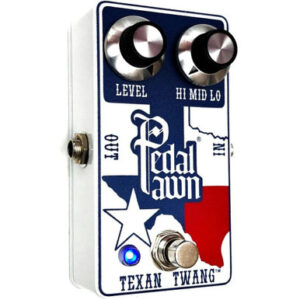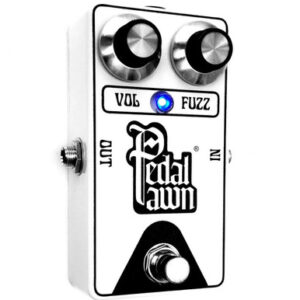
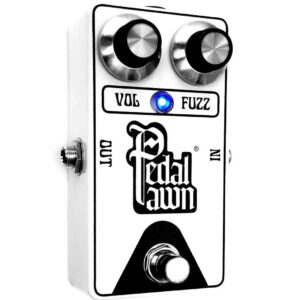

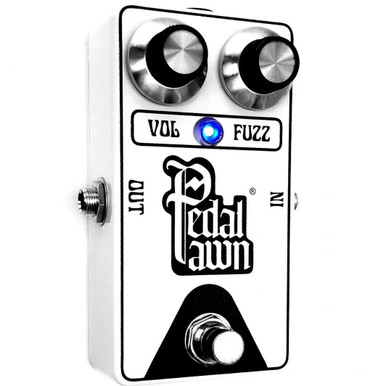
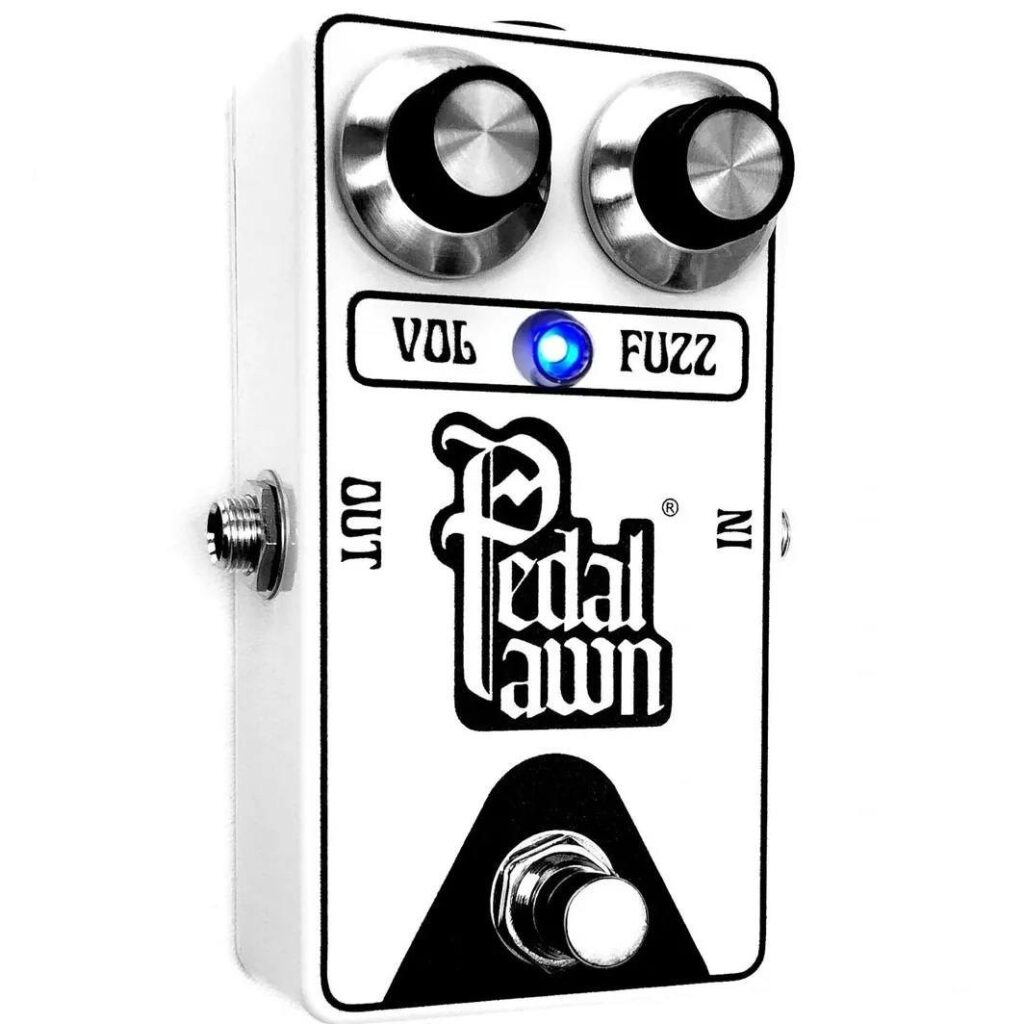


Pedal Pawn Fuzz Pedal

£194.99

This is a New Pedal Pawn Fuzz Pedal from Pedal Pawn is in our Fuzz Pedals category on Just Pedals. Read More below.

View Just
more
and

Here's what Pedal Pawn say about the Fuzz

It's no secret that the Pedal Pawn  ®  team are some of the craziest fuzz freaks ever! After having 100s if not 1000s of vintage smiley Fuzz's pass through our hands, we have refined our knowledge into the end-all Fuzz! This custom circuit is specifically tuned for an abundance of glassy clean-up when rolling back the guitars volume knob. Rolling up the guitars volume knob produces the fattest fuzz we've ever heard!

Key Features

  • Immensely fat tones! (guitar volume knob up)
  • Tuned for glass type tones (guitar volume knob down)
  • Hand selected rare NTE silicon transistors
  • Handcrafted in the UK by our master builder
  • Temperature tolerant circuitry 
  • Loud output levels to cut through the mix
  • Standard 9v power input / battery connection
  • True bypass switching

Related videos

Brand

Pedal Pawn

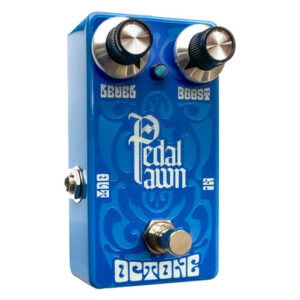
In the current JustPedals catalogue, Pedal Pawn is represented by Overdrive Pedals, Fuzz Pedals and Octave Pedals. Current listings include Fuzz, Freaky Fuzz and Octone Octave Fuzz. That makes the range relevant to players looking for drive, gain and clipping, plus modulation and movement. Check each model for its exact circuit or processing platform, controls, power requirements and connections, particularly where the catalogue includes both pedals and supporting gear.

Category

Fuzz Pedals

Fuzz drives the signal into extreme clipping, often flattening the waveform and generating a thick spectrum of harmonics. Transistor type, bias, input loading and tone filtering create markedly different responses, from loose and velvety to gated, spluttering or octave-rich. Some circuits interact strongly with pickup impedance and guitar volume, while others include buffers or blends for a more consistent response.

Tags

True Bypass

Connects input directly to output through mechanical or relay switching when the effect is off, removing the active circuit from the audio path. It avoids buffer colour but leaves cable capacitance and switching design to influence high-frequency loss and possible switching noise.