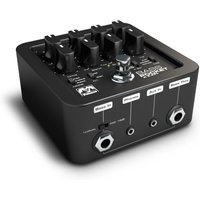
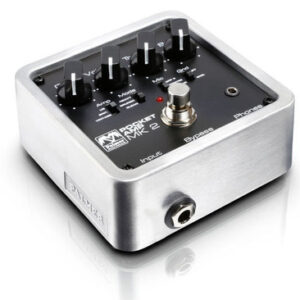
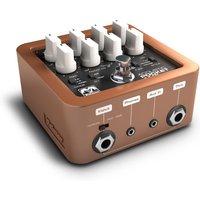
The Palmer MI Pocket Amp for Bass is a multi-purpose effects pedal and preamp that provides extensive sound shaping options for active and passive bass guitars. This versatile unit is ideal for gigging and recording and also features a headphones output for quiet play-along practising. Its equipped with clean overdrive and fuzz modes with adjustable drive and saturation and a 3-band EQ with semi-parametric mid control. This preamp also includes vintage or modern cabinet simulation that is especially voiced for Bass guitars as well as a sturdy footswitch for mute or bypass control.
Palmer MI Pocket Amp Bass Portable Preamp for Bass Guitars
£127.75
This is a New Palmer MI Pocket Amp Bass Portable Preamp for Bass Guitars from Palmer its found in our Preamp & DI Pedals on the Just Pedals menu. Read More below.
View Just Palmer
As an affiliate partner, we may earn a small commission when you buy through our links — at no extra cost to you.
Brand
Palmer
In the current JustPedals catalogue, Palmer is represented by Pedalboards and Preamp & DI Pedals. Current listings include CAB M Passive Cabinet Merger, Y-BOX – Splitter and PWT 04 Pedalboard Power Supply. That makes the range relevant to players looking for modelling, direct rigs and multi-effects, plus pedalboard infrastructure and control. Check each model for its exact circuit or processing platform, controls, power requirements and connections, particularly where the catalogue includes both pedals and supporting gear.
Category
Preamp & DI Pedals
A preamp brings an instrument signal to a controlled level and shapes its impedance, gain and frequency balance before amplification or recording. A DI converts the signal for a balanced, low-impedance connection and may include ground lift, pad and transformer isolation. Combined units can add drive, cabinet filtering, effects loops and parallel outputs while keeping the direct path stable.
Tags
Bass
Voiced or equipped to retain low-frequency fundamentals and the higher headroom of a bass signal. Clean blends, crossovers and bass-specific filter ranges can preserve weight and articulation while the effected portion adds harmonics, movement or ambience.
Others Just Ordered :
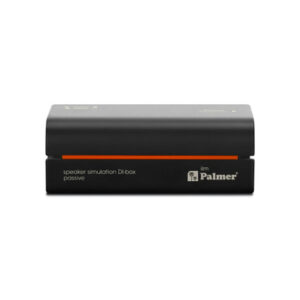
- I Love A Happy Accident… – Animals Pedal

- Animals Pedal Vintage Van Driving is Very Fun Overdrive
- Animals Pedal Sunday Afternoon Is Infinity Bender
- Ninevolt Pedals | Bath Time Reverb (Animals Pedal)
- This Fuzz Pedal Makes No Sense… But It Sounds Incredible

- ANIME Pedals | Animals Pedal Custom Illustrated Series