
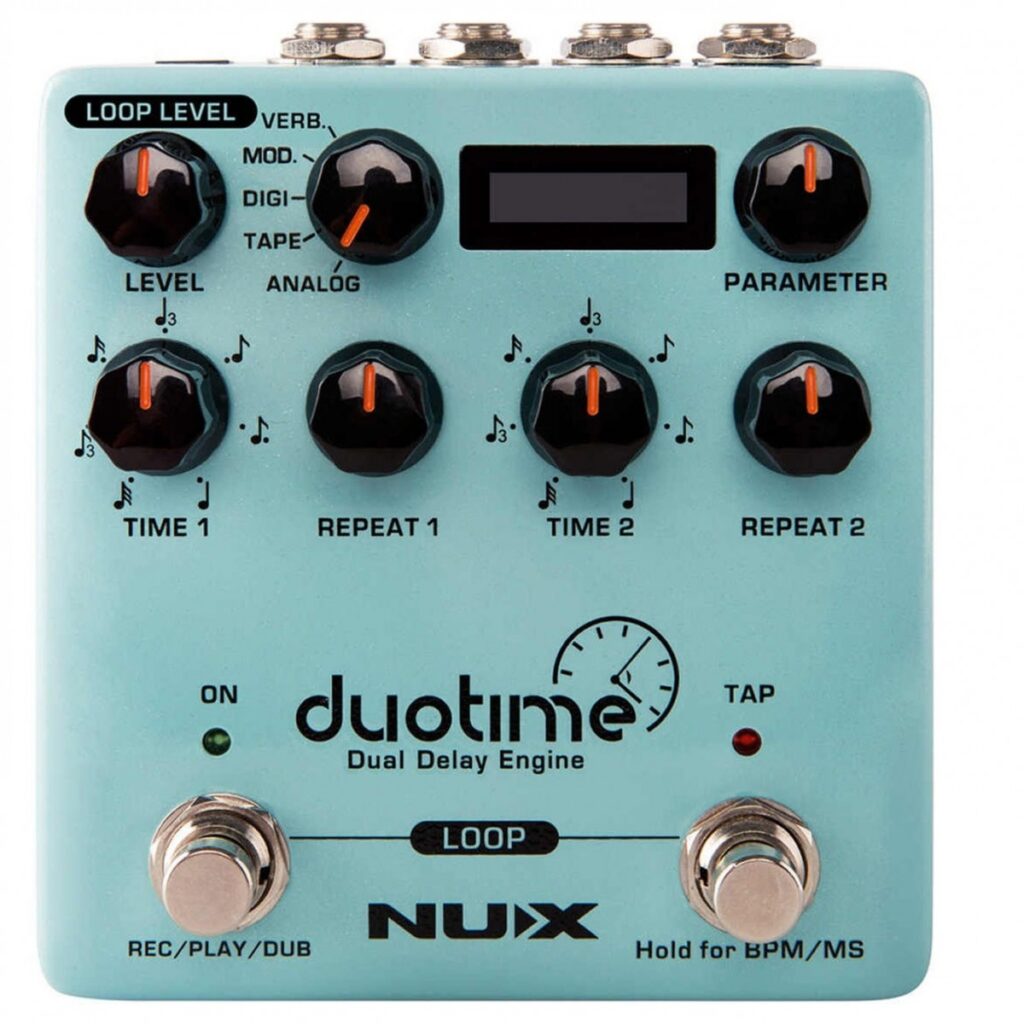
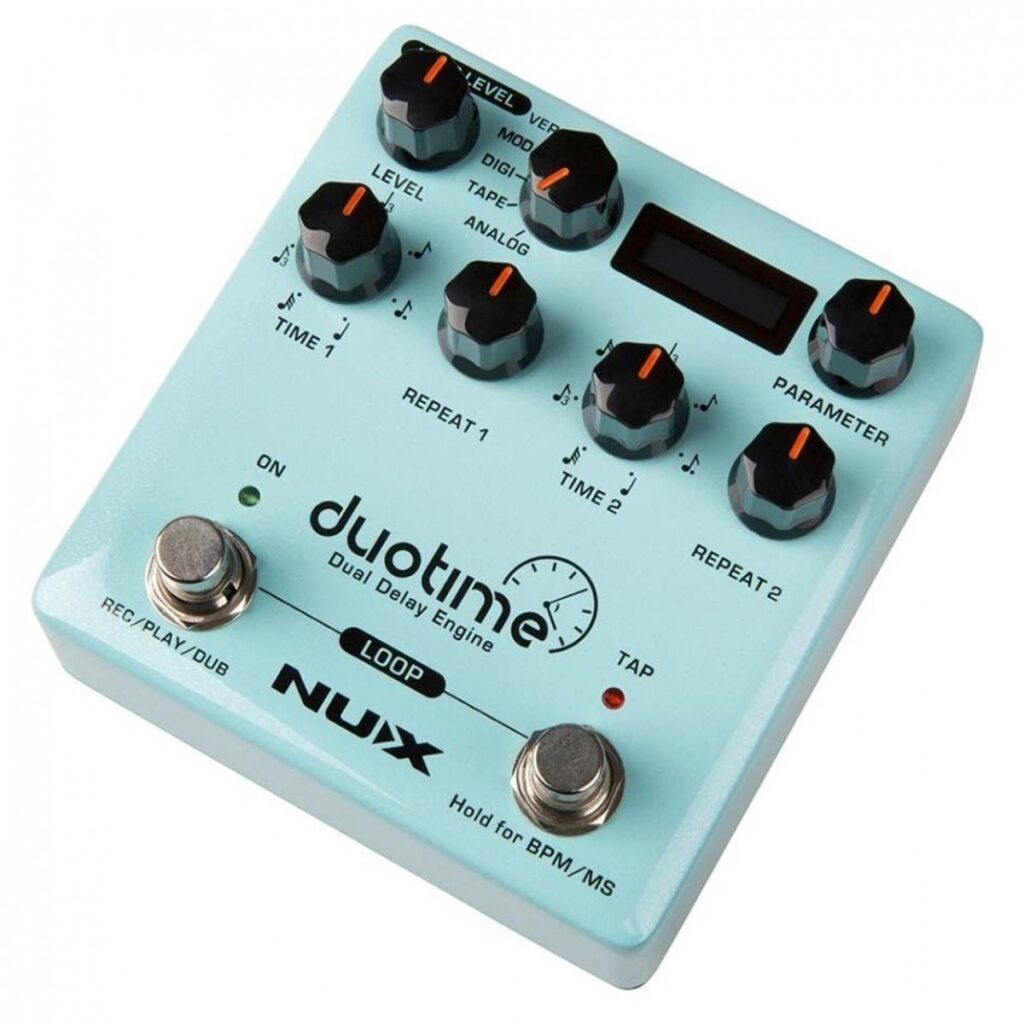
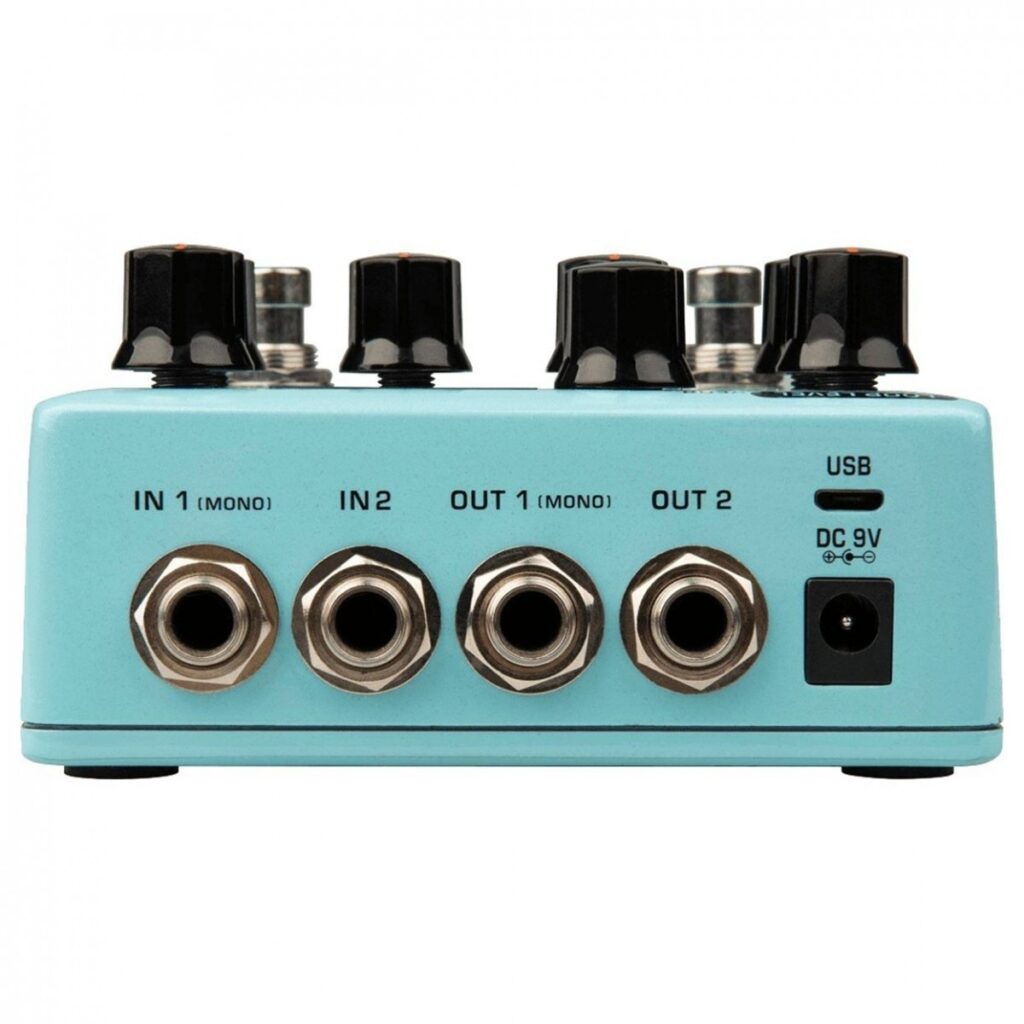
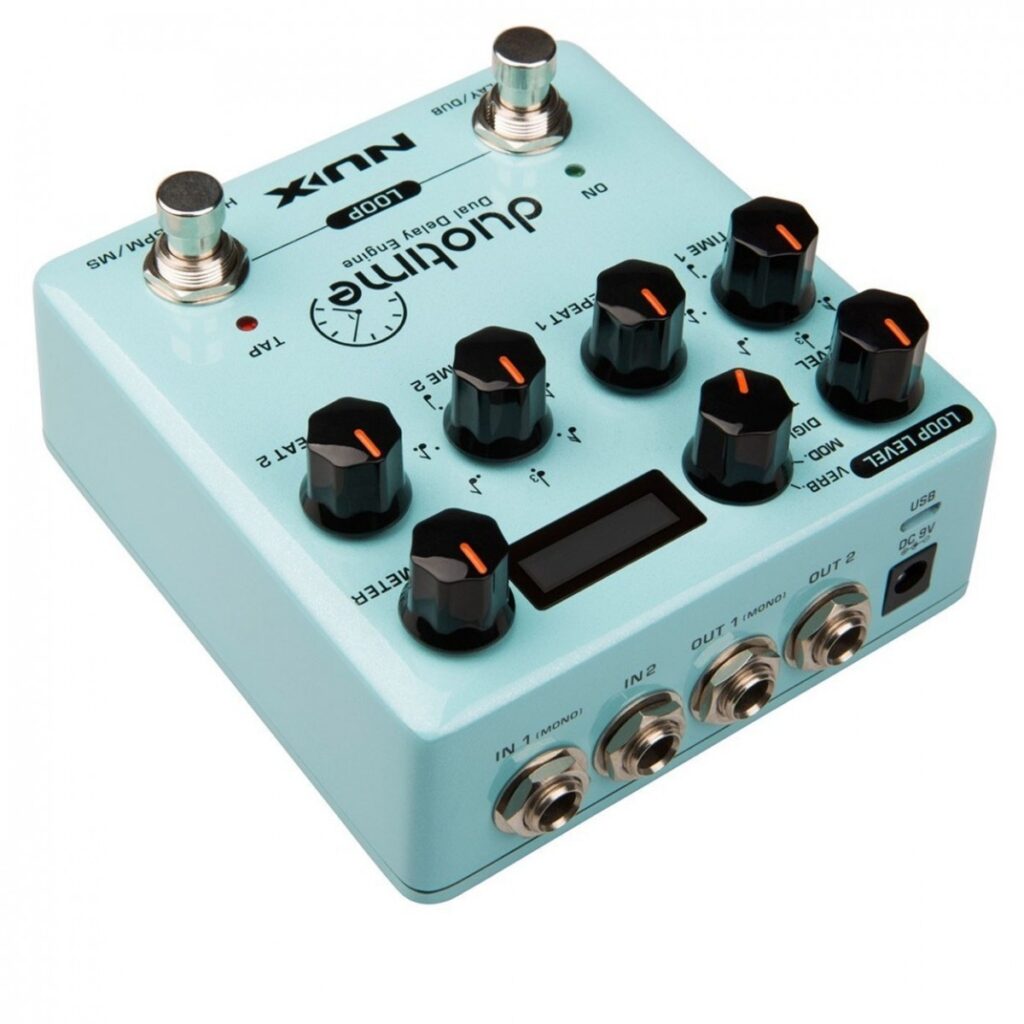
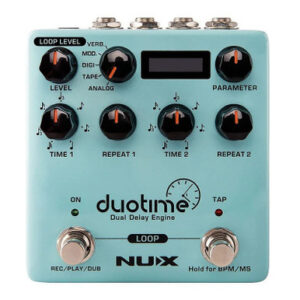
The NUX NDD-6 Duotime Dual Delay Engine packs expansive echo and delay into a compact pedal to easily add depth to your tone. Choose between five independent delay types: Analog Tape Digi Mod. and Verb- these give you a remarkable level of versatility along with an expansive control layout allowing you to fine-tune to perfection. Use the tap tempo footswitch to quickly dial-in your exact delay requirements. This allows you to quickly sync your delay to your surroundings for instant optimisation. The true stereo design realises your delay in impressive fashion giving you the potential to add an extra dimension to your sound. Just select which mode suits you best use the detailed controls to fine-tune to exactly your specs set the tempo with the dedicated tap tempo footswitch and youre away! Immaculate delay with a whole host of tones on tap and serious adaptability- a delay tookit.
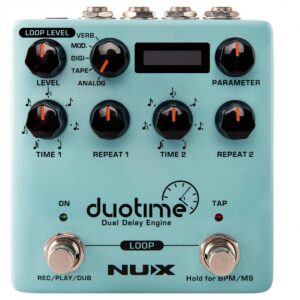
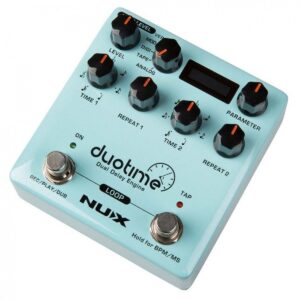
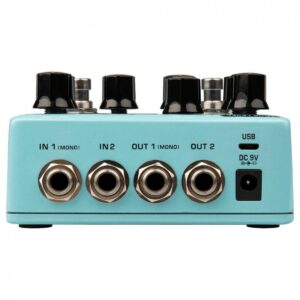
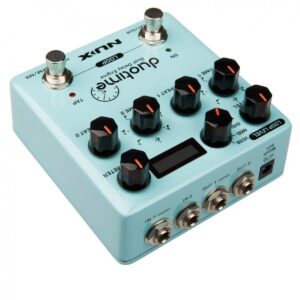
NUX NDD-6 Duotime Dual Delay Engine
This is a New NUX NDD-6 Duotime Dual Delay Engine from NUX, listed in Delay Pedals on Just Pedals. Read More below.
As an affiliate partner, we may earn a small commission when you buy through our links — at no extra cost to you.
Related videos

Brand
NUX
NUX made its industry debut in 2006 and is one of the brands owned by Cherub Technology. Its official catalogue ranges from analogue and digital stompboxes to multi-effects, amplifiers, wireless systems, drums, keyboards and recording gear. Cherub lists company locations in Guangdong, China, as well as overseas offices; that identifies the company base, not the factory for every NUX product. JustPedals listings include the NBP-5 Melvin Lee Davis bass preamp, NAI-5 Optima Air acoustic simulator and NDR-5 Atlantic delay and reverb. The range rewards model-by-model comparisons of signal path, presets and instrument-specific features.
Category
Delay Pedals
Delay records the incoming signal for a chosen interval and repeats it after the original note. Feedback returns repeats to the delay line, while tone, filtering, modulation and saturation determine whether echoes remain clear, darken progressively, wobble like tape or degrade like analogue bucket-brigade circuits. Delay time and rhythmic subdivisions govern the spacing and musical pattern of the repeats.
Tags
Analogue
The signal is shaped by continuously varying electronic circuitry rather than being converted into a digital effect algorithm. Component choice, operating voltage and circuit tolerances influence headroom, noise, clipping texture and the small variations in response between designs.
Stereo
Processes, creates or passes two audio channels. True stereo preserves separate left and right inputs, while mono-to-stereo effects generate spatial differences internally; routing, phase behaviour and whether trails remain stereo determine the resulting image. Some outputs sum to mono when only one socket is connected, which can change level or modulation depth.
Tap Tempo
Measures repeated foot taps and converts their interval into an effect rate or delay time. Subdivisions translate that pulse into dotted, triplet or other rhythmic values, while averaging and range limits influence how quickly and accurately the tempo settles.
Others Just Ordered :
- I Love A Happy Accident… – Animals Pedal

- Animals Pedal Vintage Van Driving is Very Fun Overdrive

- Animals Pedal Sunday Afternoon Is Infinity Bender

- Ninevolt Pedals | Bath Time Reverb (Animals Pedal)

- This Fuzz Pedal Makes No Sense… But It Sounds Incredible

- ANIME Pedals | Animals Pedal Custom Illustrated Series
