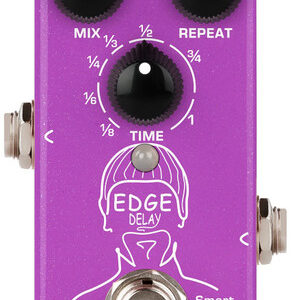
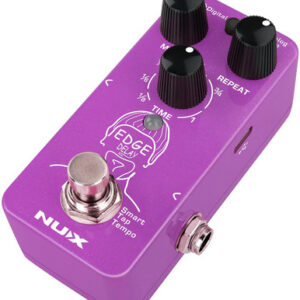
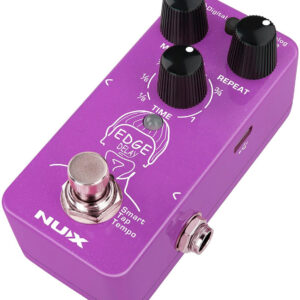
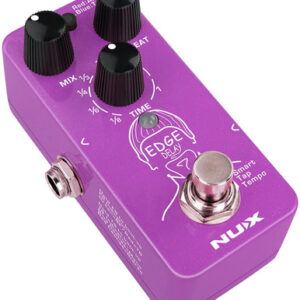
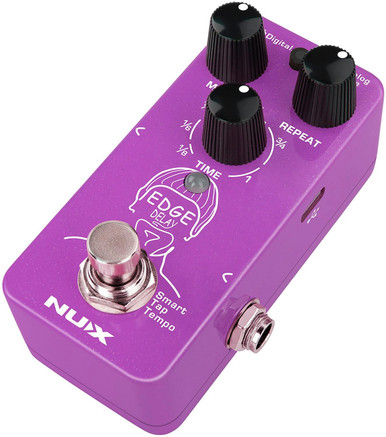
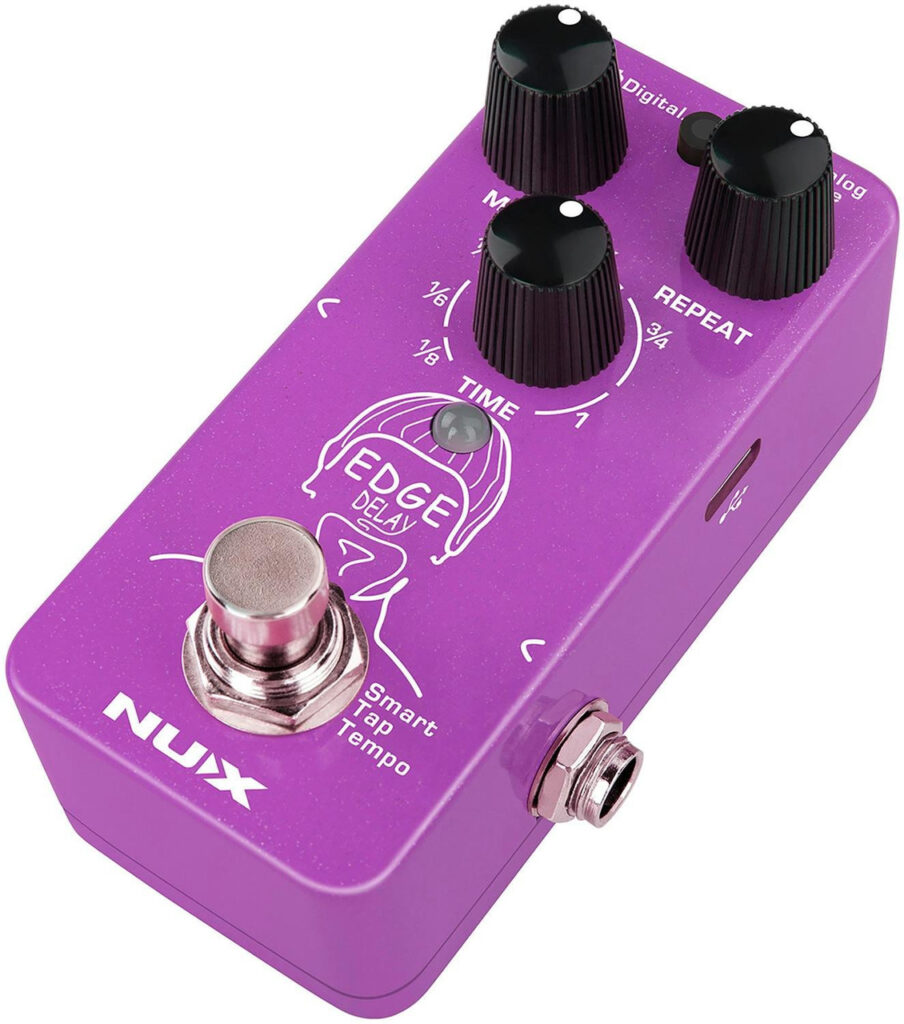
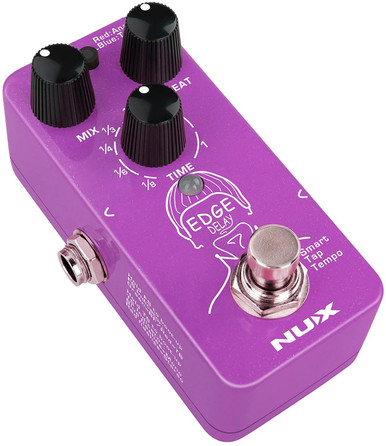
NUX NDD-3 Edge Mini Delay Pedal

£64.99

This is a New NUX NDD-3 Edge Mini Delay Pedal from NUX, listed in Delay Pedals on Just Pedals. Read More below.

View Just
more
and , ,

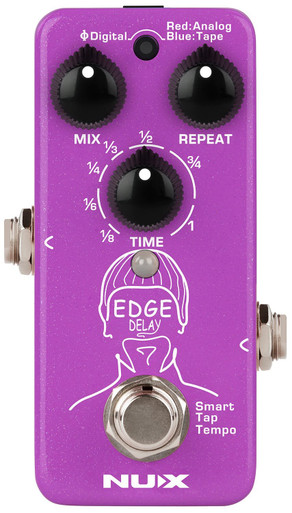
The Nux Edge Mini (NDD-3) is a mini delay pedal with 3 different delay types including Phi Digital Delay, Analogue Delay, and Tape Echo. You can switch delay types by pressing and holding the footswitch.

Key Features

  • Phi Digital Delay – A digital delay with a golden ratio 2nd repeat head. Easily tweak the knobs, setup the desired sub-division, engage the smart tap tempo, and you’re ready to go.
  • Analogue Delay – Based on the vintage BBD (Bucket Brigade Device) delay. It produces a very warm sound with natural treble decay. Very suitable for scorching ballad solos with romantic atmosphere. Nux’s unique algorithm replicates the physical infinity oscillation feedback while you tweak the time knob from max to min quickly.
  • Tape Echo – Based on the legendary Space Echo machine. Nux have digitally recreated the retro-feel of a real tape and capstan configuration. The Tape Echo emulates the high-frequency saturation and low-end decay of magnetic tape. It’s gently modulated for added richness and colour. Tweak the time knob from max to min quickly, and you can get the infinity feedback.

Specifications

  • Controls: Mix, Repeat, Time
  • Delay Modes: 3
  • Footswitch: Smart Tap Tempo
  • Power: 9V DC Adaptor (Not Included)
  • Dimensions: 94 x 51 x 53mm

Related videos

Brand

NUX

In the current JustPedals catalogue, NUX is represented by Multi-Effects Pedals, Overdrive Pedals and Delay Pedals. Current listings include Analog Delay, Plexi Crunch and Analog Chorus. That makes the range relevant to players looking for drive, gain and clipping, plus time-based effects and ambience. Check each model for its exact circuit or processing platform, controls, power requirements and connections, particularly where the catalogue includes both pedals and supporting gear.

Category

Delay Pedals

Delay pedals repeat the input after a set time, from a short slapback to long ambient trails. Feedback controls how many repeats continue; filtering, modulation, saturation and mix shape their tone and prominence. Tap tempo can keep rhythmic delays aligned with a song, while presets and MIDI help when several timings are needed. Analogue, tape-style and digital designs respond differently to transients and overload. Check maximum delay time, spillover, stereo routing, trails and headroom before choosing a model for the rest of the board.

Tags

Analogue

Analogue products use continuous audio circuitry for some or all of the signal path, so clipping, filtering or modulation arises from physical components rather than sampled algorithms. The label does not guarantee a particular tone; component choice, headroom, bias, noise and the surrounding gain stages still matter. Check whether the switching, presets, control section or cabinet stage is digital when the exact signal path is important.

Digital

Digital products use conversion and processing to create, store or control the effect. This can provide presets, complex routing, repeatable algorithms, USB, MIDI and firmware features, but conversion, latency, power requirements and clocking depend on the design. Check the input and output levels, sample or impulse-response support, bypass behaviour and current draw when combining a digital unit with analogue pedals or a direct recording setup.

Tap Tempo

Tap tempo lets a player set delay, modulation, tremolo or looper timing by tapping a footswitch. The implementation may be a dedicated switch, an external input, MIDI clock or a combination, and the supported timing divisions vary. Check whether the tempo is stored, whether tap is momentary or latching, how quickly the effect follows changes and which blocks respond. Tap tempo is useful only when the control connection and timing range match the workflow.