Brand
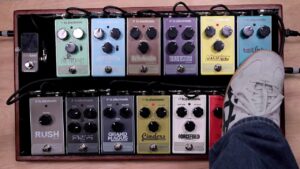
In the current JustPedals catalogue, TC Electronic is represented by Delay Pedals, Reverb Pedals and Looper Pedals. Current listings include DC30 Preamp, Plethora X1 and V550 Pre-Amp. That makes the range relevant to players looking for drive, gain and clipping, plus time-based effects and ambience. Check each model for its exact circuit or processing platform, controls, power requirements and connections, particularly where the catalogue includes both pedals and supporting gear.
Category
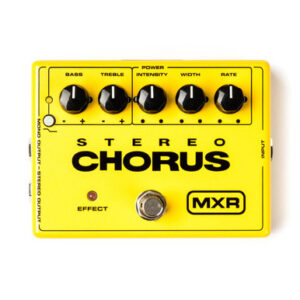
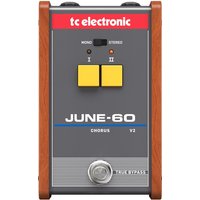
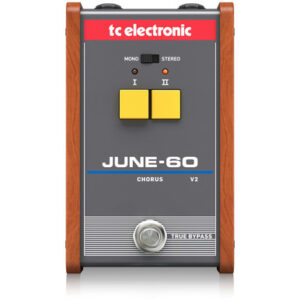
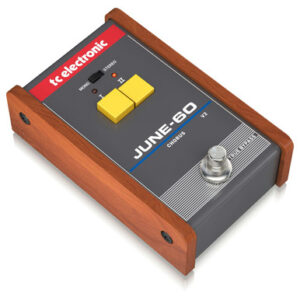
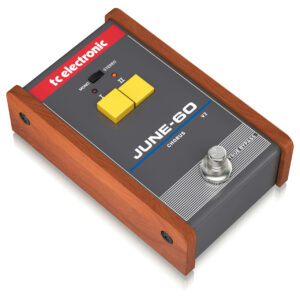
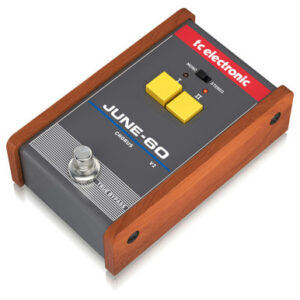
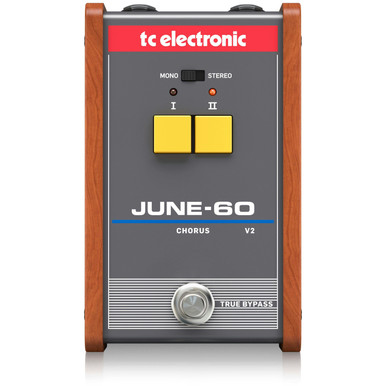
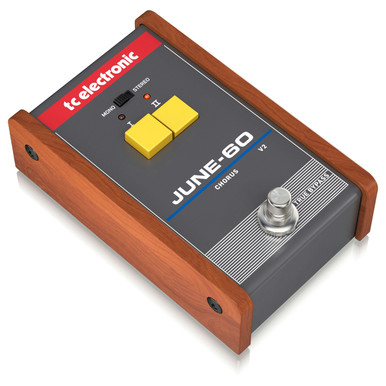
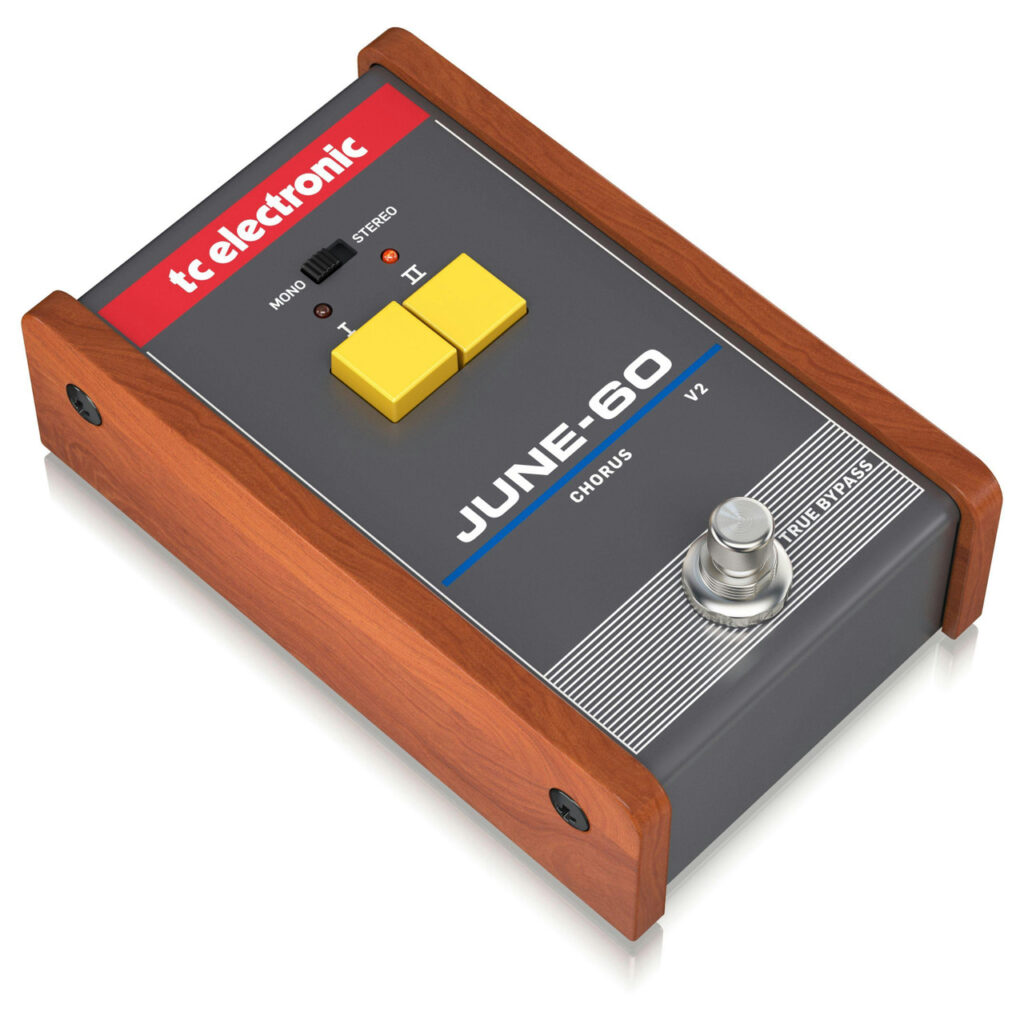
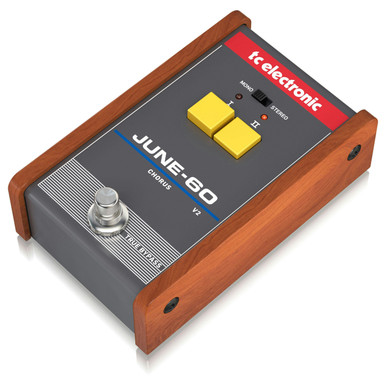
Chorus pedals mix the dry signal with one or more short, modulated delays to create movement, width and gentle pitch variation. Rate controls the speed of the modulation; depth controls its excursion; blend, tone and stereo routing determine how prominent the effect becomes. Slower, shallow settings can add width without obscuring the note, while deeper settings move towards a seasick or synthetic wobble. Analogue bucket-brigade and digital designs can behave differently, so check mono compatibility, headroom and the placement of the pedal after drives or before a mixer.
Tags
Analogue products use continuous audio circuitry for some or all of the signal path, so clipping, filtering or modulation arises from physical components rather than sampled algorithms. The label does not guarantee a particular tone; component choice, headroom, bias, noise and the surrounding gain stages still matter. Check whether the switching, presets, control section or cabinet stage is digital when the exact signal path is important.
Bass products are designed or voiced to retain low-frequency information and usable headroom with bass guitar or other low-register sources. Controls may centre on clean blend, low-end EQ, compression, crossover points or drive character. A guitar pedal can sometimes work well on bass, but it may remove the fundamental or compress the transient. Check the frequency response, input impedance, output level and dry-signal path with the intended tuning and amplifier.
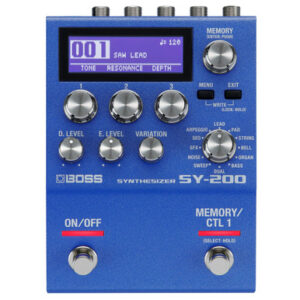
Preset-capable products can store and recall effect settings, signal paths or control assignments. The useful differences are the number of locations, whether footswitches or MIDI can recall them, what parameters are saved, how quickly they change and whether trails continue between settings. Check editing, backup, firmware, expression and USB requirements, and confirm that the preset system covers the parameters you need rather than assuming every control is recalled.
Stereo products provide separate left and right audio paths, which may widen modulation, preserve independent delays or route a pedalboard into two amplifiers or a mixer. Input and output behaviour is not always symmetrical: some units sum a stereo input, while others create stereo from a mono source. Check whether the effect collapses safely to mono, how the dry signal is routed, the socket format and the destination’s panning and phase requirements.
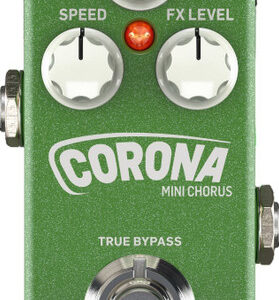
True bypass removes the effect circuit from the audio path when bypassed, usually by mechanical, relay or switching circuitry. This can preserve the direct signal but does not automatically solve long-cable loading, and it may create a pop or leave no buffer for the rest of the board. Check the actual switching method, trails or spillover, input and output loading and the number of other true-bypass pedals in the chain.