Brand
JOYO Technology is a Shenzhen music-gear company whose range goes well beyond stompboxes. Its official catalogue covers guitar and bass amplifiers, acoustic and busking amps, effects, power supplies, interfaces, wireless systems and accessories. JOYO also says it develops acoustic-core technology and has applied for utility patents. JustPedals listings include the JF-21 Splinter distortion and JF-319 Green Legend overdrive, alongside mini amps and power adapters. That breadth matters when comparing products under the JOYO name: some are effects, while others support the rest of a guitar or bass rig.
Category
A noise gate reduces or mutes the signal when it falls below a threshold, separating wanted notes from hiss, hum and high-gain noise. Threshold decides when the gate closes, while attack, release and hold control how naturally it opens and how note tails decay. Side-chain or four-cable designs can detect the clean input while silencing noise later in the gain chain.
Tags
Clips the waveform firmly and adds a dense series of harmonics with compression and sustain. The clipping devices, gain stages and tone filters determine whether the result is tight, smooth, mid-focused, scooped, grainy or deliberately abrasive.
Raises or lowers defined frequency regions. Fixed-band graphic controls provide direct visual shaping, while parametric controls vary centre frequency and bandwidth; the available range and filter width determine whether the change is broad tonal balance or narrow corrective filtering.

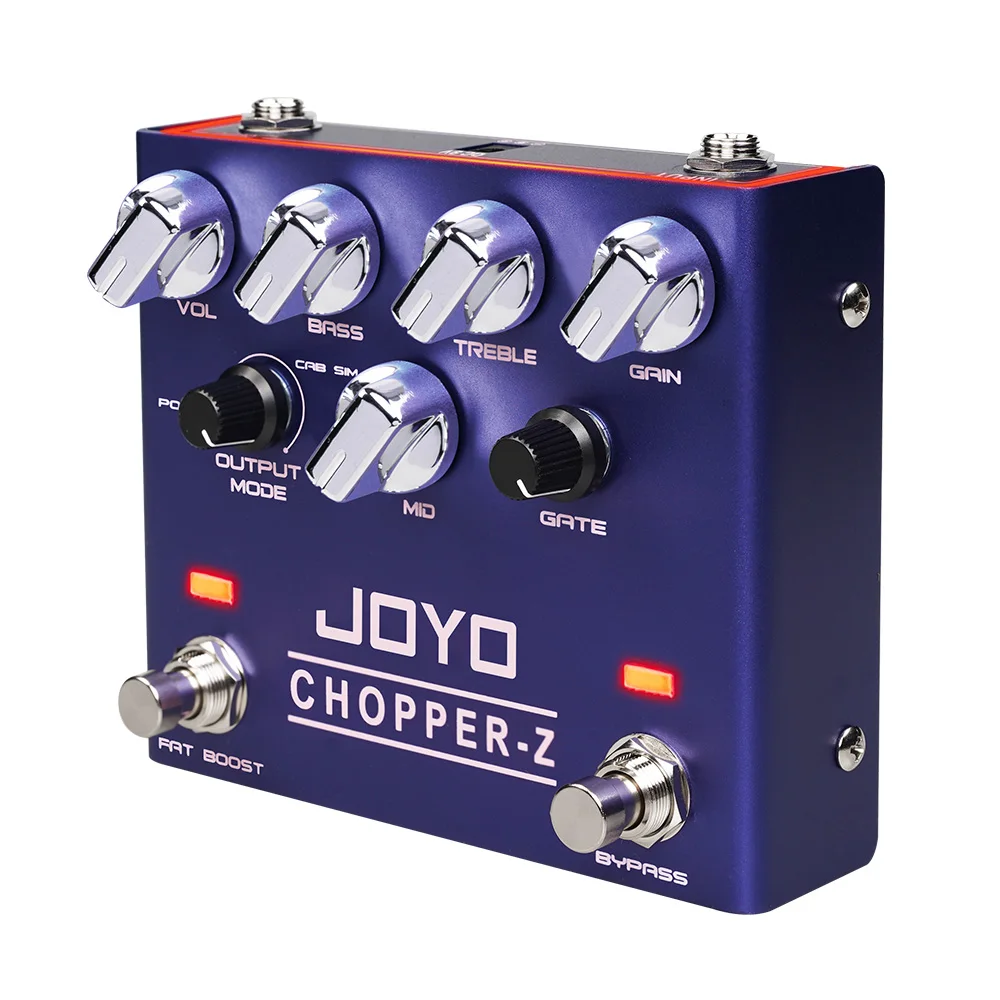
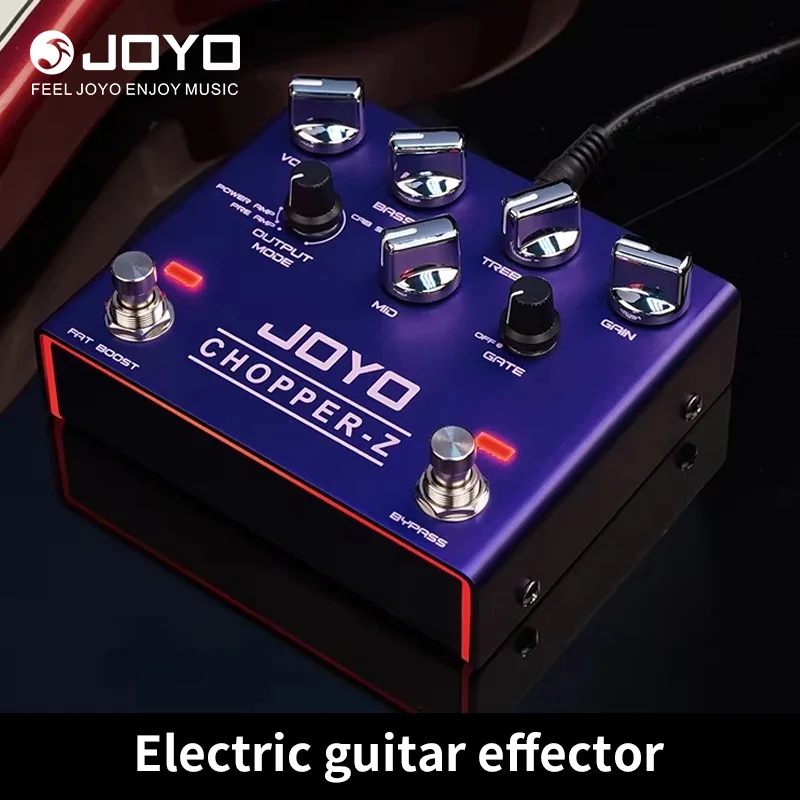 Joyo R-18 CHOPPER-Z Distortion Pedal Pedal Modern Metal Sound Noise Gate High Gain
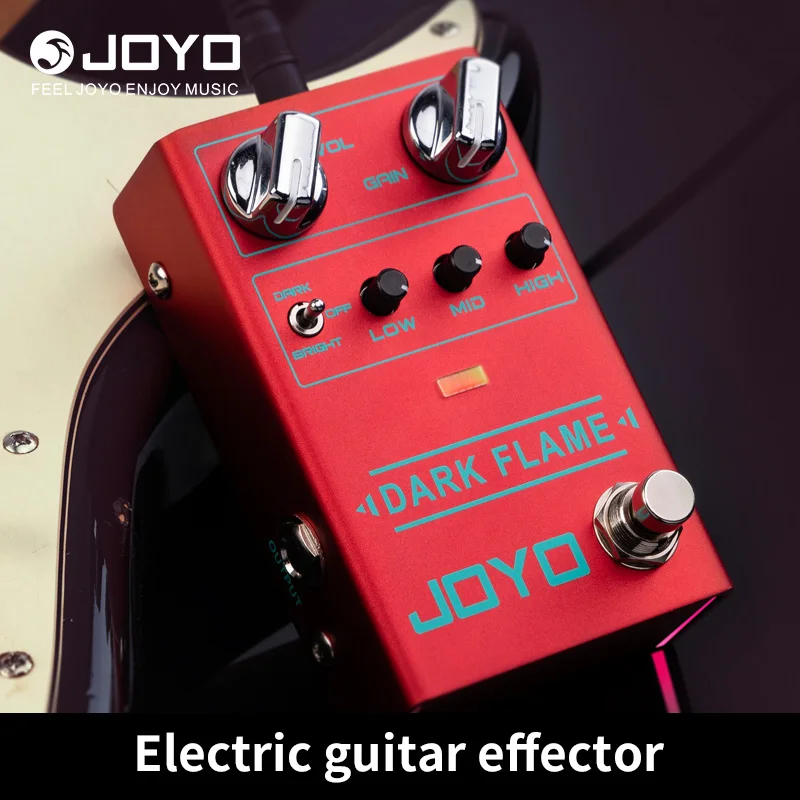 JOYO-R-17 DARK FLAME Distortion Pedal, High Gain Metal Effect, Multiple Tones, 3 Band EQ Pedal for Guitar, Riff Solo
 JOYO R-17 Dark Flame Modern Metal High Gain Distortion Effect Pedal 3 Band EQ Multiple Tones Effect Guitar Parts & Accessories