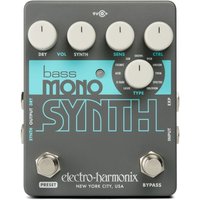
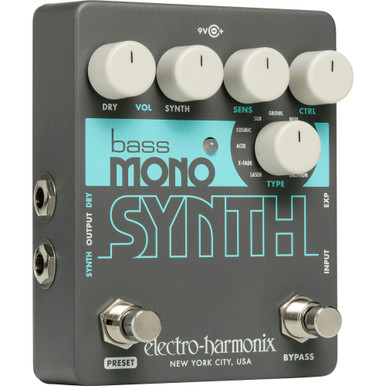
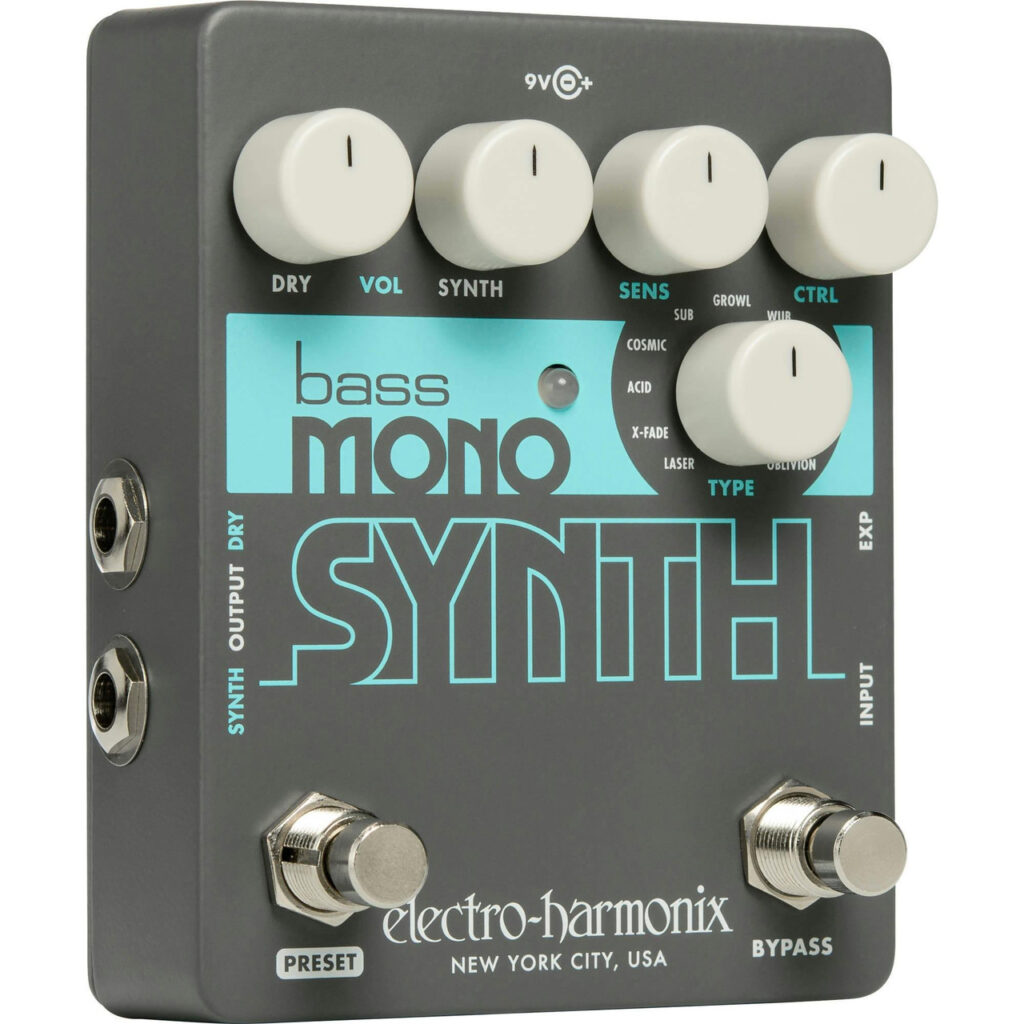
Electro Harmonix Bass Mono Synth Pedal

£119.99

This is a New Electro Harmonix Bass Mono Synth Pedal from Electro Harmonix, listed in Synth Pedals on Just Pedals. Read More below.

View Just
more
and ,

Turn your bass into a synth with the Electro Harmonix Mono Synth – a pedal packed with crazy sounds, from vintage semi modular tones to fat voicings and soaring leads.

The American company have been making legendary pedals since their inception in 1960 and the Mono Synth is yet another awesome stompbox added to the line-up. Boasting the likes of the Memory Man delay, Synth9, Pog and Superego, they're not short on synth emulators. These guys know what a great synth sounds like.

Presets

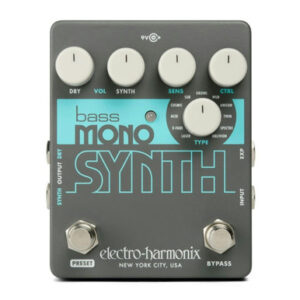
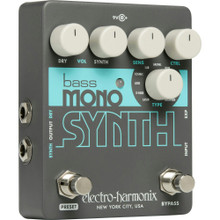
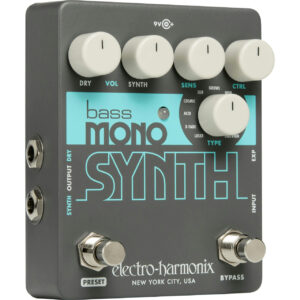
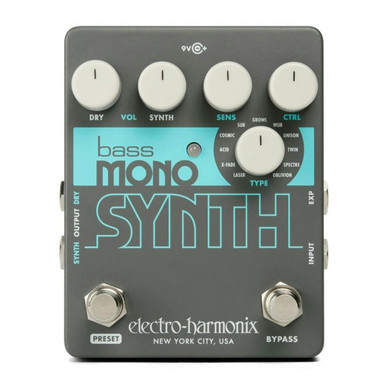
Add colour and flavour to your bass sound with the 11 presets packed into the Mono Synth. Despite just the two tone dials in the form of Control and Sensitivity, there's a whole lot lot explore. Sounds range from a classic '80s vibe Cosmic and Growl to the 8-bit Unison and Laser settings. Get classic square waves from Twin or modern swells from Wub. 

All settings work great with other Electro Harmonix pedals in the range, especially the Canyon and Holy Grail reverb or Big Muff for a bit of crunch. The Mono Synth is monophonic, so play one note at a time for awesome old-school leads.

Versatility

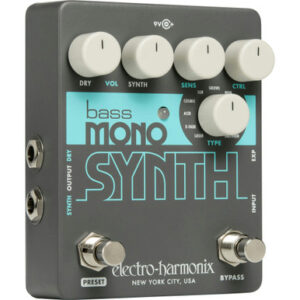
It's really easy to set the 11 separate presets for each sound type. Simply hold down the preset footswitch and it's locked in. You can jump from one tone to another with a simple step on the Mono Synth.  Hook the stompbox up to an expression pedal for real-time effect. Place at the start of your pedal chain for best results rather than in the effects loop.

Specifications

  • 11 Synth sounds
  • Works without MIDI
  • Controls: Sensitivity, Volume, Control
  • Expression Pedal Input
  • 11 Preset Save Slots
  • Synth & Dry outputs
  • 9V PSU

Related videos

Brand

Electro Harmonix

Electro-Harmonix (EHX) is a legendary manufacturer of guitar pedals and audio electronics, renowned for their distinctive sound and pioneering designs. Established in 1968 by Mike Matthews, EHX has played a significant role in shaping the landscape of effects pedals. The company’s pedals are celebrated for their innovative circuits and unique tones, earning them a dedicated following among musicians across genres. From classics like the Big Muff Pi fuzz to modern favorites like the POG octave generator, Electro-Harmonix pedals are known for their versatility and sonic character.

EHX’s product lineup spans a wide range of effects categories, including distortion, modulation, delay, and reverb, among others. Their pedals often feature intuitive controls and rugged construction, making them suitable for both stage and studio use. In addition to their iconic standalone pedals, Electro-Harmonix has also produced notable units such as the Memory Man delay/echo and the Holy Grail reverb, which have become staples in many guitarist’s rigs. With a legacy of innovation and a commitment to quality, Electro-Harmonix continues to be a leading force in the world of guitar effects, inspiring musicians to explore new sonic possibilities.

Category

Synth Pedals

Synth pedals generate or heavily reshape an instrument signal into oscillator-like tones, envelopes, filters, sequenced textures or other electronic voices. Some analyse the pitch and trigger a synthesiser; others process the waveform directly, so tracking, trigger behaviour, playing technique and latency can differ sharply. Controls may cover oscillator mix, filter cutoff, resonance, envelope, octave, glide, dry blend and presets. Monophonic units often respond best to clean single-note playing, while polyphonic designs handle chords differently. Check the input assumptions and control options before expecting a synth pedal to follow every guitar part.

Tags

Bass

Designed or voiced to retain low-frequency information and headroom with bass guitar or other low-register sources. Controls may centre on clean blend, low-end EQ, compression or drive.

Presets

Stores complete groups of parameter values for later recall. The number of locations, switching time, spillover behaviour and whether presets include routing, expression and MIDI assignments determine how completely one sound can change into another.