The Boss BF-3 Flanger guitar effects pedal builds on the legacy of the BF-2 infusing it with new elements and a heightened sound perfect for any setup. Perfect for bassists and guitarists this pedal features individual inputs for each instrument therefore ensuring that each instrument is optimised. With four knobs for intricate control of the pedals sound you can create luscious and intricate flanging sounds. A tap tempo is also a nice addition as it allows you to time your effect to the exact rhythm of your tone.
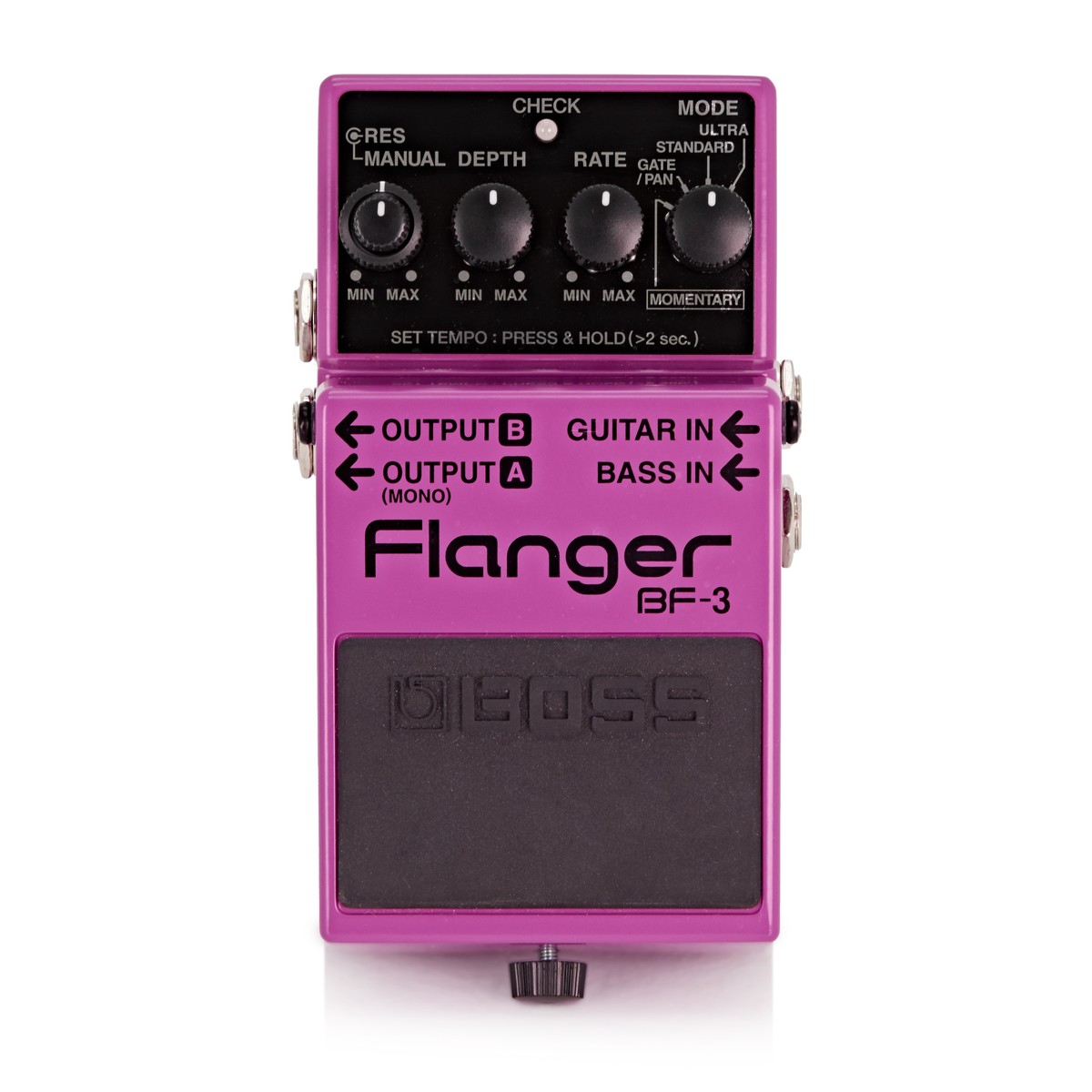
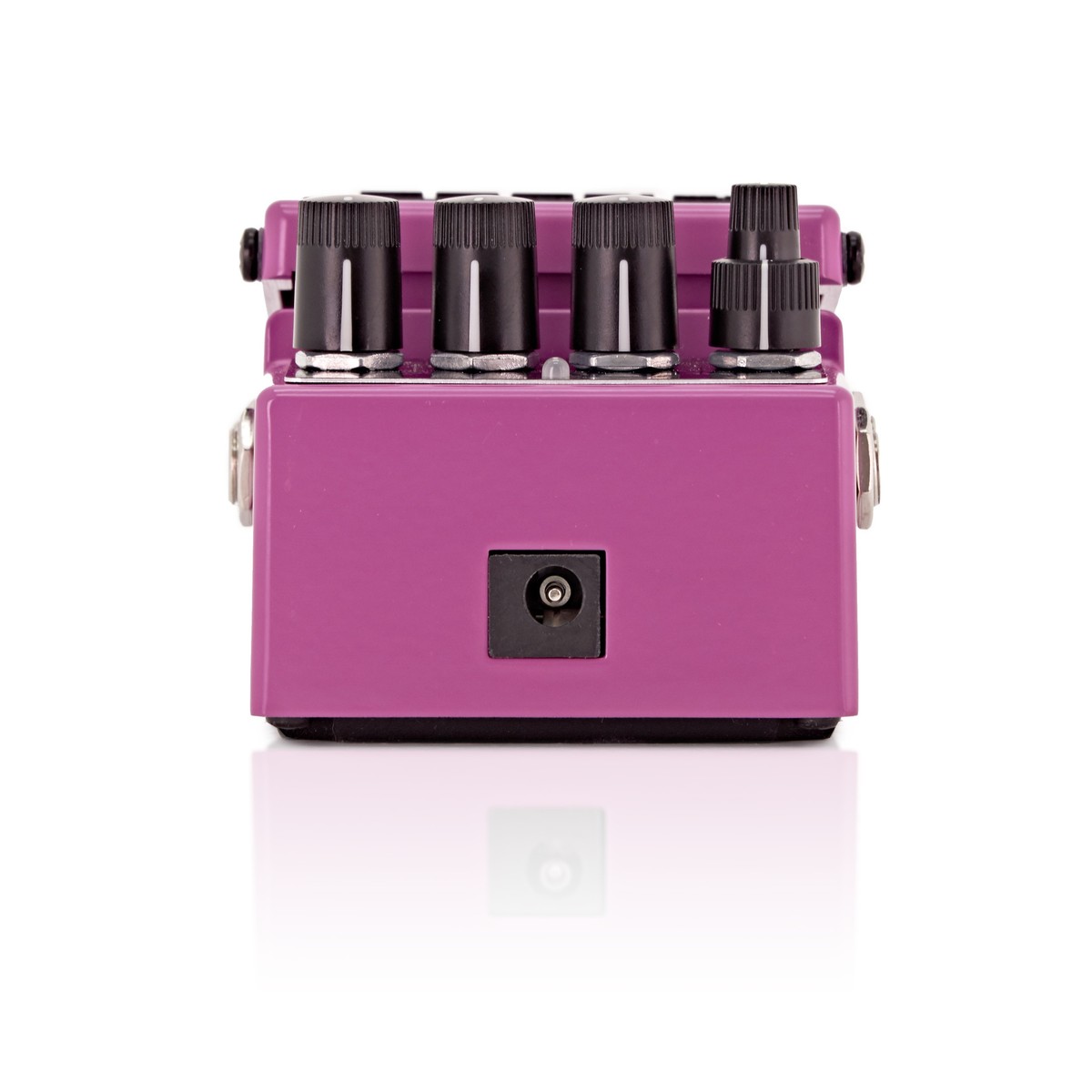
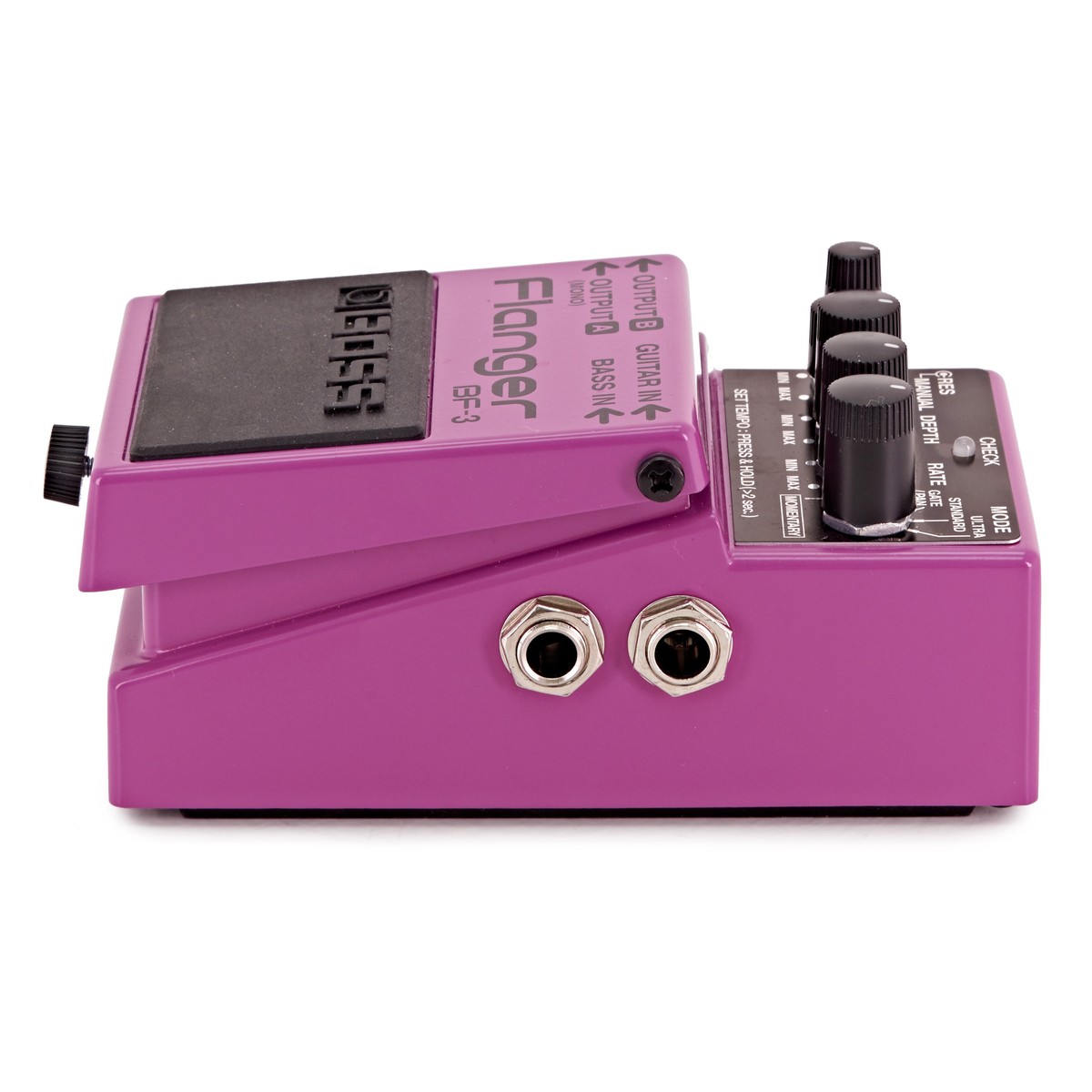
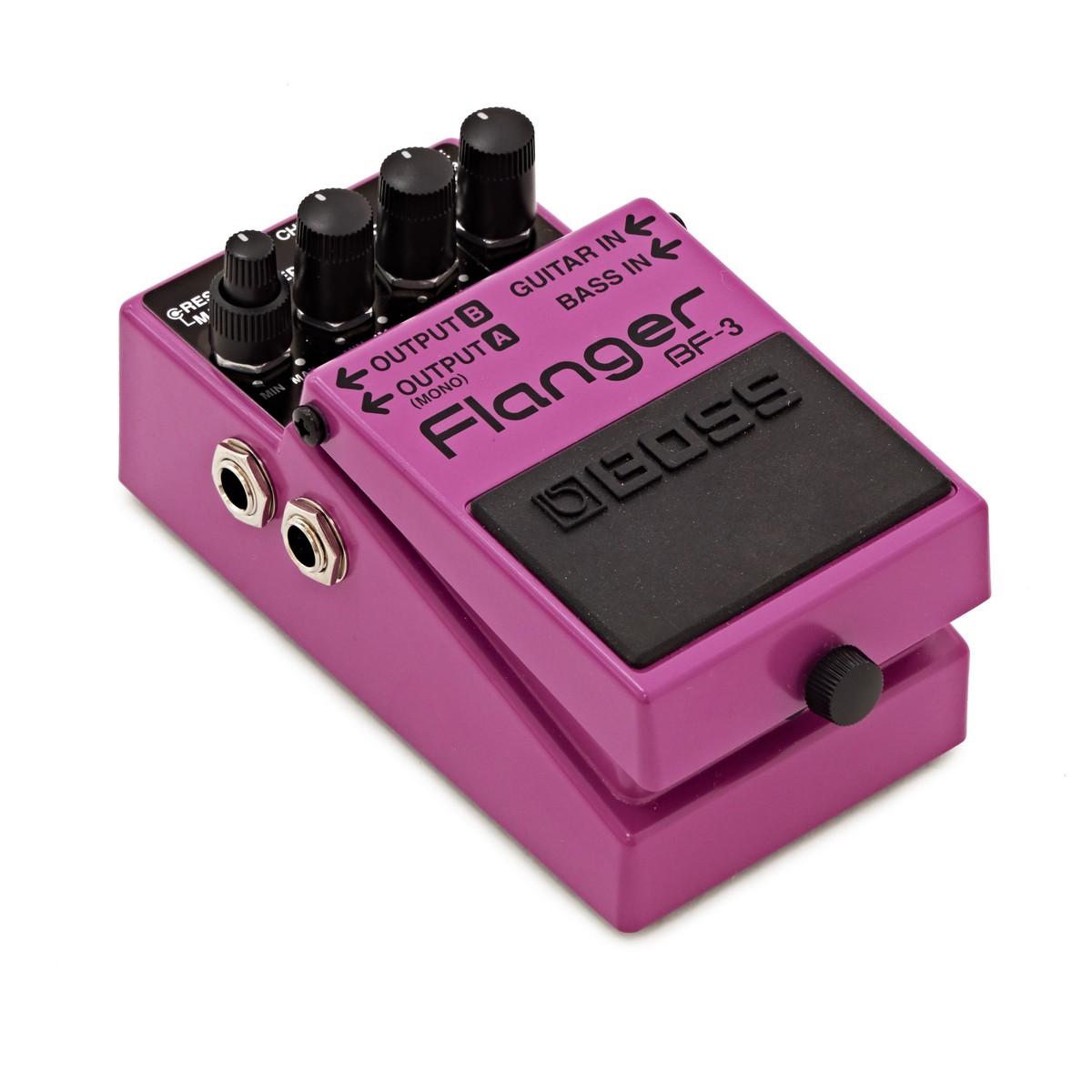
Boss BF-3 Flanger Guitar Effects Pedal
£134.00
This is a New Boss BF-3 Flanger Guitar Effects Pedal from Boss, listed in Flanger Pedals on Just Pedals. Read More below.
View Just Boss
As an affiliate partner, we may earn a small commission when you buy through our links — at no extra cost to you.
Related videos

Brand
Boss
In the current JustPedals catalogue, Boss is represented by Multi-Effects Pedals, Delay Pedals and Distortion Pedals. Current listings include PW-3 Wah, PX-1 Plugout FX and FZ-5 Fuzz. That makes the range relevant to players looking for drive, gain and clipping, plus time-based effects and ambience. Check each model for its exact circuit or processing platform, controls, power requirements and connections, particularly where the catalogue includes both pedals and supporting gear.
Category
Flanger Pedals
Flanger pedals combine the dry signal with a very short, modulated delay and feedback, producing a moving comb-filter effect. Slow rate and shallow depth add width and motion; higher feedback and depth create the familiar jet-like sweep. Manual, regeneration, mix and filter controls change the relationship between the notches and the playing transient. Analogue and digital designs can differ in noise, headroom and stereo behaviour, so check bypass, signal level and mono compatibility when placing a flanger around drives or time-based effects.
Tags
Tap Tempo
Tap tempo lets a player set delay, modulation, tremolo or looper timing by tapping a footswitch. The implementation may be a dedicated switch, an external input, MIDI clock or a combination, and the supported timing divisions vary. Check whether the tempo is stored, whether tap is momentary or latching, how quickly the effect follows changes and which blocks respond. Tap tempo is useful only when the control connection and timing range match the workflow.
Others Just Ordered :
- Mooer Meta FX – Review
- MOOER META FX Review: 3 Effects in 1—but Here’s the Problem

- I Wasn’t Expecting To Be Impressed – But What Is The Mooer Meta FX?

- Mooer // META FX Stereo Multi-Effect Platform (Demo)
- A NEW GENERATION OF PEDALS IS HERE – Mooer Meta FX Reverb Review

- Mooer META FX | All the REVERBS from subtle to WILD!