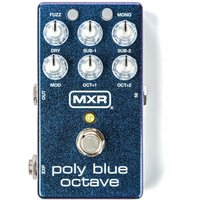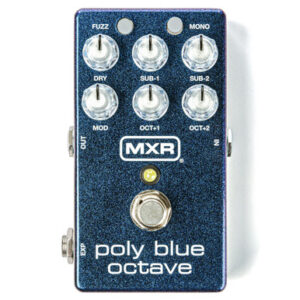

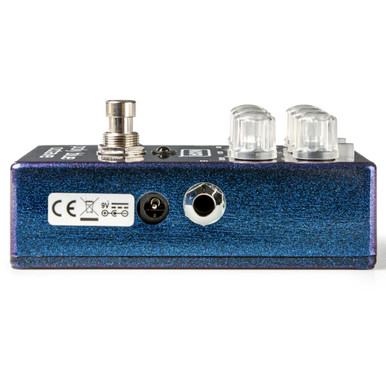
The MXR Poly Blue Octave brings modern and classic pitch-shifting styles together with fuzz and modulation — to create the ultimate octave pedal for tone-crafters and sonic-seekers!
Levelled Up
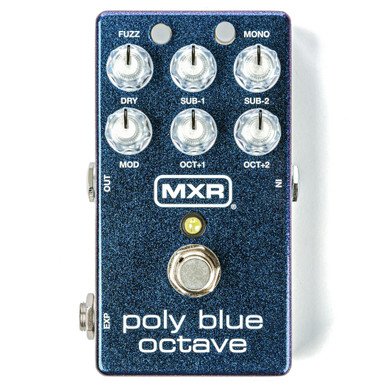
The Poly Blue Octave features four separate octave divisions — one octave down, two octaves down, one octave up, and two octaves up — and you get to control the level of each in the mix. Each is polyphonic by default, which means they sound just as amazing with chords as they do with single note passages. Your dry signal gets its own level control, as well, so you can dial in the perfect blend of pitch-shifted tones.
From Contemporary Clarity to Raw Vintage Grit
The Mono switch takes you back to the gritty, monophonic tones of analogue-style pitch-shifters. In this mode, the sub-octave signals have the warm vibes and raw personality of a pedal such as the MXR Vintage Bass Octave, while the higher octave signals resemble the Octavio Fuzz with its fuzz intensity dialled all the way back.
Call up the Thunder & Lightning
The Poly Blue Octave comes equipped with an unruly fuzz that’s inspired by the classic MXR Blue Box Fuzz. Applied to all five signals, the fuzz volume can be adjusted using the Dry knob after pressing and holding the Fuzz button. When used with the sub-octave signals, the fuzz sounds thick and subterranean. Over the higher pitched signals, the fuzz is searing and synth-like. Run them all at the same time for a choir of thunder and lightning!
Phase Yourself
For infusing your octave tones with an alluring sense of motion, from thick and syrupy to frenzied and frantic, the Poly Blue Octave features a dual-mode modulation effect. In polyphonic mode, the effect provides an uncanny simulation of the famous Leslie effect, and while In monophonic mode, it provides classic swirls and swooshes inspired by the Phase 90. Like the fuzz effect, the modulation applies to all five signals when engaged. The Mod knob adjusts the rate of the effect — when you want it off, just roll the Mod knob back fully counter-clockwise.
Step Up & Take Control
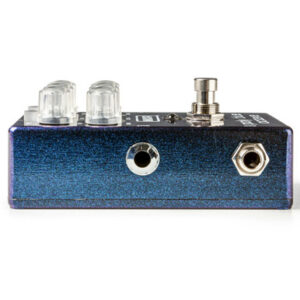
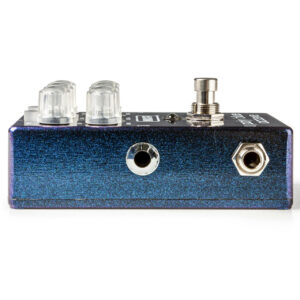
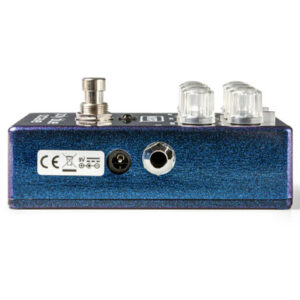
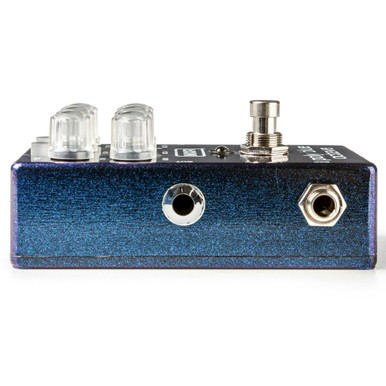
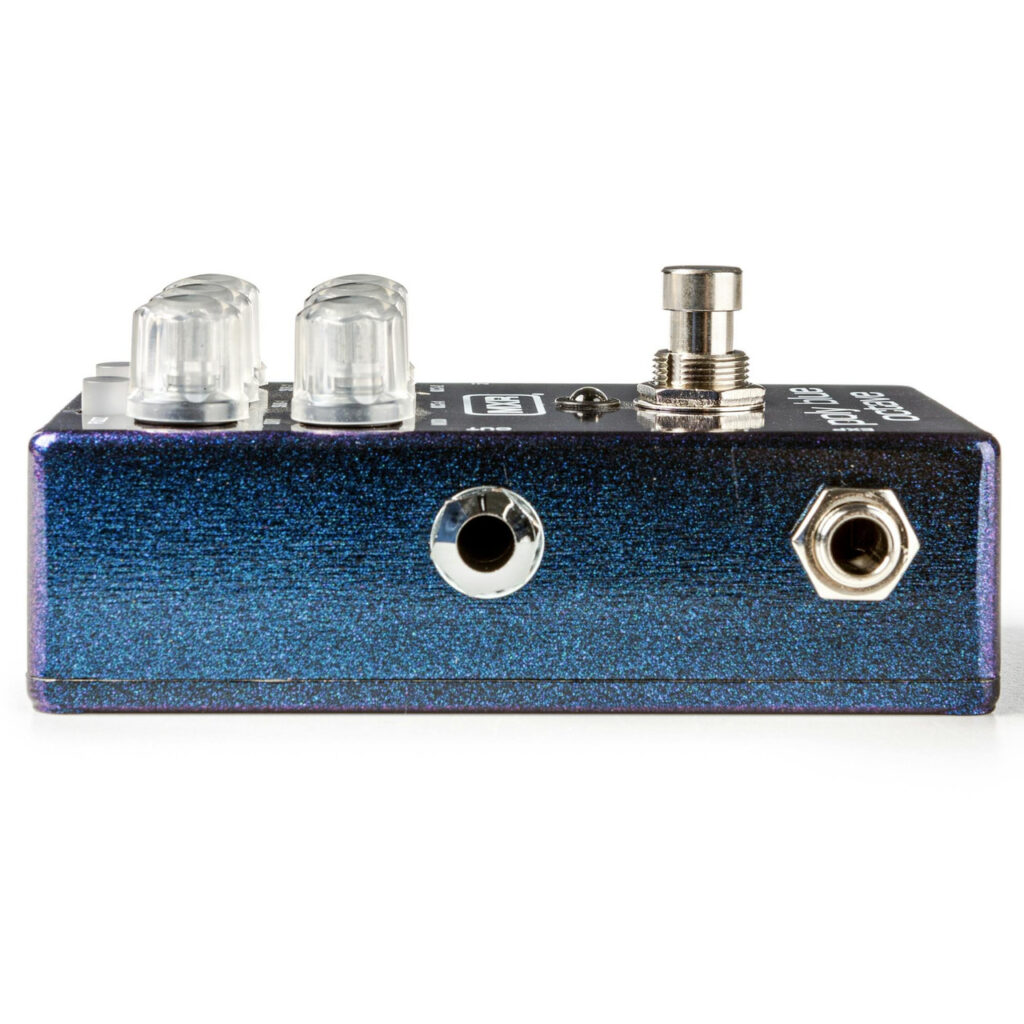
Through the EXP jack, the Poly Blue Octave allows you to control various settings with an expression pedal such as the Volume (X) 8 Pedal or an off-board switch such as the MXR Tap Tempo to sweep between two different knob and switch configurations or toggle the fuzz and mono modes on and off.
A Full Palette of Tones & Textures
The MXR Poly Blue Octave delivers high-performance pitch-shifting, fuzz, and modulation in a ruggedly reliable housing with true bypass switching. Put this into your signal chain, and open up new sonic frontiers.
Specifications
- Input Impedance: 1MΩ
- Output Impedance: 100 Ω
- Maximum Input Level: +5 dBV
- Noise Floor: -97 dBV
- Current Draw: 265 mA
- Power Supply: 9V DC