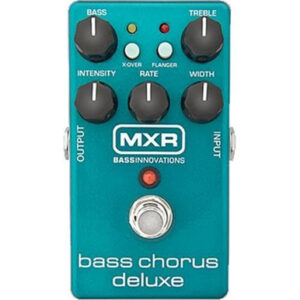
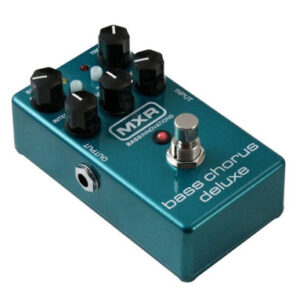
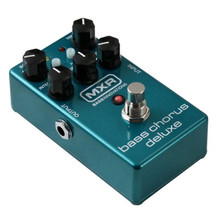
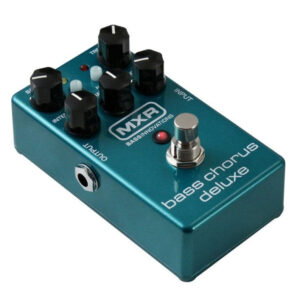
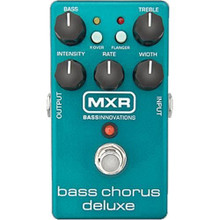
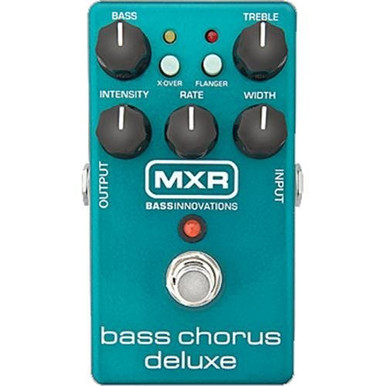
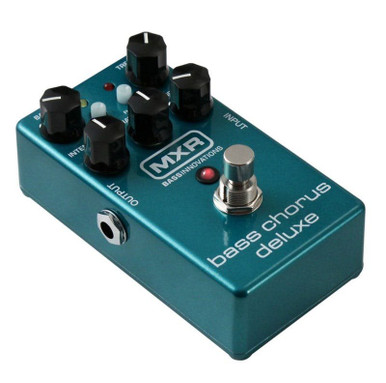
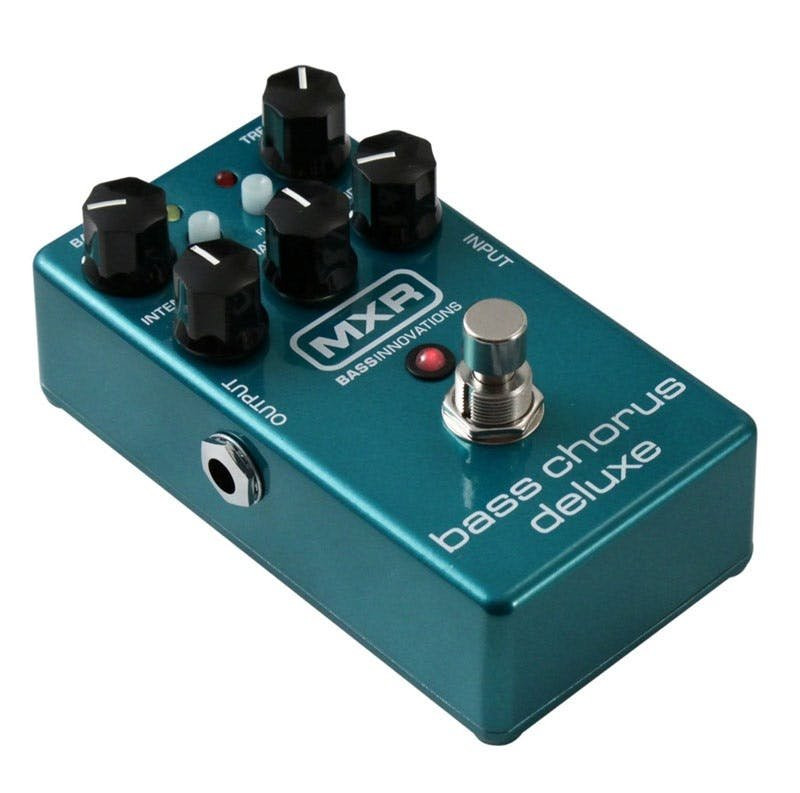
MXR Bass Chorus Deluxe Effects Pedal

£199.99

This is the MXR Bass Chorus Deluxe Effects Pedal from MXR, listed in Chorus Pedals on Just Pedals. Read More below.

View Just
more
and , ,

Using analogue bucket brigade circuitry, the MXR Bass Chorus Deluxe represents the ultimate bass chorus. Featuring on board tone controls, a Flanger mode, intensity, rate and width controls, the MXR Bass Chorus deluxe has a secret weapon – the Crossover feature – which filters modulations below 100Hz so higher register notes can be affected by modulation whilst lower register notes remain in tune. 

Key features

  • Analog bucket-brigade technology
  • Separate Bass and Treble controls
  • Flanger and X-Over for added tonal flexibility

Here’s what MXR say about the Bass Chorus Deluxe

The MXR Bass Chorus Deluxe is powered by pure analog bucket-brigade technology, serving up shimmering, liquid chorus and swooshing, metallic flanger effects while preserving the punch and fundamental of your low end.

The Bass Chorus Deluxe features top-mounted Flanger and X-Over buttons with LED status indicators. In X-Over Mode, modulation in low frequencies is decreased at 100Hz—perfect for playing upper register chords, melodies and fills while keeping the low end in tune. With Bass and Treble controls you can cut or boost lows and highs and shape the tonal character of the effect. For a wide stereo sound, select the TRS (tip-ring-sleeve) Stereo Hardwire Bypass Mode via an internal switch. In this mode, you can use a TRS to TS (tip-sleeve) Y-splitter cable to send the effect signal to two different amplifiers, allowing the modulation to move from left to right.

The Bass Chorus Deluxe joins the ranks of award-winning pedals in the MXR Bass Innovations line, each designed by bass players for bass players.
Related videos

Brand

MXR

MXR is a renowned manufacturer of guitar effects pedals and audio electronics, recognized for their classic designs and high-quality sound. Established in the 1970s, MXR has played a significant role in shaping the landscape of effects pedals, producing iconic units that have become staples in countless musicians’ rigs. The company’s pedals are celebrated for their rugged construction, intuitive controls, and versatile tones, making them popular among guitarists and bassists across genres.

MXR’s product lineup encompasses a wide range of effects categories, including distortion, delay, modulation, and more. Some of their most notable pedals include the Phase 90 phaser, the Dyna Comp compressor, and the Carbon Copy analog delay, all of which have earned legendary status among players for their distinctive sound and reliability. With a legacy of innovation and a commitment to quality, MXR continues to be a respected name in the world of guitar effects, inspiring musicians to explore new sonic possibilities and express themselves creatively.

Category

Chorus Pedals

Chorus mixes the dry signal with one or more short, continuously modulated delays. The small pitch and timing movement between the paths creates width, shimmer and the impression of several instruments playing together. Rate controls the modulation speed, depth controls its excursion, and delay or mix settings determine whether the result is subtle thickening, a liquid wobble or a broad stereo image.

Tags

Analogue

The signal is shaped by continuously varying electronic circuitry rather than being converted into a digital effect algorithm. Component choice, operating voltage and circuit tolerances influence headroom, noise, clipping texture and the small variations in response between designs.

Bass

Voiced or equipped to retain low-frequency fundamentals and the higher headroom of a bass signal. Clean blends, crossovers and bass-specific filter ranges can preserve weight and articulation while the effected portion adds harmonics, movement or ambience.

Stereo

Processes, creates or passes two audio channels. True stereo preserves separate left and right inputs, while mono-to-stereo effects generate spatial differences internally; routing, phase behaviour and whether trails remain stereo determine the resulting image. Some outputs sum to mono when only one socket is connected, which can change level or modulation depth.