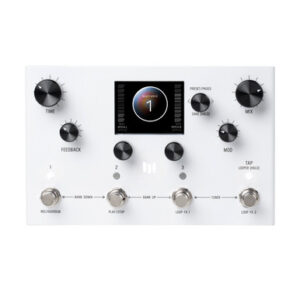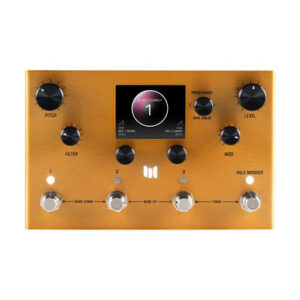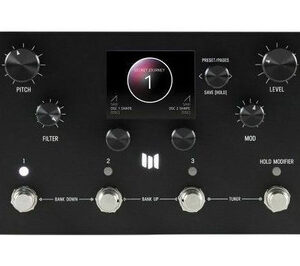

Combining 5 synth modes, the Enzo X combines the systems of the award-winning LVX & MercuryX pedals to create the ultimate synth pedal. By using the intuitive interface, you can get creative and dial in the most inspirational sounds in an instant. Featuring stereo In/Outs, expression pedal connectivity & MIDI control, the Enzo X is simple to integrate into your existing setup – the only limitation is your imagination.
Along with being a 6-voice poly synth, the Meris Enzo X contains 3 of the lushest reverbs, a full stereo 2.5-second delay, flanger, phaser & 5 drives (including bitcrush).
Key Features
- 5 Synthesizer Modes – Mono, Polyphonic, and Dry Processing modes
- Synthesizer Playable – Via instrument input or MIDI keyboard
- 6 Fully Polyphonic Voices – Available simultaneously so you can blend layers of stunning tone
- Waveforms – SAW, TRIANGLE, and SQUARE waveforms selectable per oscillator with cross modulation
- Stunning High-Definition Screen – Adapted from LVX and MercuryX
- Expressive Hold Modifier Switch – For on-the-fly control
- 99 Preset Locations – In 33 Banks
- Save Your Favourite 3 Presets – Favorite Preset Bank: Instant access to 3 favourite presets
- Built-In Tuner – With configurable Reference and Output modes
- New Processing Elements – Including Meris custom Flanger and Phaser
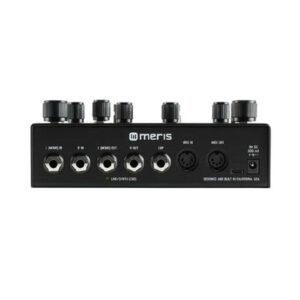
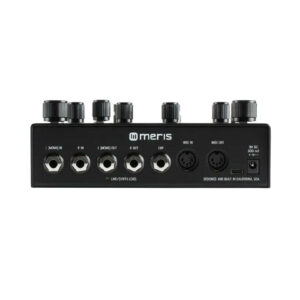
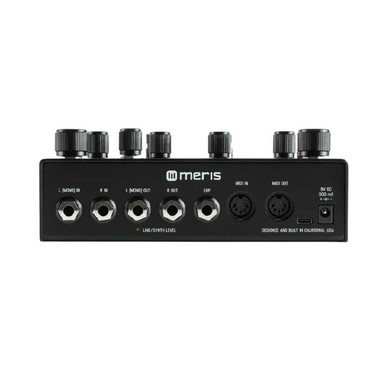
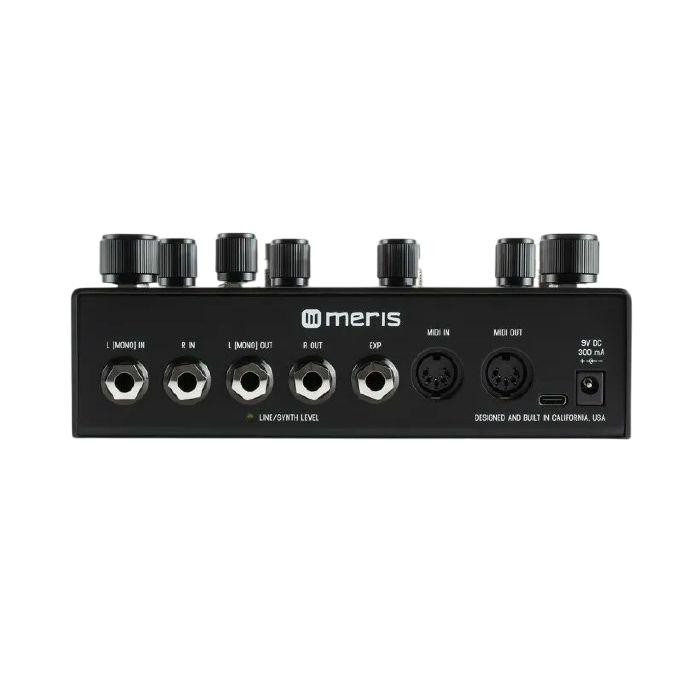
- Stereo Input and Outputs – Separate jacks for each
- Switchable Input/Output Headroom – For instrument or synthesizer/line levels
- Control Via MIDI – Over standard MIDI DIN jacks, MIDI Preset Send and Receive, Beat Clock Synchronization & Preset Send & Receive
- Assignable Expression Pedal Control – For multiple parameters simultaneously, just connect it through the dedicated expression pedal jack
- Premium Analog Signal Path – 24-bit AD/DA with 32-bit floating-point DSP, and JFET Input Section
“Enzo X is an evolution of sound. From the oscillators to the filters to the envelopes and more, I evolved and enhanced every aspect of the original Enzo to unlock the synth sounds living in your imagination.” – Angelo Mazzocco, DSP Engineer/VP
Black Limited Edition
Now in a limited edition black casing, you can enjoy the Meris Enzo X with a glossy & lustrous edition, perfect for adding an extra layer of sophistication to your pedalboard.
Controls
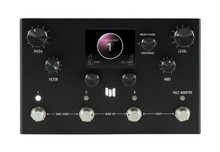
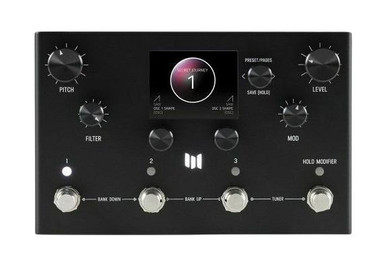
Use the Presets/Pages dial to navigate through the collection of boundary-pushing sounds. Use the Pitch control to select the base pitch in semitones relative to the input signal. The filter control sets the filter’s cutoff frequency, which plays a central role in shaping the brightness or darkness of the sound.
The Mod control controls the depth of pitch modulation when used in combination with MOD Speed. The level control controls the overall output level of the Oscillator section, establishing the foundation of your synth’s sound. Use the 4 footswitches to cycle through the sound bank, navigate your presets, use the built-in tuner and hold the expression switch down for even more tonal manipulation.
Specifications
- Power: Standard 9V Power (9V DC, centre -, 2.1 mm, ~280 mA current draw – power supply not included)
- USB-C Slot: For connecting the meris to your PC for future firmware updates
- Conversion: 24-bit A/D and D/A
- DSP: 32-bit floating point
- Sample Rate: 48000 Hz
- Input Impedance: 1 Meg Ohm
- SNR: 115 dB Typical
- Frequency Response: 20Hz-20kHz
- Max Input Level: +9 dBu (instrument level setting)
+12.5 dBu (line/synth level setting) - Bypass: Selectable True Bypass (Relay) or Analog Buffered Bypass
- Dimensions: 7.25” wide, 4.5” long, 2” tall. (Same depth and height as all other pedals.)
- Weight: 24 Ounces