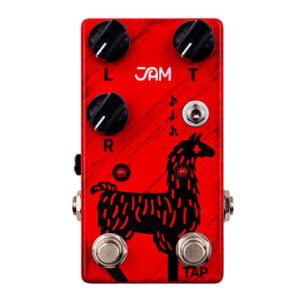
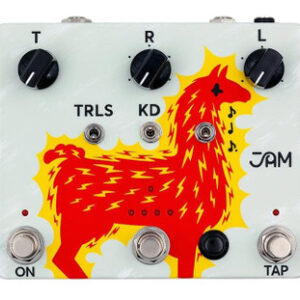
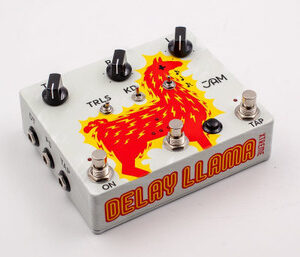
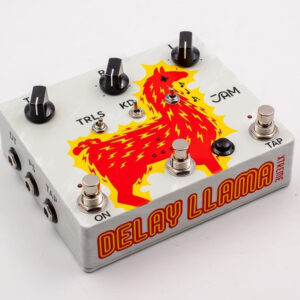
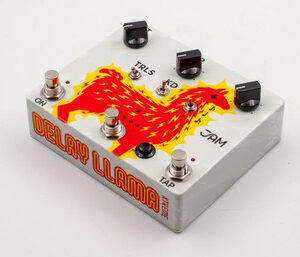
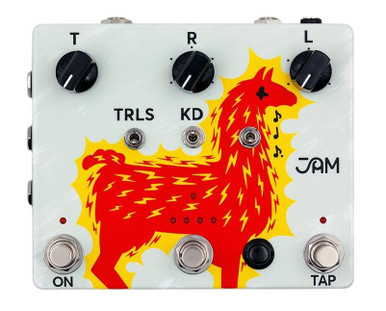
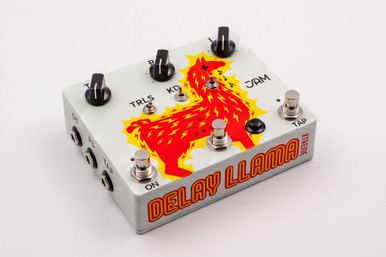
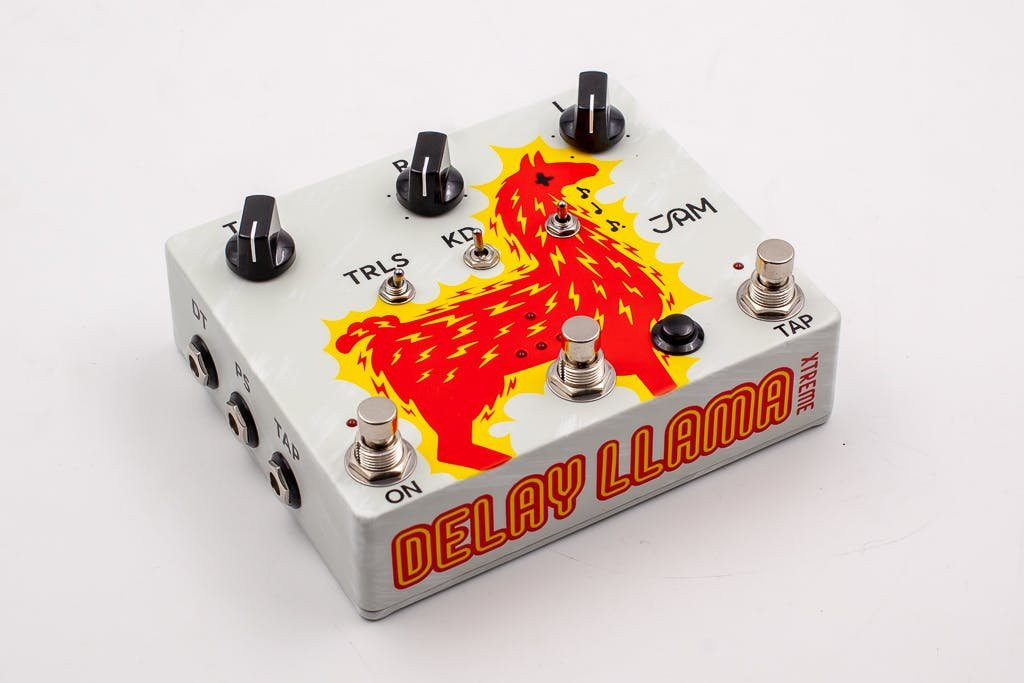
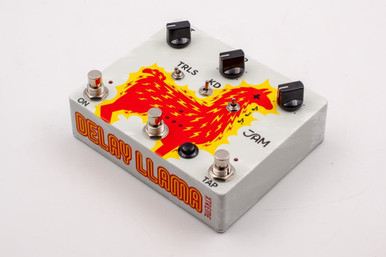
JAM Pedals Delay Llama Xtreme Pedal

£349.00

This is a New JAM Pedals Delay Llama Xtreme Pedal from JAM Pedals, listed in Delay Pedals on Just Pedals. Read More below.

View Just
more
and , , ,

Here’s What Jam Pedals Say About the Delay Llama Xtreme

The Delay Llama XTREME introduces new functionality and exciting features to our Delay Llama series, challenging preconceived notions of what an analog delay pedal can do. Featuring 3 x 3205 BBD chips and a thoughtful layout, the Delay Llama XTREME appeals to traditional delay users and sound explorers alike.

It comes equipped with 4 presets, 800ms of max. delay time, tap tempo w/ subdivisions, hold function, kill-dry, trails (buffered) OR true bypass modes, delay time expression pedal / CV input, remote tap tempo input and remote preset selection input. It also features 4 trail effects you can get lost in for hours on end!

These 4 XTREME modes are the result of us experimenting with the Delay Time and musically taming it to create inspiring trails effects.

  • Vibrato: sine-wave LFO modulation w/ controls for Depth and Speed
  • Tape-age: this mode emulates the slight and random pitch variations (warble) a physical “worn-down” tape would produce in vintage tape-echo machines, w/ control for frequency of deviation occurrences
  • Random: this mode randomly changes the ms value of the repeats over fixed time increments resulting in abrupt pitch and rhythmic changes
  • Pitch-shift: this mode will give you 5 distinct pitch-shifted intervals and 5 playback patterns the last of which is a 5-mode sequencer

We sent the Delay Llama to the future and it finally made its way back with a taste for the XTREME! So strap in, get comfortable and ride this Llama into uncharted sonic fields.
Related videos

Brand

Jam Pedals

In the current JustPedals catalogue, Jam Pedals is represented by Overdrive Pedals, Fuzz Pedals and Tremolo & Vibrato Pedals. Current listings include Eureka Fuzz, Ripple Phaser and Chill Tremolo. That makes the range relevant to players looking for drive, gain and clipping, plus time-based effects and ambience. Check each model for its exact circuit or processing platform, controls, power requirements and connections, particularly where the catalogue includes both pedals and supporting gear.

Category

Delay Pedals

Delay pedals repeat the input after a set time, from a short slapback to long ambient trails. Feedback controls how many repeats continue; filtering, modulation, saturation and mix shape their tone and prominence. Tap tempo can keep rhythmic delays aligned with a song, while presets and MIDI help when several timings are needed. Analogue, tape-style and digital designs respond differently to transients and overload. Check maximum delay time, spillover, stereo routing, trails and headroom before choosing a model for the rest of the board.

Tags

Analogue

Analogue products use continuous audio circuitry for some or all of the signal path, so clipping, filtering or modulation arises from physical components rather than sampled algorithms. The label does not guarantee a particular tone; component choice, headroom, bias, noise and the surrounding gain stages still matter. Check whether the switching, presets, control section or cabinet stage is digital when the exact signal path is important.

Presets

Preset-capable products can store and recall effect settings, signal paths or control assignments. The useful differences are the number of locations, whether footswitches or MIDI can recall them, what parameters are saved, how quickly they change and whether trails continue between settings. Check editing, backup, firmware, expression and USB requirements, and confirm that the preset system covers the parameters you need rather than assuming every control is recalled.

Tap Tempo

Tap tempo lets a player set delay, modulation, tremolo or looper timing by tapping a footswitch. The implementation may be a dedicated switch, an external input, MIDI clock or a combination, and the supported timing divisions vary. Check whether the tempo is stored, whether tap is momentary or latching, how quickly the effect follows changes and which blocks respond. Tap tempo is useful only when the control connection and timing range match the workflow.

True Bypass

True bypass removes the effect circuit from the audio path when bypassed, usually by mechanical, relay or switching circuitry. This can preserve the direct signal but does not automatically solve long-cable loading, and it may create a pop or leave no buffer for the rest of the board. Check the actual switching method, trails or spillover, input and output loading and the number of other true-bypass pedals in the chain.