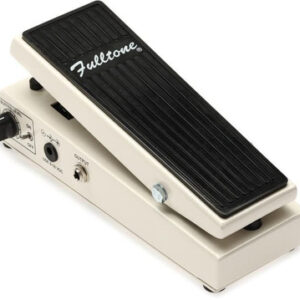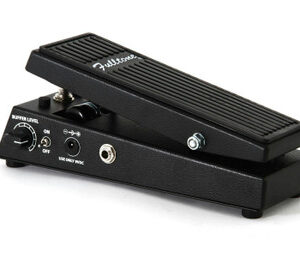
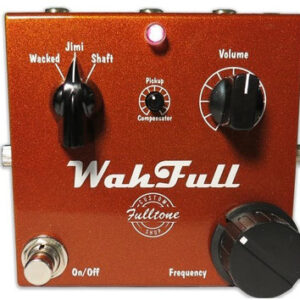
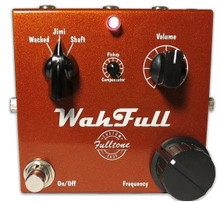

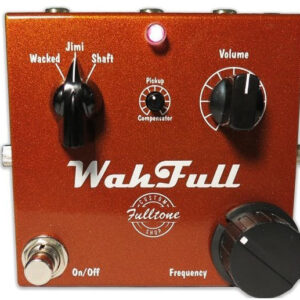
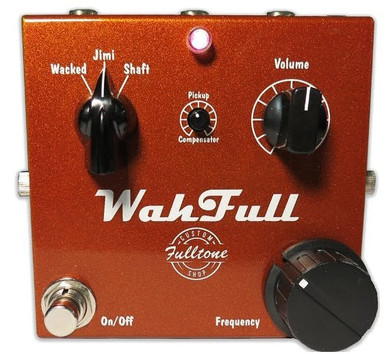
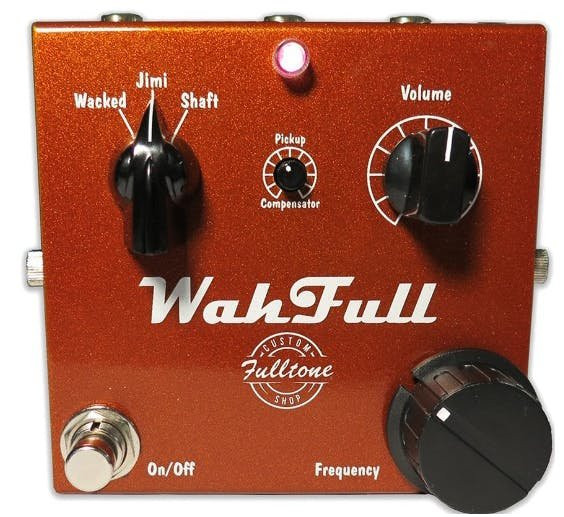
Wah sounds great but when you want a controlled, predictable and easy to use wah sound with great options like “Jimi, Wacked and Shaft” then this is for you. This wah stomp box lets you turn on your sound and play away without worrying about finding that sweet spot on a traditional wah foot pedal.
Here’s what Fulltone have to say about this pedal
15 years ago Robin Trower called me and said he was doing some gigs with Jack Bruce and asked “Would it be possible to have a wah wah in a regular box so that one could get that “fixed wah” sound by clicking on the pedal?” He’s got the first one, I think I have the other one.
Recently Joe Satriani asked me for one, so I revisited the circuit adding a Volume Control, 3 selectable Range Modes (Wacked, Jimi, and Shaft) , a Pickup Compensator mini knob (humbucker guys rejoice!), and JFET input and output buffers. These buffers completely isolate the circuit from outside influence and are only in-play when the pedal is ON, giving it a much broader range of wah effect, interfacing with all types of PU’s better, and working with any amp whether it be hi-gain or clean. Turns a Fender into a Vox, and allows infinite sustain with little or no Distortion.