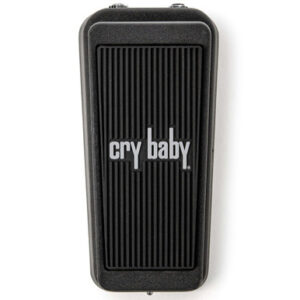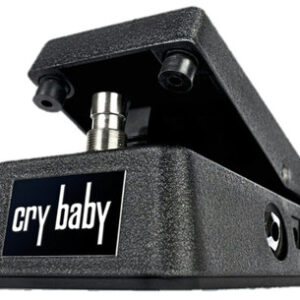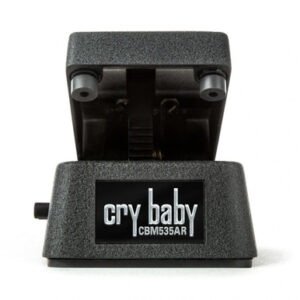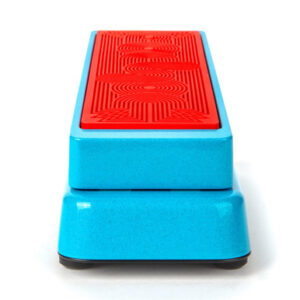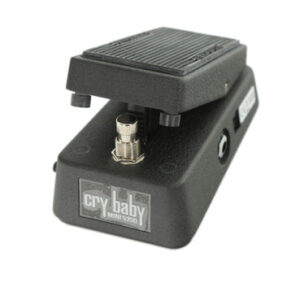

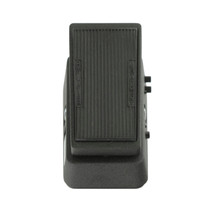
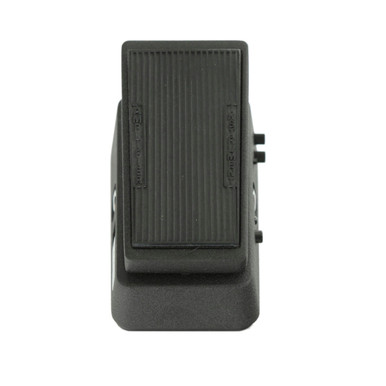
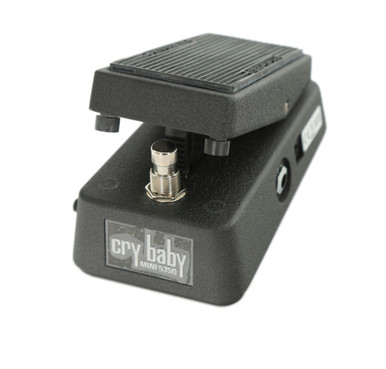
The Dunlop Mini Cry Baby Q Wah is a super versatile wah pedal in this perfect, tiny format. The Q Control allows you to shape the wahs response and emphasis on high and lower harmonics.
Q Control
With the Q control, you can shape the wah’s response, from a narrow bandpass that emphasizes higher end harmonics to a wide bandpass that emphasizes lower end harmonics. If you want a bump up to the front of the mix, just crank the Volume control and then kick the Boost switch to engage the level change.
Four Sweep Ranges
The Mini Cry Baby Q Wah features the four most popular sweep ranges with the range selector the musician can chose the tonal character of sound using the range selector providing the perfect balance of wah control and pedal board-efficiency. It also features a handy LED next to the Boost switch that lets you know when its active which makes it easier for the musician and adds to the design of the pedal.
Features:
- Four Sweep Ranges
- True Bypass Switching
- Q Control
- Iconic Fasel Inductor
- Compact Size Perfect for Pedal Boards
Specifications
- Inductor: Fusel
- Bypass: True Hardwire
- Footplate: Gripping
- Housing: Robust Metal
- Boost Control Range: 0.1 dB to 17 dB