BOSS MS-3 Multi Effects Switcher

£399.00

On the Menu for January 2026 are the Boss Guitar Pedals. These are fresh in, hand picked by the chef, & cooked to perfection. A tasty number we can deliver straight to your door, serving orders quickly and securely. For more info on Boss New Guitar Pedals, please read on for full details, demos, videos, reviews & to order online


Spread the love

Description

Spread the love

The Boss Guitar Pedals are fresh in for Jan. The Just Pedals Chef is dishing up hot gear all over the UK, served straight to your door, quickly and securely, For more info on tasty Boss New Guitar Pedals, please read on for full details, ingredients, reviews and where to order in the UK.

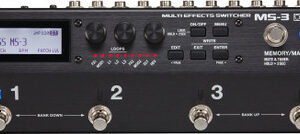
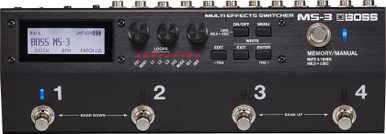
The Boss MS-3 is a multi-effects switcher with two key functions to take your pedalboard to the next level. Not only does it act as a switcher, turning your pedals on and off with the click of a single button, but it also possesses the power of 112 on-board effects in delays, reverbs, drives, pitch shifting and modulation to use in conjunction with the pedals you put in the chain.

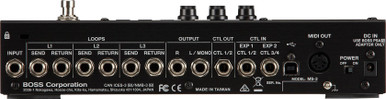
The MS-3 contains three pedal loops to connect and activate your favourite effects as you please. Mix and match your own stompboxes and the MS-3’s effects. This is also the perfect solution for a small pedalboard or when travelling light, as you can use the MS-3 standalone. With a built-in tuner, EQ and noise suppressor, you won’t ever have to waste precious pedal real estate on your board.

MS-3 Editor Via USB

It couldn’t be easier to create your patches. All you need to do is connect the MS-3 to your computer via USB and set up the patches via the librarian software.

Key Features

  • Powerful integrated solution for creating a compact professional pedalboard
  • Unlimited sound creation with six simultaneous pedal effects and audio loops for connecting three external pedals
  • 112 built-in effects types for guitar and bass, including delays, reverbs, mod/pitch effects, overdrives, distortions, and more
  • Intuitive user interface for easy patch creation
  • Backlit LCD, editing knobs, and panel LEDs for on/off status of loops and effects
  • Control assign, wave pedal, and other functions for deep real-time expression
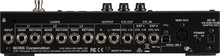
  • Equipped with numerous jacks for amp channel switching, effects control, and more
  • MIDI output for working with MIDI-enabled effects
  • Built-in tuner, noise suppressor, and global EQ
  • USB for patch creation and backup via free MS-3 Editor/Librarian software

Here’s what Boss say about the MS-3:

The MS-3’s highly flexible design gives you the freedom to create any kind of effects system, from simple to complex. It can serve as a general-purpose effects unit to augment core tone from three stompboxes, or function as the central hub of an advanced hybrid rig with MIDI gear and channel-switching amps.

It even works as a standalone effects processor, making it perfect for fly dates and other times you need to travel light. And if you’re just starting out, the MS-3 provides a solid effects foundation that can be expanded as your experience grows.

Three Loops for Your Choice of Effects

Via the MS-3’s audio loops, you can connect three different effects devices to the system. You’ll probably want to hook up your favorite drive and booster pedals to the loops, but you can use any effects you like. Once your pedals are connected, you’re able to switch the loops on/off individually, and position the MS-3’s onboard effects around them any way you want.

World-Class BOSS Effects Engine

To complement the three external loops, the MS-3 is equipped 112 effects types to choose from. They’re organized in six categories, which are available simultaneously: FX1, FX2, Mod1, Mod2, Delay, and Reverb. FX1 and FX2 contain many different types, from overdrives and distortions to compressors, pitch shifters, Slow Gear, and many others.

Mod1 and Mod2 offer the famous BOSS chorus and vibrato effects, plus tremolo, flanger, phaser, and more. All the effects are fantastic for guitar, and there’s also a large selection specially optimized for bass.
Ingredient Allergy Warning : Product may contain nuts.

Additional information

Weight2 kg

Brand

Boss

Boss is a prominent manufacturer of guitar effects pedals, multi-effects units, and related musical equipment, known for their durability, reliability, and wide range of effects. Founded in 1973 as a division of the Roland Corporation, Boss quickly became synonymous with high-quality effects pedals that are popular among guitarists and musicians worldwide.

Boss pedals are renowned for their rugged construction, intuitive controls, and signature sound quality. The company offers a comprehensive lineup of effects pedals covering various categories, including distortion, overdrive, delay, modulation, and more. Iconic pedals like the DS-1 Distortion, the DS-2 Turbo Distortion, the DD-3 Digital Delay, and the MT-2 Metal Zone have become staples on countless pedalboards due to their versatility and reliability.

Category

Boss

Boss is a prominent manufacturer of guitar effects pedals, multi-effects units, and related musical equipment, known for their durability, reliability, and wide range of effects. Founded in 1973 as a division of the Roland Corporation, Boss quickly became synonymous with high-quality effects pedals that are popular among guitarists and musicians worldwide.

Boss pedals are renowned for their rugged construction, intuitive controls, and signature sound quality. The company offers a comprehensive lineup of effects pedals covering various categories, including distortion, overdrive, delay, modulation, and more. Iconic pedals like the DS-1 Distortion, the DS-2 Turbo Distortion, the DD-3 Digital Delay, and the MT-2 Metal Zone have become staples on countless pedalboards due to their versatility and reliability.

Tags

Delay

A delay pedal records your signal and plays it back after a set time, creating echoes that can range from tight, slapback repeats to long, atmospheric trails. It’s one of the most versatile effects, used to thicken tones, add rhythmic depth, or build spacious, ambient layers. Analogue delays offer warm, decaying repeats that blend naturally with your tone, while digital units provide pristine echoes with precise control over time, feedback, and mix levels.

From classic rockabilly and tape-style echoes to modern looping and shimmer effects, delay pedals have become essential tools for shaping sound. They can make solos soar, rhythms pulse, or transform simple chord progressions into cinematic textures. Whether used subtly to add dimension or boldly to create soundscapes, a good delay pedal can completely redefine the feel and atmosphere of your music.

EQ

While Ed Sheeran primarily relies on the natural sound of his acoustic guitar and vocals, he occasionally uses EQ (Equalization) to shape and enhance his tone during live performances or in the studio. EQ pedals or onboard preamps can allow him to adjust the frequency response of his guitar signal to suit the acoustics of different venues or to achieve specific tonal characteristics. Here’s how EQ might be utilized in Ed Sheeran’s setup:

1. **Tonal Shaping**: EQ can be used to adjust the balance of frequencies in the guitar signal, allowing Ed Sheeran to shape his tone to his liking. For example, he might boost the midrange frequencies to bring out the warmth and presence of his acoustic guitar, or cut certain frequencies to reduce any harshness or mud in the sound.

2. **Feedback Control**: In a live setting, EQ can help control feedback by notching out problematic frequencies that might cause the guitar signal to feed back through the amplification system. This can be particularly useful when performing in venues with challenging acoustics or high volume levels.

3. **Room Correction**: In situations where the venue’s acoustics are less than ideal, EQ can be used to compensate for any deficiencies in the sound. By adjusting the EQ settings, Ed Sheeran can tailor the guitar tone to sound more balanced and natural, regardless of the room’s acoustic properties.

4. **Matching Gear**: EQ can also be used to match the tone of Ed Sheeran’s guitar to the sound of other instruments or equipment in his setup. For example, he might adjust the EQ to complement the tonal characteristics of his vocal microphone or to blend seamlessly with backing tracks or other instruments.

Overall, while EQ may not be a central component of Ed Sheeran’s guitar effects setup, it can still play a valuable role in shaping his tone and ensuring that he achieves the desired sound in different performance environments. Whether used subtly for tonal shaping or more aggressively for feedback control, EQ allows Ed Sheeran to tailor his guitar tone to suit his musical vision and performance needs.

Expression

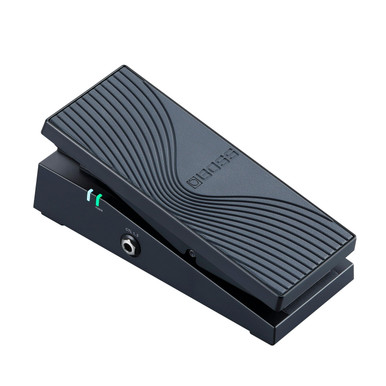
Expression pedals allow real-time control over specific parameters on compatible guitar pedals, such as volume, delay time, modulation depth, or filter sweep. Used with an expression input, they let players shape effects dynamically with their foot, adding movement and performance control that cannot be achieved with fixed knob settings.

Flanger

A flanger is a type of guitar effects pedal used to create a swirling, whooshing sound by modulating the phase of an audio signal. It works by combining the original signal with a slightly delayed and modulated version of itself. As the two signals interact, they create peaks and troughs in the frequency spectrum, resulting in the characteristic “jet plane” or “swooshing” sound associated with flanging.

Key features of a flanger pedal include:

1. **Rate**: Controls the speed at which the delayed signal is modulated. Higher rates produce faster modulation, while lower rates create slower, more subtle effects.

2. **Depth**: Adjusts the intensity of the modulation effect. Higher depth settings result in more pronounced sweeps, while lower settings produce a gentler effect.

3. **Manual (or Range)**: Sets the center frequency of the modulation. This control allows you to focus the effect on specific frequency ranges, altering the tonal character of the flanging.

4. **Feedback (or Regeneration)**: Determines the amount of modulated signal that is fed back into the effect. Increasing feedback can create more pronounced peaks and troughs, resulting in a more intense effect.

Flanger pedals are commonly used in various music genres, including rock, metal, and psychedelic music, to add movement, depth, and texture to guitar tones. They can be used subtly to add a touch of modulation and dimension to a guitar sound, or more prominently to create dramatic swirling effects. Overall, flanger pedals offer guitarists a versatile tool for shaping and enhancing their tone, adding a dynamic and expressive element to their playing.

Guitar Pedals

Your pedal is like a signature dish for your sound — a flavour-packed creation that transforms the bland ingredients of your guitar into something unforgettable. Each one adds its own seasoning, texture, and heat, turning a simple meal into a feast of tone.

These tasty little boxes sit in a row, like plates on a buffet, letting you mix and match flavours as you play. With one tap of your foot, you can swap sweet for spicy, subtle for smoky, and serve up something completely new. From the comfort food of warm overdrive to the fiery kick of fuzz, from smooth jazz sauce to heavy-metal spice, pedals give players a full menu of options to express their taste.  And just like with food, once you’ve tried one dish, you’ll want to sample them all.

Collecting, trading, and discovering new flavours soon becomes part of the joy of being a tone-loving gourmet geek with a guitar.

MIDI

MIDI pedals use the Musical Instrument Digital Interface standard to communicate with other guitar pedals, effects units, and hardware. They allow control over presets, parameters, and switching across multiple devices from a single controller. MIDI integration makes it possible to build complex, synchronised pedal setups while keeping control simple and consistent.

New

This is brand new, fresh in, and a UK warranty is included. New Gear always comes from trusted UK music retailers.

Phaser

A phaser is a type of guitar effects pedal that creates a swirling, sweeping sound by modulating the phase of the audio signal. It works by splitting the incoming signal into two paths, shifting the phase of one path, and then recombining them. This creates peaks and troughs in the frequency spectrum, resulting in a distinctive, “phasing” effect characterized by moving notches in the frequency response.

Here’s how a phaser pedal typically works and some common features:

1. **Rate**: The rate control adjusts the speed at which the phase-shifting effect oscillates. Increasing the rate produces faster modulation, creating a more pronounced swirling effect, while decreasing the rate slows down the modulation for a smoother, more subtle effect.

2. **Depth**: The depth control adjusts the intensity or depth of the phase-shifting effect. Higher depth settings result in more pronounced peaks and troughs in the frequency response, while lower settings produce a more subtle modulation.

3. **Feedback (or Regeneration)**: Some phaser pedals feature a feedback control that determines the amount of modulated signal fed back into the effect. Increasing the feedback creates more pronounced peaks and troughs in the frequency spectrum, resulting in a more intense and resonant phasing effect.

4. **Stages**: Phasers typically have multiple stages (usually four, six, or eight), each of which contributes to the overall phase-shifting effect. More stages generally result in a more complex and textured phasing sound.

5. **Sweep (or Manual)**: The sweep control adjusts the center frequency of the phase-shifting effect. This allows you to focus the phasing effect on specific frequency ranges, altering the tonal character of the modulation.

6. **Resonance (or Feedback)**: Some phaser pedals feature a resonance control that emphasizes the peaks and troughs in the frequency response, creating a more pronounced and resonant effect. This control can add richness and depth to the phasing sound.

Phaser pedals are commonly used in various music genres, including rock, funk, and psychedelic music, to add movement, depth, and texture to guitar tones. They can be used to create swirling, swirling effects on rhythm parts, add dynamics to lead lines, or create atmospheric textures for ambient music. Overall, phaser pedals offer guitarists a versatile tool for shaping their tone and adding expressive modulation effects to their playing.

Reverb

A reverb pedal is like the rich sauce that ties every flavour on the plate into one smooth experience. It adds depth, warmth, and atmosphere — the sonic equivalent of a perfectly reduced glaze that lingers on the tongue. Whether you’re after the subtle ambience of a cosy café (spring or plate reverb) or the grand echoes of a cathedral (hall or shimmer reverb), this is where your tone breathes and expands. A touch of reverb can turn a dry sound into something lush and inviting — but pour on too much, and it’s all you can taste. Used with finesse, it’s the finishing touch that transforms your tone from plain to unforgettable.

Switcher

Switcher refers to a guitar pedal or pedalboard unit that allows multiple pedals or signal paths to be controlled from a single device. A switcher can turn several pedals on or off at once, change signal order, or recall preset combinations, helping players manage complex pedal setups cleanly and reliably, especially in live situations.

Tuner

A tuner is an essential pedal or device that helps keep your guitar perfectly in tune by detecting the pitch of each string and showing whether it’s sharp or flat. Tuners come in many forms, from simple clip-on units to advanced pedalboard models with bright displays and muting options for silent tuning on stage. They ensure accurate pitch, stable tone, and a more professional sound, making them one of the most important tools for any guitarist.

Available for Amazon Prime