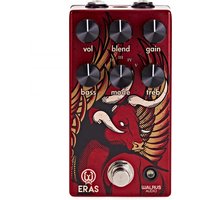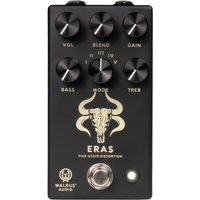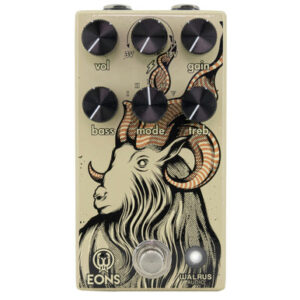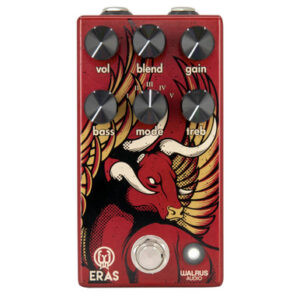
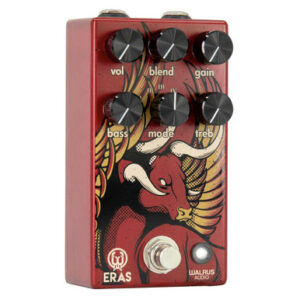

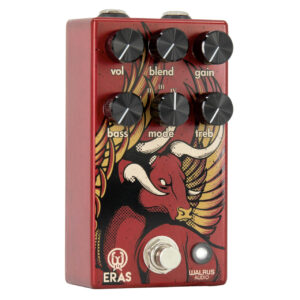
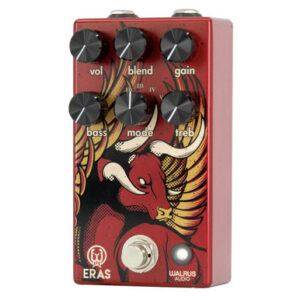
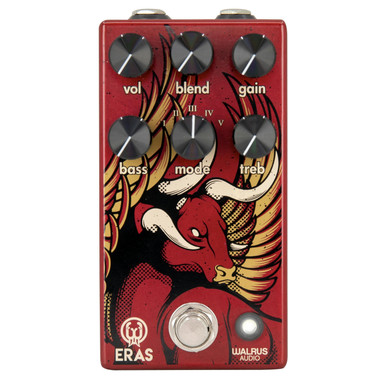
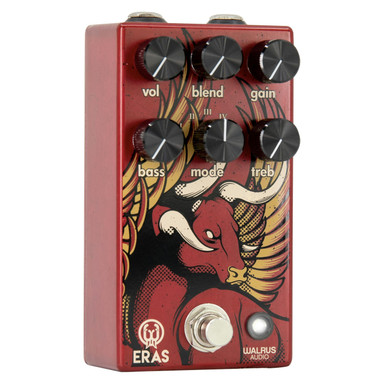
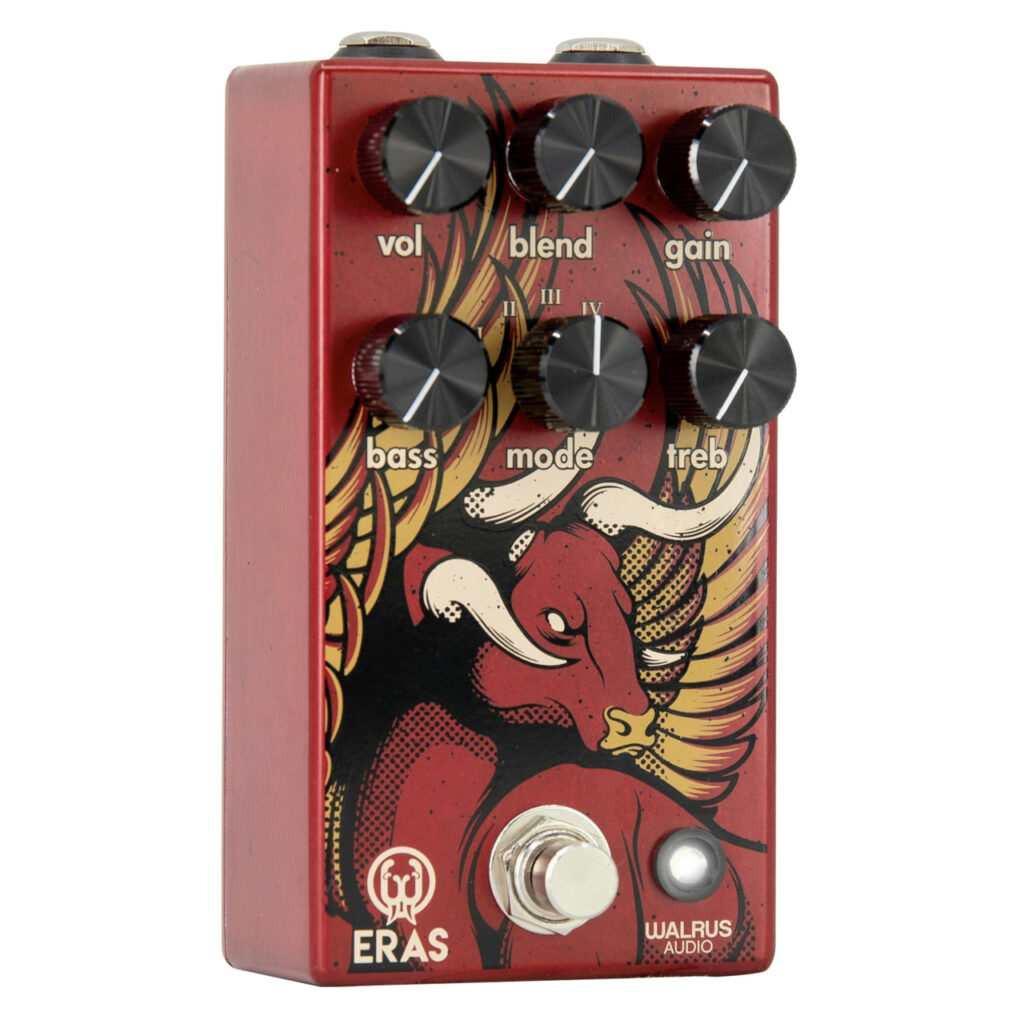
The Walrus Audio Eras pedal is one of the most versatile gain boxes we've seen for some time! With plenty of sounds and functions packed into a compact chassis that easily fits onto your pedalboard — thanks to its thoughtful top-mounted jacks — the Eras is ready to chug, shred and palm-mute with a tight response and multiple clipping options at your disposal.
Unique Blend Control
Max out the unit's dedicated 'Blend' knob for full-on distorted onslaught, or roll it back and experiment by stacking other dirt pedals in front of the Eras. This stompbox is also great for bass players who like to blend their dry signal with distortion, yielding a modern tone that remains focused and dynamic. No matter how you configure the Walrus Audio Eras, this pedal is ready to deliver a diverse selection of speaker-ripping sounds!
5 Gain States for Unparalleled Versatility
The Eras features a five-position rotary knob that offers the following gain states. It's almost like having five drive circuits in one pedal!
- I: Tight mode with a slight mid-cut, LED hard-clipping, and internal volume compensation. Fastest response, great for palm muting.
- II: Tight mode with a slight mid-cut and silicon hard-clipping. Smooth with added compression.
- III: Dual-clipping mode with a slight mid-cut and both silicon and LED hard-clipping. Rich & full with added sustain.
- IV: Rhythm mode with a deeper mid-cut, LED hard-clipping, and internal volume compensation. Scooped mids, tight response.
- V: Rhythm mode with a deeper mid-cut and silicon hard-clipping. Rhythmic, warm and full.
Think of each position as a different "flavour". Blend in your dry signal, or use other pedals in conjunction with these gain states for a near-infinite amount of high-quality distortion sounds!
Key Features
- Versatile high-gain distortion with 5 selectable "flavours" (modes).
- Each mode varies in regard to compression, bass-response, clipping-type and gain amount.
- Great for all types of heavy musical genres, from classic rock to progressive metal.
- Blend in your dry signal for clarity or stacking/mixing with other drive pedals.
- Works great for bass guitar too, especially with blending ability.
- Active boost/cut bass & treble control for sculpting the perfect tone.
- Top-mounted input & output lets you save precious pedalboard real-estate.
- Artwork by Adam Forster features a mythical four-horned, winged bull ready to stampede into any mosh pit!
Specifications
- Controls: Volume, Blend, Gain, Bass, Treble, Mode (5-position selector switch)
- Power: 9V DC, centre negative, 100mA minimum (power supply not included)
- Dimensions: 12.1 x 7.4 x 5.2 cm
- True bypass
- Made in the USA