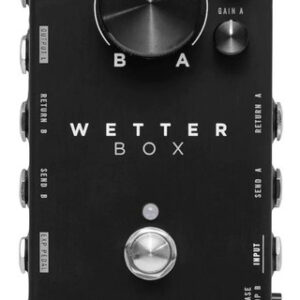
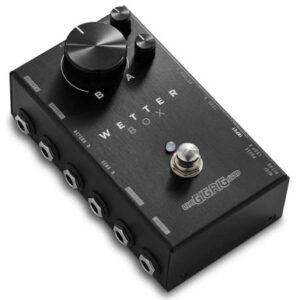
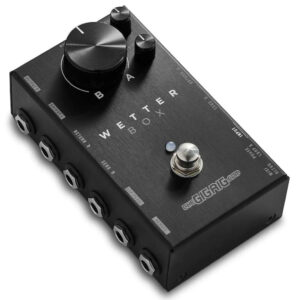
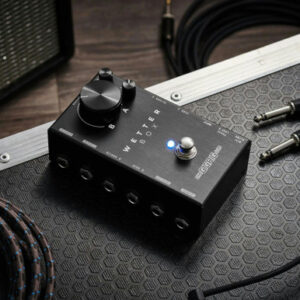
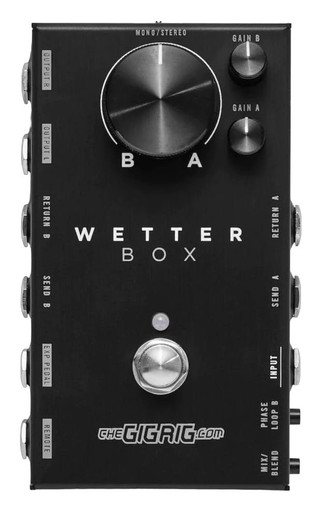
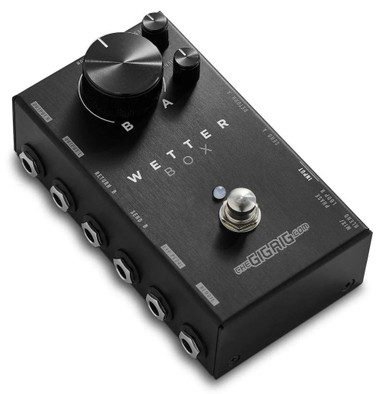
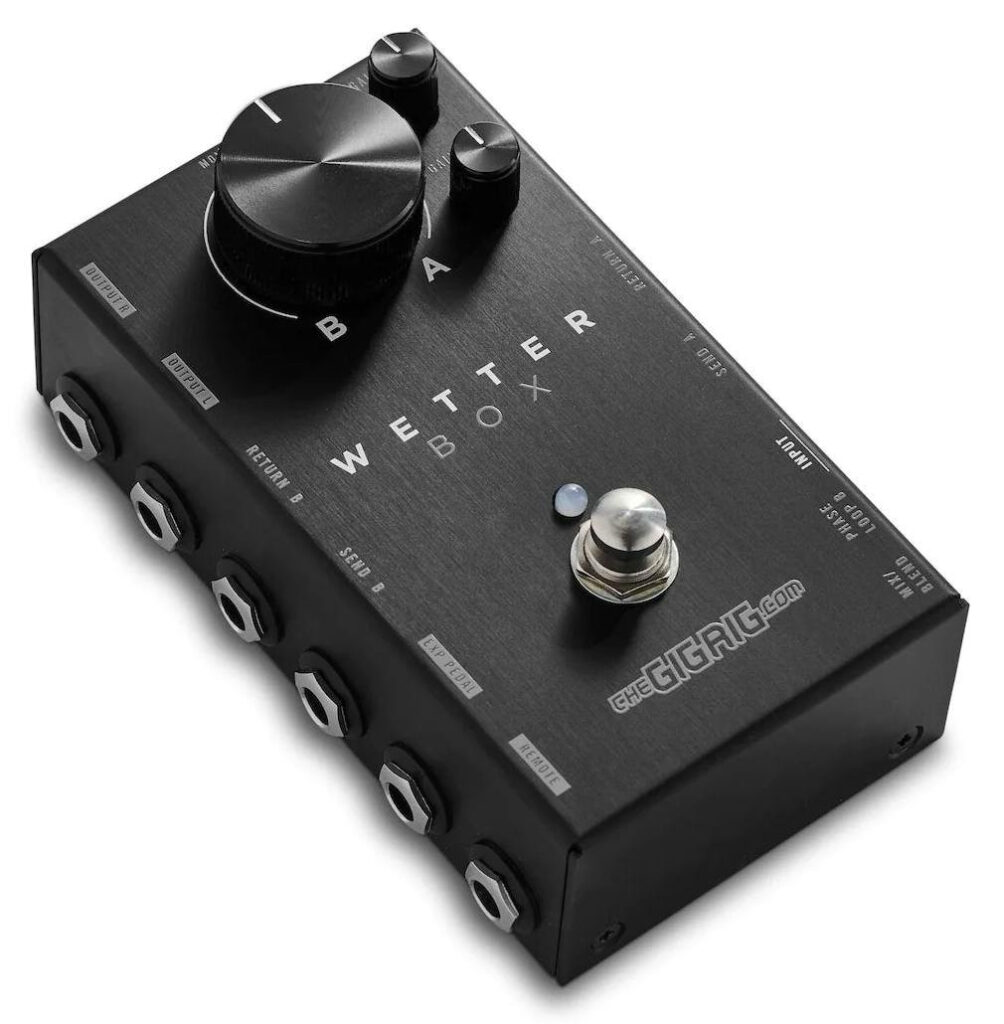
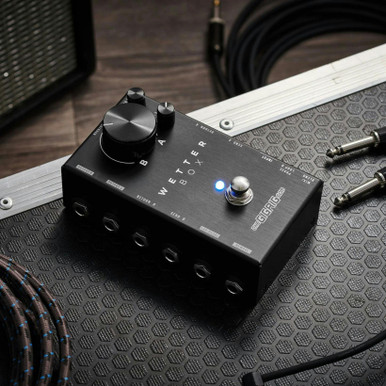
The GigRig Wetter Box Effects Blender Pedal

£249.00

This is a New The GigRig Wetter Box Effects Blender Pedal from The GigRig, listed in Specialist Effects Pedals on Just Pedals. Read More below.

View Just
more
and , , ,

Mixing your pedals in parallel is a powerful way to unlock a world of potential. The Wetter Box ensures it's done right. Would you like to be able to coax sounds from your effects pedals that you didn't even know were in there? How about mixing your favourite  Fuzz and an Overdrive? Or a chorus and a phaser?

What about mixing a short analog and a long digital delay? In 2006 our original Wet Box gave us a glimpse into the power and infinite possibilities of parallel mixing, but the goal has always been to take this to an entirely new level. The Wetter Box is the realisation of this goal.

Key Features

  • Plug in any 2 effects and blend them in parallel
  • Blend in an effect in parallel with your direct signal
  • Do this in real time with an expression pedal
  • Independent gain controls on each loop
  • The ability to flip the phase on the return of LOOP B to be able to deal with any phase issues
  • True stereo signal path using TRS cables
  • 2 separate modes of operation, BLEND (crossfade from loop A to loop B) or MIX (add loop B to Loop A)
  • Internal voltage doubling compatible with guitar level or amp fx loop level
  • Internally isolated power 
  • True Bypass or Buffered Spillover bypass
  • Control the bypass state remotely with any latching switch
  • 100% analog signal path
  • TheGigRig OptoKick footswitch

Specifications

  • 9V DC centre negative.
  • Optimised for use with the GigRig Generator power supply
  • Current Draw – 185mA
  • True Bypass: Yes
  • Box size: 13.5cm x 7.5cm x 4cm
  • 0.33kg / 0.73lbs

Brand

The GigRig

In the current JustPedals catalogue, The GigRig is represented by Pedal Switchers, Utility Pedals and Pedal Power Supplies. Current listings include ACA AOK, ABY-BABY and Distributor. That makes the range relevant to players looking for pedalboard infrastructure and control. Check each model for its exact circuit or processing platform, controls, power requirements and connections, particularly where the catalogue includes both pedals and supporting gear.

Category

Specialist Effects Pedals

Specialist effects alter the signal in ways that do not sit cleanly inside one established family. They may use granular processing, frequency shifting, resonators, freeze or sustain, bit reduction, ring modulation, feedback networks or combinations of several techniques. The relevant distinction is the underlying process, its tracking or latency, and how completely the dry signal can be blended or replaced.

Tags

Analogue

Analogue products use continuous audio circuitry for some or all of the signal path, so clipping, filtering or modulation arises from physical components rather than sampled algorithms. The label does not guarantee a particular tone; component choice, headroom, bias, noise and the surrounding gain stages still matter. Check whether the switching, presets, control section or cabinet stage is digital when the exact signal path is important.

Digital

Digital products use conversion and processing to create, store or control the effect. This can provide presets, complex routing, repeatable algorithms, USB, MIDI and firmware features, but conversion, latency, power requirements and clocking depend on the design. Check the input and output levels, sample or impulse-response support, bypass behaviour and current draw when combining a digital unit with analogue pedals or a direct recording setup.

Stereo

Stereo products provide separate left and right audio paths, which may widen modulation, preserve independent delays or route a pedalboard into two amplifiers or a mixer. Input and output behaviour is not always symmetrical: some units sum a stereo input, while others create stereo from a mono source. Check whether the effect collapses safely to mono, how the dry signal is routed, the socket format and the destination’s panning and phase requirements.

True Bypass

True bypass removes the effect circuit from the audio path when bypassed, usually by mechanical, relay or switching circuitry. This can preserve the direct signal but does not automatically solve long-cable loading, and it may create a pop or leave no buffer for the rest of the board. Check the actual switching method, trails or spillover, input and output loading and the number of other true-bypass pedals in the chain.