



Buy the Tech 21 SansAmp Programmable Bass Driver Elite Pedal at Music Co!



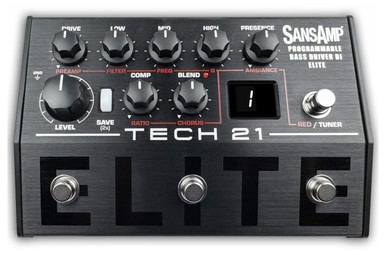
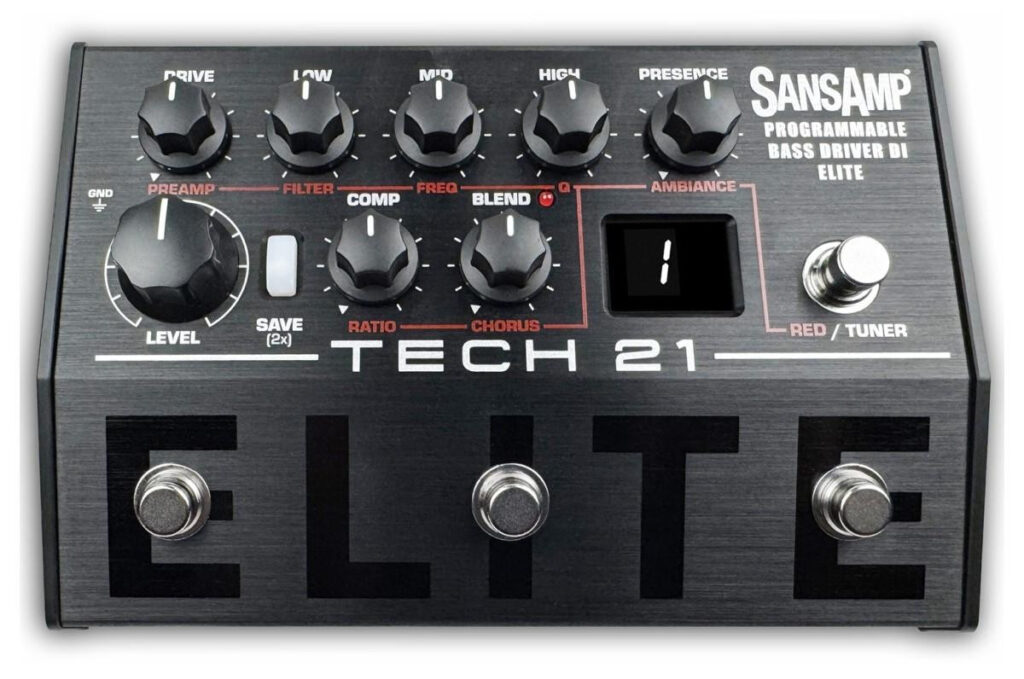
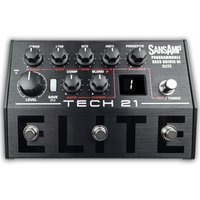
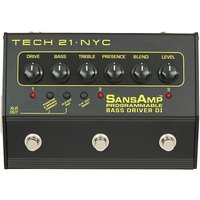
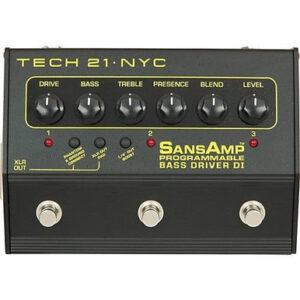
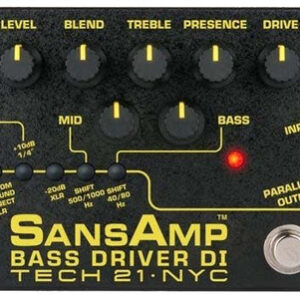
Tech 21 SansAmp Programmable Bass Driver Elite Pedal
£339.00
This is a New Tech 21 SansAmp Programmable Bass Driver Elite Pedal from Tech 21 its found in our Specialist Effects Pedals on the Just Pedals menu. Read More below.
View Just Tech 21
As an affiliate partner, we may earn a small commission when you buy through our links — at no extra cost to you.
Related videos

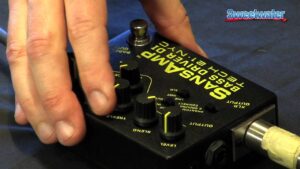
Brand
Tech 21
Tech 21 began in Manhattan in 1989 when designer Andrew Barta introduced SansAmp, an all-analogue amplifier and speaker-emulation circuit for direct recording. SansAmp remains central to the company’s guitar and bass range, appearing in standalone preamps, DI pedals, rack units and Fly Rig products. JustPedals listings include the GT2, Programmable Bass Driver DI, Para Driver DI and Character Series VT Bass DI, as well as the MIDI Mouse. These products shape or send a direct instrument signal, rather than providing only conventional modulation or ambience; compare instrument voicing and output connections.
Category
Specialist Effects Pedals
Specialist effects alter the signal in ways that do not sit cleanly inside one established family. They may use granular processing, frequency shifting, resonators, freeze or sustain, bit reduction, ring modulation, feedback networks or combinations of several techniques. The relevant distinction is the underlying process, its tracking or latency, and how completely the dry signal can be blended or replaced.
Tags
Bass
Voiced or equipped to retain low-frequency fundamentals and the higher headroom of a bass signal. Clean blends, crossovers and bass-specific filter ranges can preserve weight and articulation while the effected portion adds harmonics, movement or ambience.
Others Just Ordered :
- I Love A Happy Accident… – Animals Pedal

- Animals Pedal Vintage Van Driving is Very Fun Overdrive
- Animals Pedal Sunday Afternoon Is Infinity Bender

- Ninevolt Pedals | Bath Time Reverb (Animals Pedal)
- This Fuzz Pedal Makes No Sense… But It Sounds Incredible

- ANIME Pedals | Animals Pedal Custom Illustrated Series