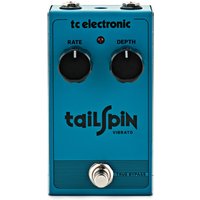
The TC Electronic Tailspin Vibrato is a pedal that provides you with a full host of vintage vibrato tones encased within a compact affordable unit. Equipped with an all-analogue bucket-brigade circuit the Tailspin Vibrato maintains a perfect frequency delivering a natural vibrato tone that is usable in any application. When you buy a TC Electronic product you know that is has been designed and manufactured to last with passion and care. This pedal is no different. Housed within a compact rugged chassis the Tailspin is highly road worthy. Whats more the easy-to-use interface provides the perfect creative surface for both developing and established players.
TC Electronic Tailspin Vibrato Pedal
£24.90
This is a New TC Electronic Tailspin Vibrato Pedal from TC Electronic its found in our Tremolo & Vibrato Pedals on the Just Pedals menu. Read More below.
View Just TC Electronic
As an affiliate partner, we may earn a small commission when you buy through our links — at no extra cost to you.


Related videos


Brand
TC Electronic
Founded in Denmark in 1976 by brothers Kim and John Rishoj, TC Electronic first made its mark with the Stereo Chorus Flanger (SCF), prized for its transparent modulation. The company later developed the TC 2290 digital delay, a landmark studio processor, and extended its guitar range with compact effects, loopers and TonePrint-enabled pedals. JustPedals listings include the MojoMojo overdrive, Dark Matter distortion, Spark Booster, Ditto X2 looper and Flashback Triple Delay. TC Electronic now covers guitar, bass and voice products, so compare the exact model’s stereo routing, presets and control method.
Category
Tremolo & Vibrato Pedals
Tremolo varies amplitude, making volume rise and fall; vibrato varies pitch, making the note move sharp and flat. Some circuits combine both or derive them from modulation systems that blur the boundary. Rate, depth, waveform and stereo phase determine whether the motion is smooth, pulsing, choppy, seasick or spatial, while tap tempo can lock the cycle to a rhythm.
Tags
Analogue
The signal is shaped by continuously varying electronic circuitry rather than being converted into a digital effect algorithm. Component choice, operating voltage and circuit tolerances influence headroom, noise, clipping texture and the small variations in response between designs.
Others Just Ordered :
- I Love A Happy Accident… – Animals Pedal

- Animals Pedal Vintage Van Driving is Very Fun Overdrive

- Animals Pedal Sunday Afternoon Is Infinity Bender

- Ninevolt Pedals | Bath Time Reverb (Animals Pedal)

- This Fuzz Pedal Makes No Sense… But It Sounds Incredible

- ANIME Pedals | Animals Pedal Custom Illustrated Series