
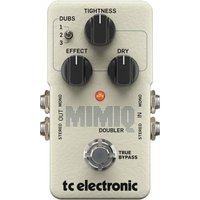
The TC Electronic Mimiq Doubler is a titan of sound. The worlds first realistic live guitar doubling pedal you can reinforce your sound with up to three additional guitar tracks to truly make your riffs rock or your solos sound enormous. Coming with a brand-new algorithm you can capture the essence of a natural doubled track embedding timing differentials and slight notational movements for an authentic studio sound opposed to an artificial basic duplication. You can however achieve a uniform sound but leaving the timing loose adds an extra essence of groove. With complete control infuse your sound with three times the power you could usually obtain.
TC Electronic Mimiq Doubler
£90.00
This is a New TC Electronic Mimiq Doubler from TC Electronic is in our Specialist Effects Pedals category on Just Pedals. Read More below.
View Just TC Electronic
As an affiliate partner, we may earn a small commission when you buy through our links — at no extra cost to you.
Related videos

Brand
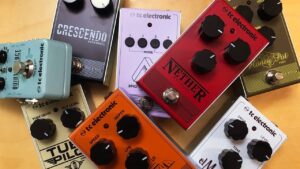
TC Electronic
Founded in Denmark in 1976 by brothers Kim and John Rishoj, TC Electronic first made its mark with the Stereo Chorus Flanger (SCF), prized for its transparent modulation. The company later developed the TC 2290 digital delay, a landmark studio processor, and extended its guitar range with compact effects, loopers and TonePrint-enabled pedals. JustPedals listings include the MojoMojo overdrive, Dark Matter distortion, Spark Booster, Ditto X2 looper and Flashback Triple Delay. TC Electronic now covers guitar, bass and voice products, so compare the exact model’s stereo routing, presets and control method.
Category
Specialist Effects Pedals
Specialist effects alter the signal in ways that do not sit cleanly inside one established family. They may use granular processing, frequency shifting, resonators, freeze or sustain, bit reduction, ring modulation, feedback networks or combinations of several techniques. The relevant distinction is the underlying process, its tracking or latency, and how completely the dry signal can be blended or replaced.
Others Just Ordered :
- I Love A Happy Accident… – Animals Pedal

- Animals Pedal Vintage Van Driving is Very Fun Overdrive

- Animals Pedal Sunday Afternoon Is Infinity Bender

- Ninevolt Pedals | Bath Time Reverb (Animals Pedal)

- This Fuzz Pedal Makes No Sense… But It Sounds Incredible

- ANIME Pedals | Animals Pedal Custom Illustrated Series
