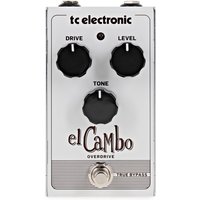
The TC Electronic El Cambo Overdrive Pedal is a vintage sounding overdrive delivering classic blues rock tones and offering powerful controls to suit a variety of playing styles. Its intuitive control layout makes it easy to shape the scream of the tube drive allowing both seasoned players and beginners to create powerful blue rock riffs licks and lead lines. Use the drive and tone controls to fatten up your tone with extra girth adding an incredible midrange punch ideal for singing blues solos. Also equipped with top mounted jacks true bypass switching and a roadworthy enclosure the TC Electronic El Cambo is perfect for giving your performance extra character and life.
TC Electronic El Cambo Overdrive Pedal
£35.00
This is a New TC Electronic El Cambo Overdrive Pedal from TC Electronic its found in our Overdrive Pedals on the Just Pedals menu. Read More below.
View Just TC Electronic
As an affiliate partner, we may earn a small commission when you buy through our links — at no extra cost to you.
Related videos
Brand
TC Electronic
Founded in Denmark in 1976 by brothers Kim and John Rishoj, TC Electronic first made its mark with the Stereo Chorus Flanger (SCF), prized for its transparent modulation. The company later developed the TC 2290 digital delay, a landmark studio processor, and extended its guitar range with compact effects, loopers and TonePrint-enabled pedals. JustPedals listings include the MojoMojo overdrive, Dark Matter distortion, Spark Booster, Ditto X2 looper and Flashback Triple Delay. TC Electronic now covers guitar, bass and voice products, so compare the exact model’s stereo routing, presets and control method.
Category
Overdrive Pedals
Overdrive uses soft or moderate clipping to add harmonics and compression while retaining more of the original note shape than heavy distortion. Some circuits emphasise the midrange and trim bass before clipping; others remain broad, transparent or amplifier-like. Gain, clipping arrangement, headroom and tone filtering decide whether it supplies a light edge, a saturated drive sound or extra push into another gain stage.
Tags
True Bypass
Connects input directly to output through mechanical or relay switching when the effect is off, removing the active circuit from the audio path. It avoids buffer colour but leaves cable capacitance and switching design to influence high-frequency loss and possible switching noise.
Others Just Ordered :
- I Love A Happy Accident… – Animals Pedal

- Animals Pedal Vintage Van Driving is Very Fun Overdrive

- Animals Pedal Sunday Afternoon Is Infinity Bender

- Ninevolt Pedals | Bath Time Reverb (Animals Pedal)

- This Fuzz Pedal Makes No Sense… But It Sounds Incredible

- ANIME Pedals | Animals Pedal Custom Illustrated Series