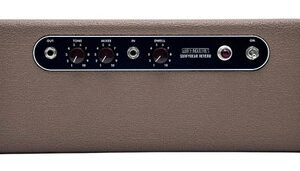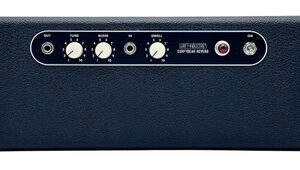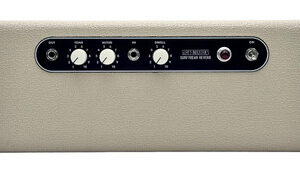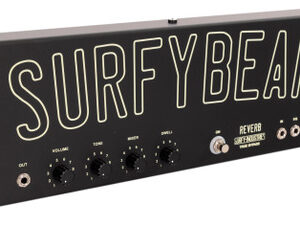
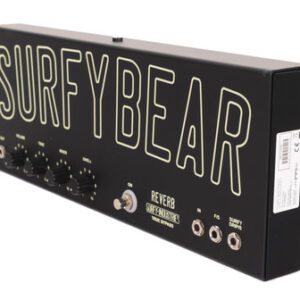

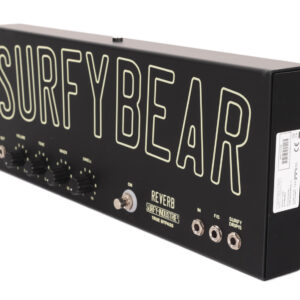
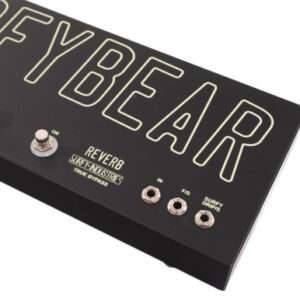
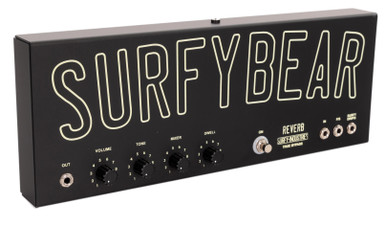
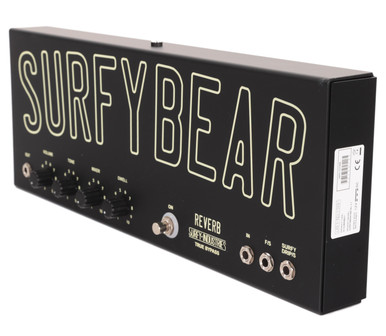
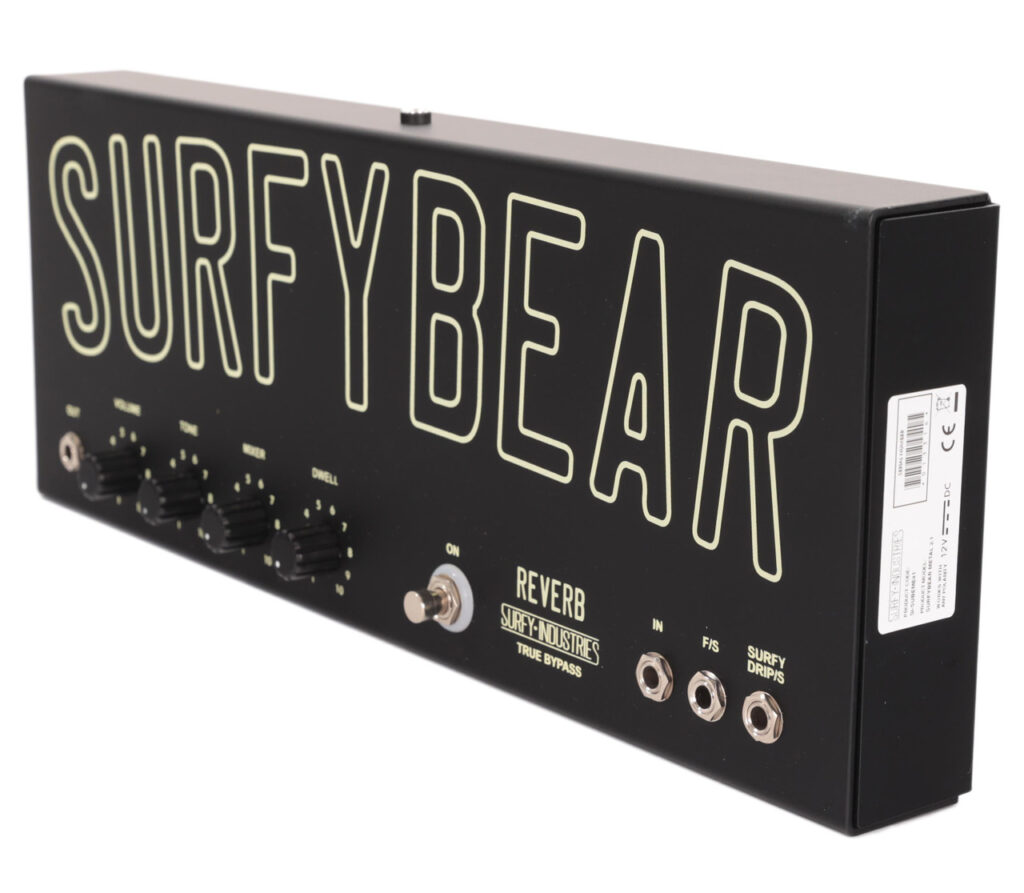
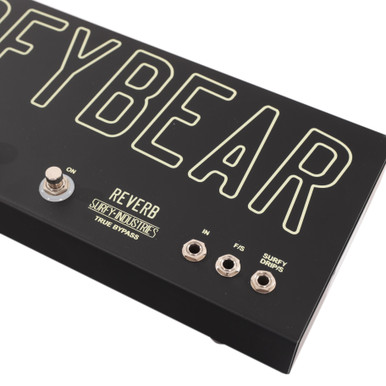
Here’s what Surfy Industries say:
The original piece of electronics that started it all for us! This is a controller, initially produced as a DIY kit, featuring the same specifications of the Fender® 6G15® reverb unit, replacing the tubes with JFET transistor technology. This is NOT a digital effect and it incorporates a real spring reverb pan.
Key Features
- Exclusive SurfyPan type-4 spring reverb pan by Accutronics® and Surfy Industries
- Aluminium body with removable feet on the bottom side for better positioning on pedalboards
- Clean boost to adjust the volume when the effect is on
- Innovative dual-LED on/off button
- True bypass functionality to keep your signal intact when the effect is off
- Dual mixer control through the SurfyDrip Switch connection
- External footswitch possibility though the dedicated 1/4″ jack (footswitch not included)
- Working worldwide with a 12V power supply (included in the package) ANY polarity
Spring reverb technology has been well known for more than 50 years. One of the first reverb units available for electric guitars was the Fender® 6G15® standalone reverb, released in 1962, which has set the standard for generations of musicians. Still today, the unique sound of spring reverbs is very popular among guitarists. But the sound of the 6G15® is something unique, it is truly an instrument on its own. As a musician you learn to play and interact with the springs, creating that “drippy” sound which became typical in surf music, but also applied to many different styles and situations.
The SurfyBear has become today’s market leader, keeping the price more reasonable than the now discontinued and collectible Fender® unit, smaller in size and reliable in any way, especially for traveling musicians. Also at Surfy Industries we never stop developing better and more sophisticated versions of our products, working with great partners like Belton/Accutronics® that helped us creating our own reverb pan, the SurfyPan, closer to the sound and decay of the original and unmatched Gibbs® pans from the early 60s.
A common question: what’s with the name SURFYBEAR? Well, Bjorn Isheden is the technical director of Surfy Industries and the Swedish engineer who developed the original circuit. “Bjorn” in Swedish also means “bear”… it is really that simple!
Specifications
Size: approx. 44 X 17 X 8 cm (17.5 X 6.5 X 3 inches)