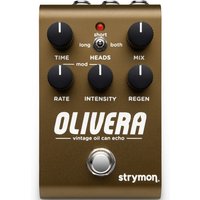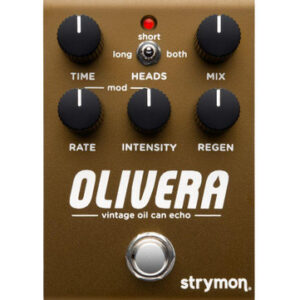
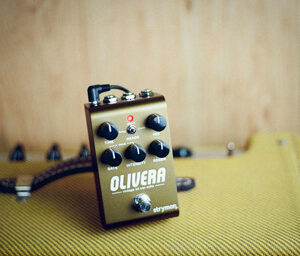

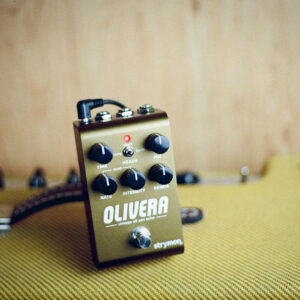
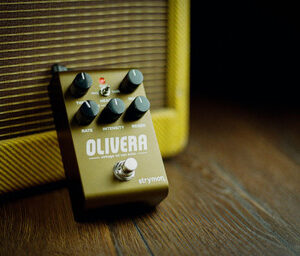
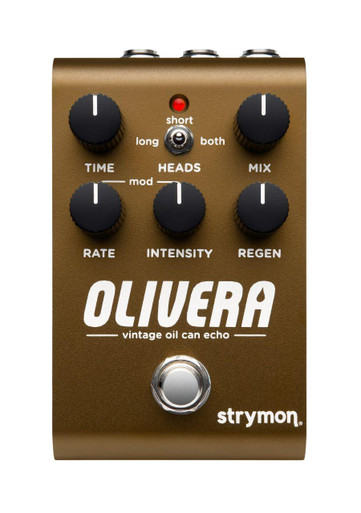
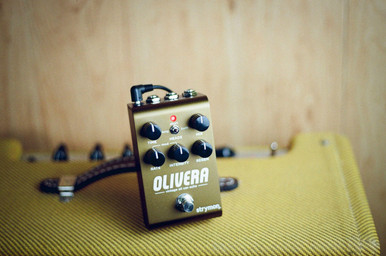
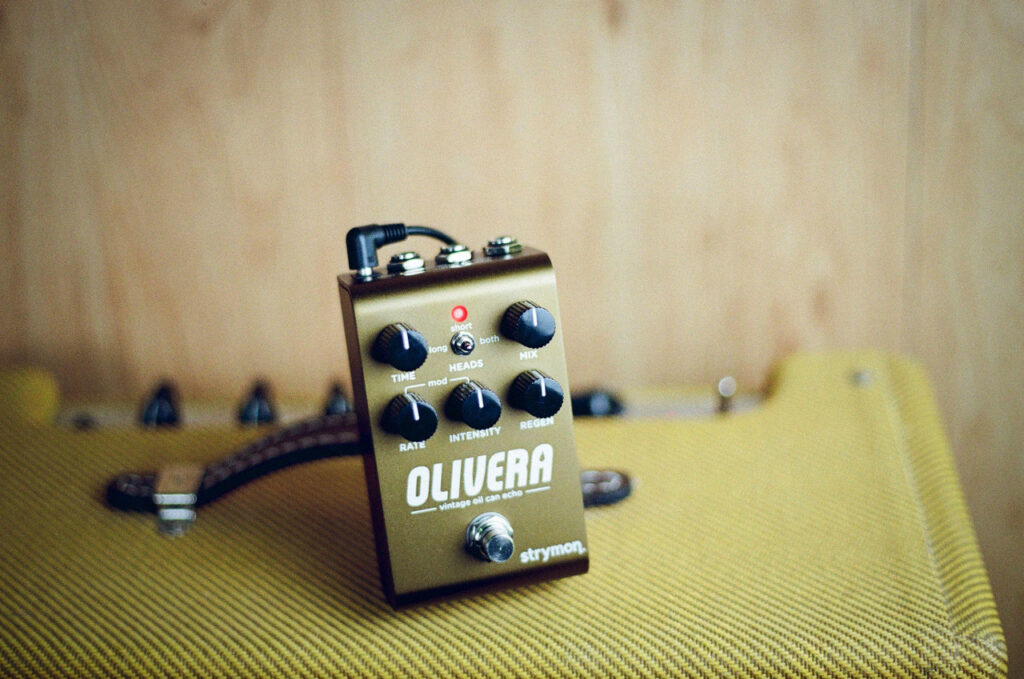
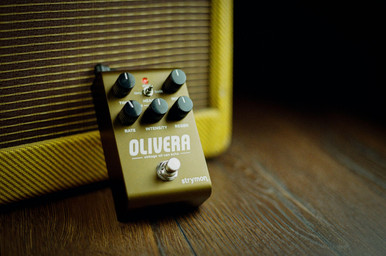
The Strymon Olivera Vintage Oil Can Echo pedal is a masterful recreation of the rare and enigmatic oil can echo effects from the late 1950s. This pedal captures the dark, syrupy repeats and organic modulation that only an authentic oil can echo can produce, delivering a sound that is both nostalgic and uniquely inspiring. Whether you’re seeking subtle, modulated echoes or lush, sustaining textures reminiscent of classic spring reverbs, Olivera brings these vintage tones into the modern pedalboard with remarkable accuracy and versatility.
Unlike tape delays, the original oil can echoes used a rotating can filled with conductive oil to create their distinctive sound. This mechanical process produces echoes with a murky, rhythmic character that is impossible to replicate with conventional delay technologies. Strymon’s innovative algorithm and extensive research have enabled Olivera to faithfully emulate these sonic nuances, from the uneven decay of the repeats to the thick, evolving modulation that reacts dynamically to your playing.
Designed for today’s musicians, Olivera offers discrete stereo processing with independent left and right inputs, allowing you to sculpt your sound in stereo with ease. Its intuitive controls let you adjust delay time, mix, modulation rate and intensity, and regeneration to tailor the echo’s character. Additional features like MIDI control, delay spillover, and selectable bypass modes make Olivera a seamless addition to any rig, combining vintage charm with modern functionality.
For players who crave authentic vintage echo textures with the convenience and reliability of a modern pedal, the Strymon Olivera is an essential tool that brings the soulful sound of oil can echoes to life like never before.
True Oil Can Echo Emulation
Olivera authentically recreates the mechanical and organic qualities of classic oil can echoes, delivering dark, modulated repeats and rich sustaining textures that go beyond traditional tape delays. This unique sound source adds depth and vibe to any instrument or mix.
Discrete Stereo Processing
With independent stereo inputs and outputs, Olivera processes left and right signals separately, offering flexible routing options and lush stereo echo effects that enhance your spatial soundstage.
Comprehensive Control Set
Adjust delay time, playback head selection, mix, modulation rate and intensity, and regeneration to shape your echo precisely. The regeneration knob also features tone adjustment for repeat character, providing a wide palette of vintage echo sounds.
Modern Connectivity and Features
MIDI implementation with 300 presets, USB firmware updates, selectable true bypass or buffered bypass, and a Class A JFET input preamp ensure Olivera integrates effortlessly into any setup while preserving your tone and offering extensive control.
Key Features
- Authentic Oil Can Echo Sound – Experience the rare and distinctive dark, syrupy repeats and evolving modulation unique to oil can echoes, adding character and depth to your sound.
- Discrete Stereo Inputs and Outputs – Process stereo signals independently for immersive echo effects and versatile routing options, perfect for complex pedalboards and studio setups.
- Extensive Control Over Echo Characteristics – Fine-tune delay time, playback head selection, mix, modulation rate and intensity, and regeneration with tone shaping to craft your ideal echo texture.
- Advanced MIDI and USB Integration – Control presets remotely, update firmware easily, and choose between true bypass or buffered bypass to maintain signal integrity and flexibility.
Specifications
Delay and Echo
- Delay Time Range: Approximately 200ms to 800ms
- Playback Heads: Short, Long, Both (simultaneous)
- Regeneration Control: Feedback with tone adjustment
- Modulation: Rate and Intensity controls for thick, evolving echoes
Inputs and Outputs
- Stereo Inputs: Discrete Class A JFET preamps
- Stereo Outputs: Independent left and right processing
- Routing Options: Mono In/Mono Out, Mono In/Stereo Out, Stereo In/Stereo Out via rear switch
- Connectors: TRS for stereo operation
Controls
- Time, Heads, Mix, Rate, Intensity, Regeneration knobs
- Footswitch with hold function for regeneration tone adjustment
Additional Features
- MIDI: Full implementation with 300 presets, control via EXP/MIDI jack or USB
- Bypass Modes: Electromechanical relay-switched true bypass or premium buffered bypass
- Processor: ARM processor for advanced algorithm and low power consumption
- Construction: Rugged chassis with USB port for firmware updates and computer control