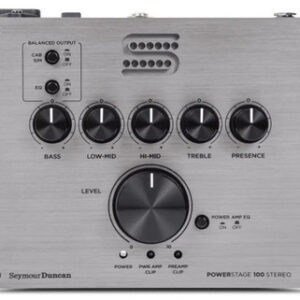
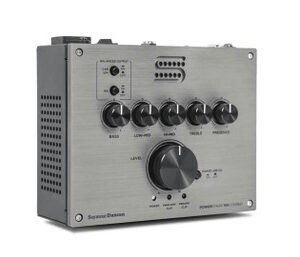

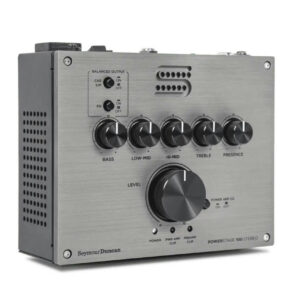
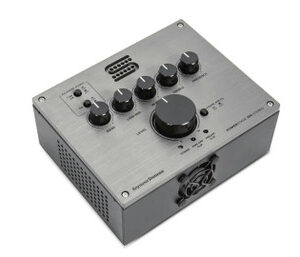
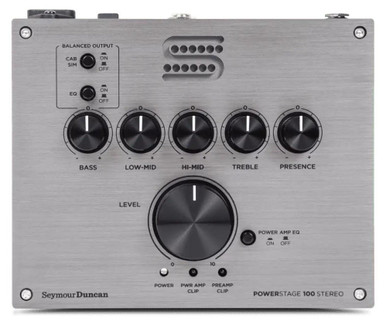
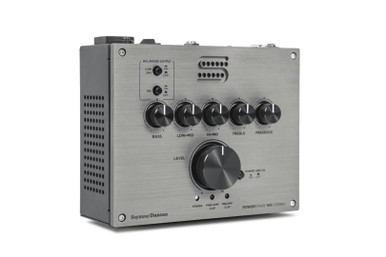
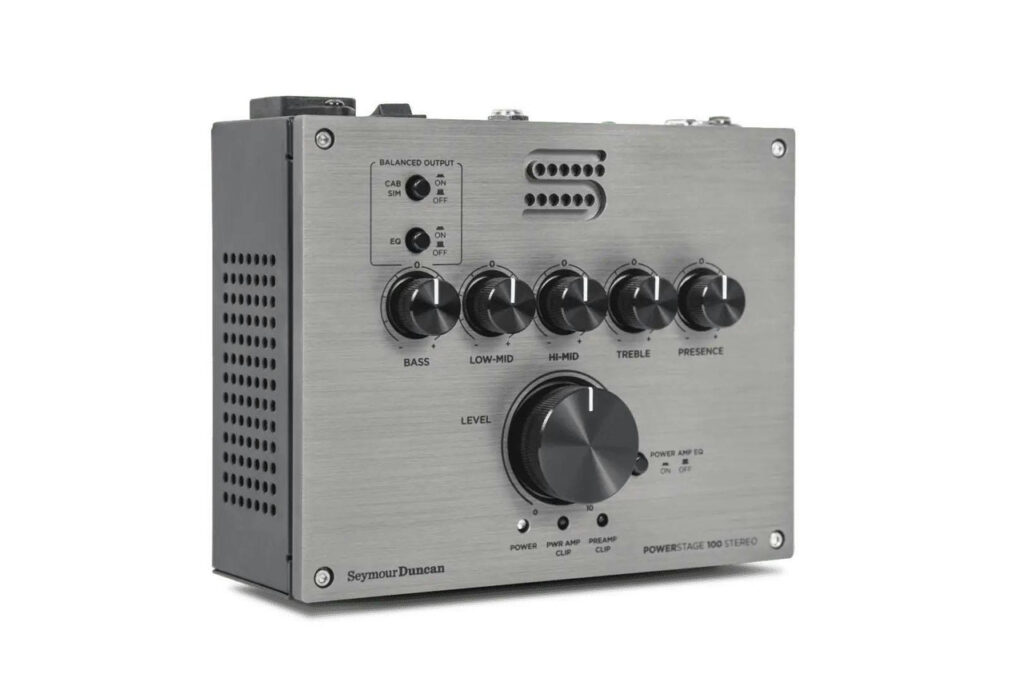
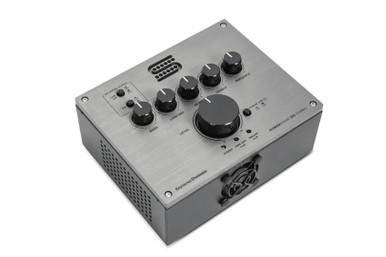
The PowerStage line of compact power amps provides high-headroom class-D amplification to guitarists looking to deliver the sound of their preamp, pedal chain, or amp modeler to the masses.
Key Features
- Stereo, 100 Watts per Channel at 4 Ohms – Have 100 watts of power at your disposal in each channel.
- 5 band EQ – Dial in the exact tonal quality you want, with a simple to use interface!
- Stereo Balanced Outputs – Deliver the true sound of stereo created sounds though any pair of speakers.
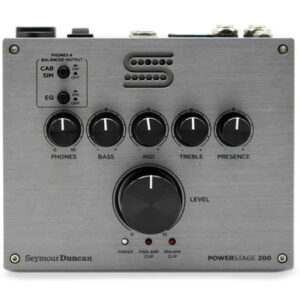
The PowerStage 100 Stereo provides features demanded by the modern guitarist, including stereo inputs and outputs that each drive 100 watts of transparent sound to your cabinets. Perfect for amplifying the sound of modern modeling units to on-stage cabinets, the PS100 Stereo also offers an extended EQ section and balanced line outs with switchable analogue cabinet simulation for more authentic projection through any sound system.
The stereo sounds developed in your amp modeler, multi effects-unit, or preamp will be delivered with clarity through any pair of speakers, all in a package small enough to fit on your pedalboard.