Source Audio Nemesis Delay ADT Pedal

£289.00

This is the Source Audio Nemesis Delay ADT Pedal from Source Audio, listed in Delay Pedals on Just Pedals. Read More below.

View Just
more
and , ,

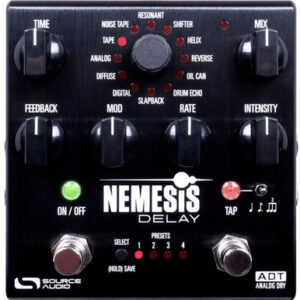
The Nemesis Delay ADT pedal takes everything about the first version and makes it even better. Featuring all three of the original modes and tones that made the first one so great, this second iteration includes a dry analogue signal path to reach new sonic heights. The analogue dry mode produces 100% of your guitars pure tone signal and allows you to add the specific delay setting of your choice.

Loaded Presets

With 100 loaded factory presets, you can easily discover and play the exact tones you’re searching for without your experience being too fiddly. Through the Nemesis Delay ADT’s intuitive interface, you can access an up to date collection of delay effects that are compatible with over 1,000 Neuro user presets that were created for the first Nemesis Delay pedal.

12 Delay Engines

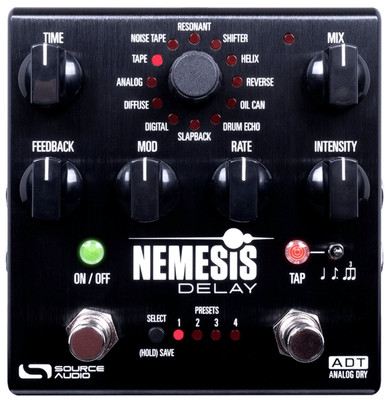
The 12 delay modes give you a wealth of choice when it comes to discovering the sonic palette that suits you best. Featuring Slapback, Digital, Diffuse, Analogue, Tape, Noise Tape, Shifter, Helix, Reverse, as well as new engines to this updated version; Resonant, Oil Can, and Dum Echo. With the Nemesis Delay ADT pedal, you have the world of delay effects at your feet to be expressive and creative with your soundscapes.

Key Features

  • Analogue Drive Through Signal Path – Preserves 100% of your guitars dry signal, to produce an unfiltered and unprocessed signal that you can run alongside a selected delay effect from the Nemesis Delay ADT.
  • 12 Delay Engines – Each delay engine gives you a breadth of soundscapes to play through, with three new effects: Resonant, Oil Can, and Dum Echo.
  • 100 loaded Factory Presets – Easily access a whole host of presets, with 8 presets available through the onboard controls, and many more to be accessed via MIDI to give you the most up to date presets created by Source Audio and other users alike.

Specifications

  • Includes 9v DC power supply (300mA / Negative Tip)
  • Includes 1/8” to 1/4” cable for Neuro Mobile App connection.
  • Power Consumption — 200mA
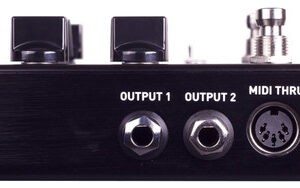
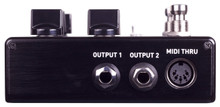
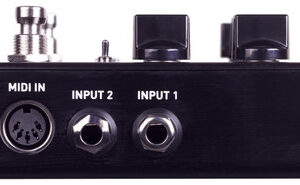
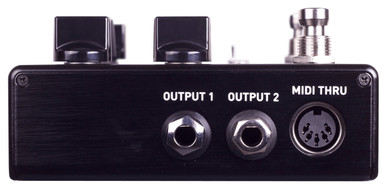
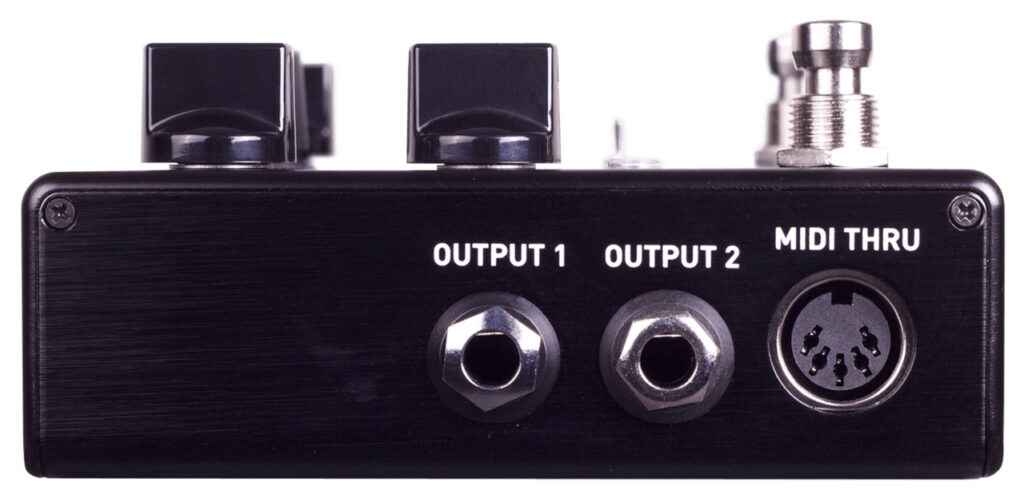
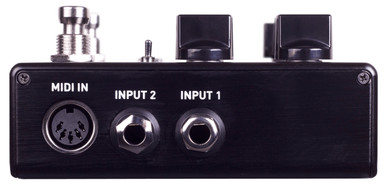
  • MIDI IN/ MIDI THRU
  • USB port — Connects to Mac or Windows PC for MIDI control of firmware updates.
  • Brushed Anodized Aluminium Housing
  • Dimensions: L: 4.5 in./11.4cm x W: 4.5 in./11.4cm x H: 2 in./5.1cm (including knobs)
  • Weight: 1 lb./0.45 kg

Related videos

Brand

Source Audio

Source Audio is an American company renowned for its advanced guitar effects pedals and digital audio processing technology. Founded in 2008, the company is recognized for its innovative approach to effects design, incorporating sophisticated digital signal processing (DSP) and extensive customization features.

Source Audio’s product lineup includes a variety of pedals such as the Nemesis Delay, the Ventris Dual Reverb, and the Collider Delay+Reverb, which offer a range of high-quality, programmable effects. Their pedals are distinguished by their deep editing capabilities, allowing users to create and save custom sounds through a user-friendly interface and Source Audio’s proprietary Neuro Mobile App.

Known for their precision, versatility, and cutting-edge technology, Source Audio pedals are favoured by musicians seeking advanced tonal possibilities and seamless integration into modern setups.

Category

Delay Pedals

Delay records the incoming signal for a chosen interval and repeats it after the original note. Feedback returns repeats to the delay line, while tone, filtering, modulation and saturation determine whether echoes remain clear, darken progressively, wobble like tape or degrade like analogue bucket-brigade circuits. Delay time and rhythmic subdivisions govern the spacing and musical pattern of the repeats.

Tags

Analogue

The signal is shaped by continuously varying electronic circuitry rather than being converted into a digital effect algorithm. Component choice, operating voltage and circuit tolerances influence headroom, noise, clipping texture and the small variations in response between designs.

Digital

Converts the signal or control process into numerical data for algorithmic processing. Digital designs can provide precise timing, long memory, complex routing and repeatable presets; sample rate, conversion, internal resolution and latency influence fidelity and response.

Presets

Stores complete groups of parameter values for later recall. The number of locations, switching time, spillover behaviour and whether presets include routing, expression and MIDI assignments determine how completely one sound can change into another.