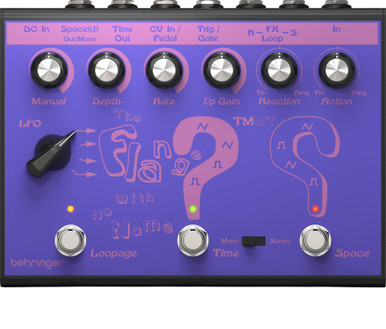
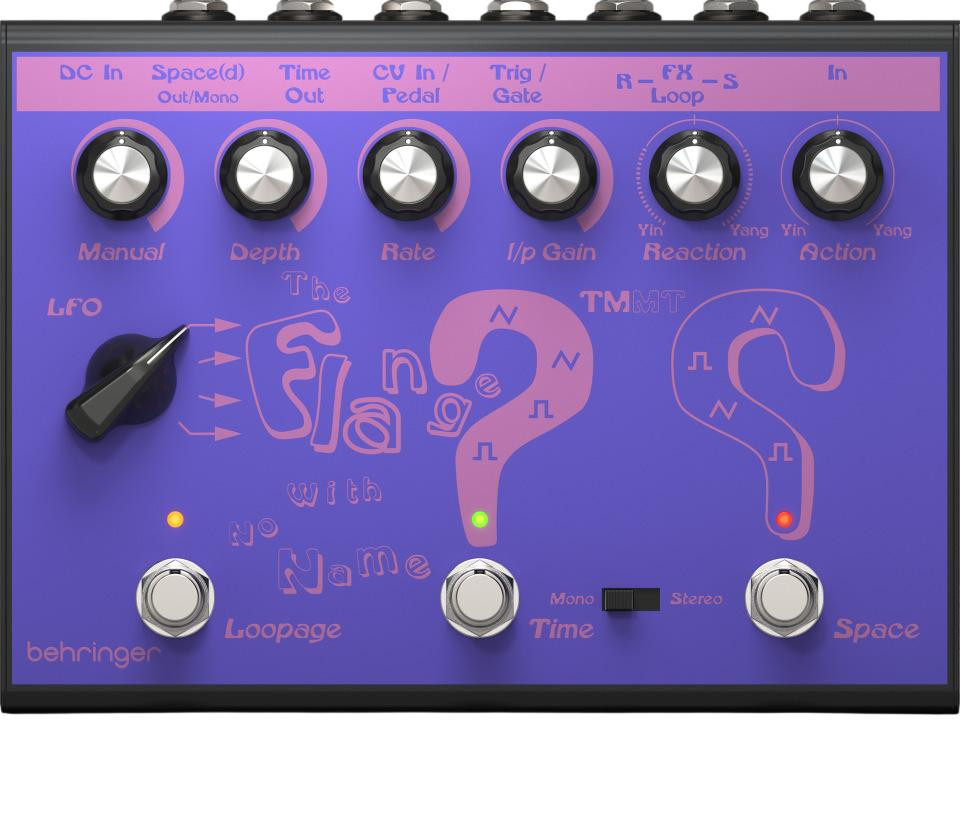



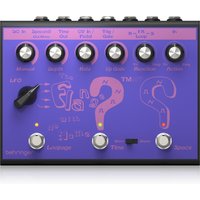
Get theBehringer THE FLANGE WITH NO NAME Flanger Pedal from Music Company today!



Behringer THE FLANGE WITH NO NAME Flanger Pedal
£99.00
This is a New Behringer THE FLANGE WITH NO NAME Flanger Pedal from Behringer its found in our Flanger Pedals on the Just Pedals menu. Read More below.
View Just Behringer
As an affiliate partner, we may earn a small commission when you buy through our links — at no extra cost to you.
Related videos

Brand
Behringer
Behringer was founded in 1989 by musician and sound engineer Uli Behringer, who began building equipment because he could not afford the studio gear he needed. The company has since grown into a broad audio supplier, and its JustPedals listings cover guitar, bass and utility units rather than effects alone. Examples include the DR600 digital reverb, EQ700 graphic equalizer, UT300 tremolo, BDI21 bass preamp, acoustic preamp and TU300 tuner. This spread makes model-level detail useful: check the instrument, circuit type and intended signal-chain role instead of assuming every Behringer listing is a guitar effect.
Category
Flanger Pedals
Flanging mixes the dry signal with a very short delay whose time is continuously modulated. The paths reinforce and cancel at regularly spaced frequencies, producing a moving comb-filter sweep with a hollow, metallic or jet-like character. Rate and depth set the motion, while feedback sharpens the notches and can push the effect towards resonant, self-oscillating textures.
Others Just Ordered :
- I Love A Happy Accident… – Animals Pedal

- Animals Pedal Vintage Van Driving is Very Fun Overdrive

- Animals Pedal Sunday Afternoon Is Infinity Bender

- Ninevolt Pedals | Bath Time Reverb (Animals Pedal)
- This Fuzz Pedal Makes No Sense… But It Sounds Incredible

- ANIME Pedals | Animals Pedal Custom Illustrated Series