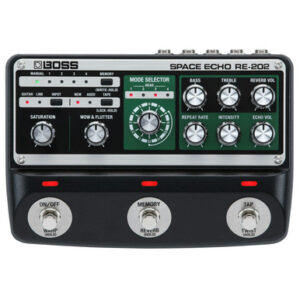
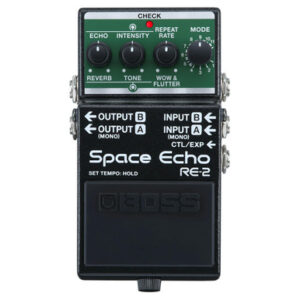
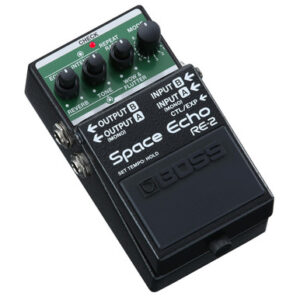

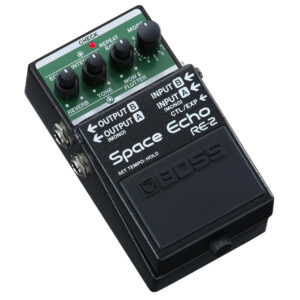
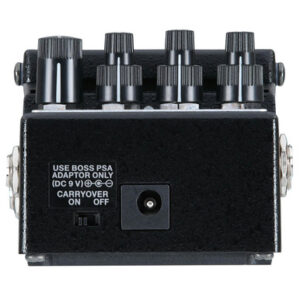
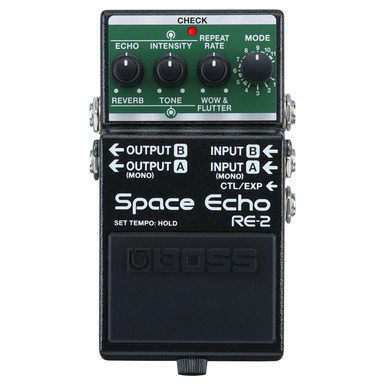
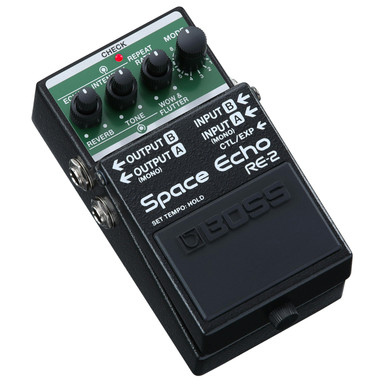
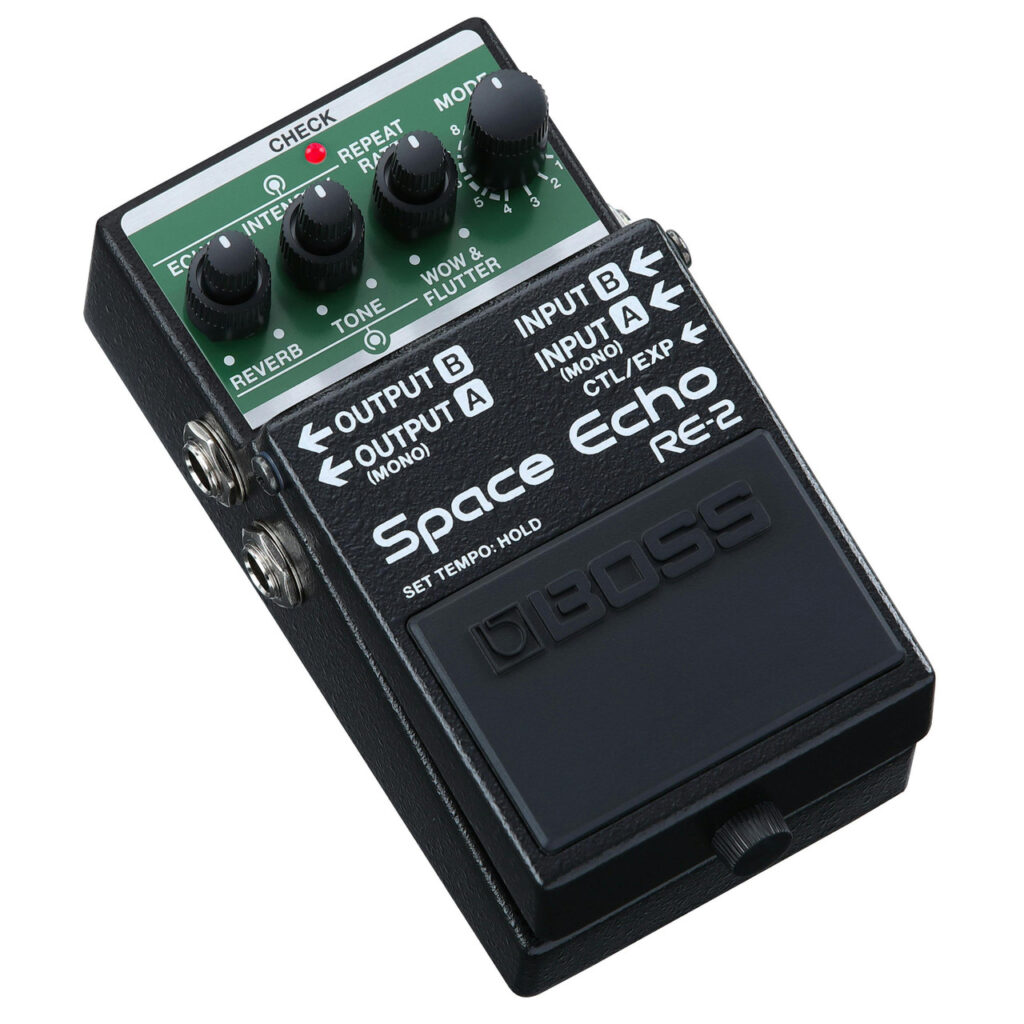
Boss has squeezed the inspiring sounds of the legendary Roland RE-201 Space Echo into a compact pedal! Introduced in 1974, the tape-based RE-201 quickly became a favourite among guitarists and studio wizards who adored its unique rhythmic echo sounds, warm character, and highly-playable sonic quirks. However, the Roland RE-201 was produced for just over 14 years — making original working units rare and highly sought-after.
But now, you can replicate the spellbinding tones of the Space Echo with the Boss RE-2! It delivers the coveted magic of the RE-201 in a pedalboard-friendly footprint with reliable digital circuitry — realised in flawless detail by the company that designed the original.
Key Features
- Authentic sound and behaviour of the iconic Roland RE-201 Space Echo in a Boss compact pedal.
- Classic multi-head tape echo sound with expanded delay time.
- Original three-head configuration and 11 different sound combinations.
- Vintage RE-201 spring reverb sound with modern stereo operation.
- 'Wow' and 'Flutter' control for introducing varying levels of natural tape modulation.
- 'Twist' effect with footswitch control.
- Select between the unprocessed analogue dry signal, or the modelled sound of the Space Echo preamp.
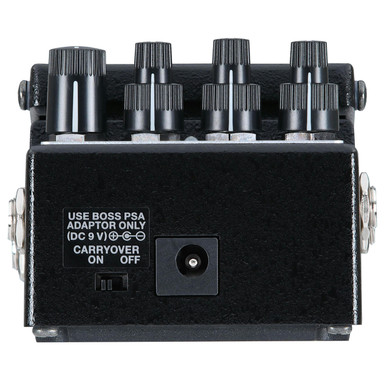
- Tap tempo and carryover functions.
- True stereo input and output.
- Expandable control via external footswitches or an expression pedal.
RE-201 Space Echo: A Coveted Classic
The Roland RE-201 Space Echo was a game-changer when it came out. Equipped with three evenly-spaced tape heads and a spring reverb tank, it was capable of producing anything from clean, single delays to dense, rhythmic echoes and ambient washes. But there was more to it than that. The RE-201’s appealing sound was influenced by many factors, from the warm compression of magnetic tape saturation to the evolving modulation produced by motor speed fluctuations, friction, and other elements. Analogue preamp circuitry was also a key ingredient in the Space Echo’s rich sonic recipe.
Reborn in Digital Form
With its RE-2, Boss has managed to fully reproduce all of the complex, non-linear behaviours that contribute to the RE-201’s immortal sound. By analysing numerous vintage units, they've ensured that all of the enchanting sonic characteristics have been accurately captured and recreated courtesy of all-new algorithms — including the tape path, record/playback mechanism, motor variations, preamp colouration, spring reverb sound, and more.
Otherworldly Sounds
The Boss RE-2's 11-position mode selector allows you to dial in different virtual tape heads with or without spring reverb. You can also balance the echo/reverb blend with independent level knobs. The distinctive idiosyncrasies of the RE-201 have been emulated too, such as the gradual pitch change that occurs with 'Repeat Rate' tweaks and the runaway feedback that happens when maxing the 'Intensity' knob. And with the expressive 'Wow' and 'Flutter' control, you can harness all of the natural modulation characteristics essential to the classic Space Echo sound.
Built for Contemporary Players
When Boss recreate one of their legendary effects units, they don't just make it true to the original. They make it better too! The RE-2's delay time has been doubled, tap tempo control is supported, and there’s a cool 'Twist' function for creating evocative special effects as you perform. For the dry sound, you can choose between the warm and fat RE-201 preamp tone or a clean signal with zero processing. Full stereo I/O is available for full immersion, and it’s possible to mute the dry signal for parallel effect setups and studio use. The RE-2 also supports expanded control via external footswitches or an expression pedal, including continuous pedal control of multiple panel functions at once.
Specifications
- Voltage: 9V
- Current Draw: 75 mA
- Bypass: Buffered
Dimensions & Weight
- Dimensions: 73 (W) x 129 (D) x 59 (H) mm
- Weight (Including Battery): 450 g
Accessories
- Owner's Manual
- Leaflet
- Dry Battery (9V, 6LR61)
Options (Sold Separately)
- AC Adaptor: PSA Series
- Footswitch: FS-5U
- Dual Footswitch: FS-6, FS-7
- Expression Pedal: FV-500H, FV-500L, EV-30, Roland EV-5