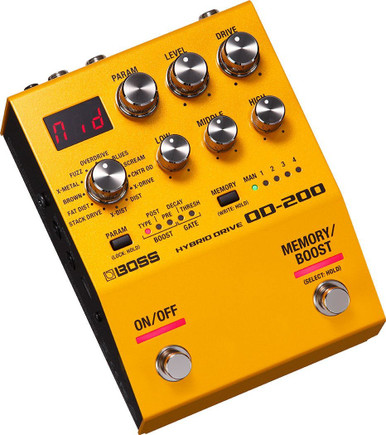
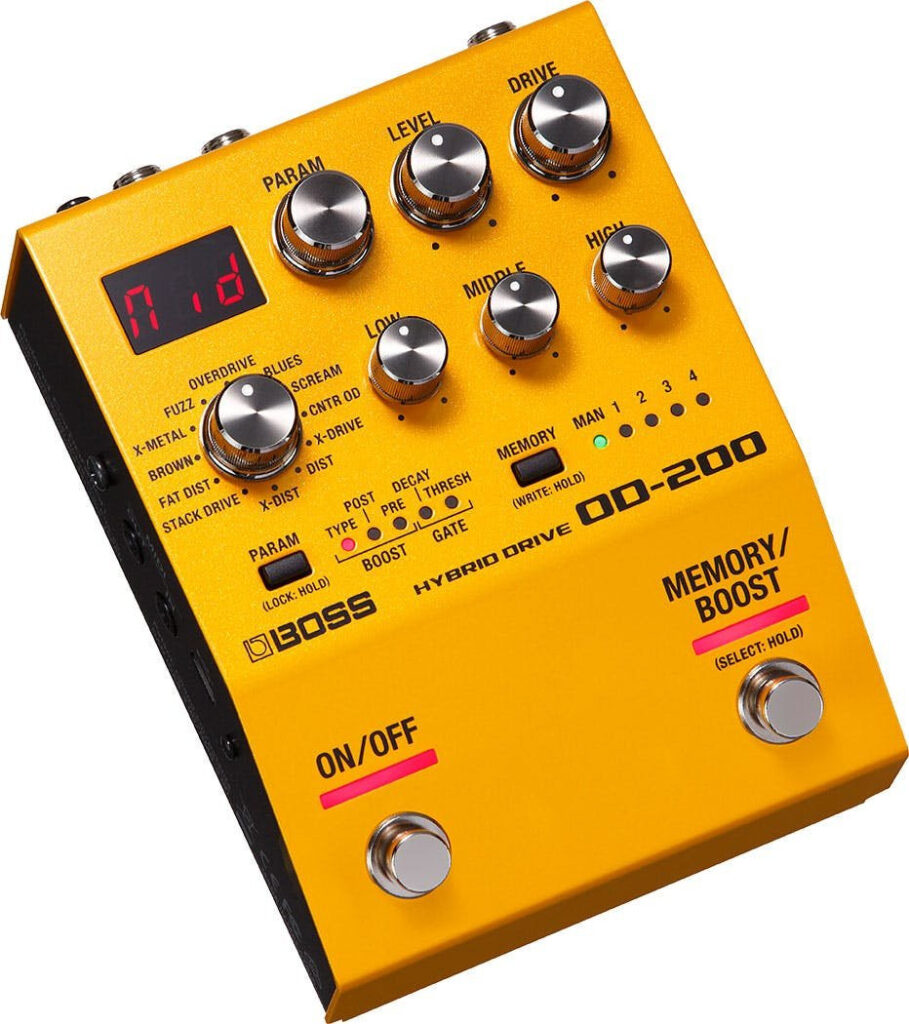
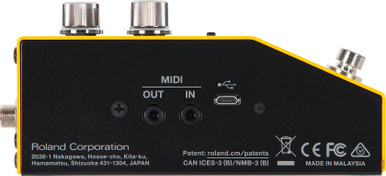
Brand
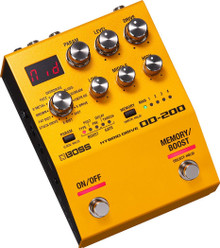
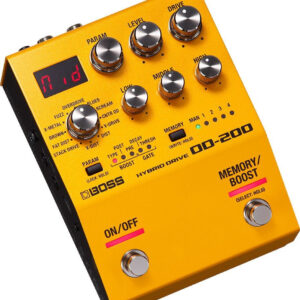
Boss is a prominent manufacturer of guitar effects pedals, multi-effects units, and related musical equipment, known for their durability, reliability, and wide range of effects. Founded in 1973 as a division of the Roland Corporation, Boss quickly became synonymous with high-quality effects pedals that are popular among guitarists and musicians worldwide.
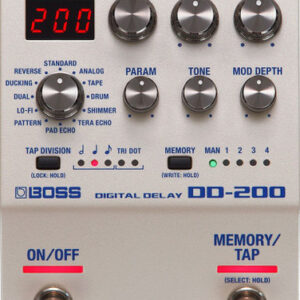
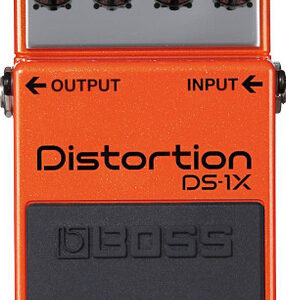
Boss pedals are renowned for their rugged construction, intuitive controls, and signature sound quality. The company offers a comprehensive lineup of effects pedals covering various categories, including distortion, overdrive, delay, modulation, and more. Iconic pedals like the DS-1 Distortion, the DS-2 Turbo Distortion, the DD-3 Digital Delay, and the MT-2 Metal Zone have become staples on countless pedalboards due to their versatility and reliability.
Category
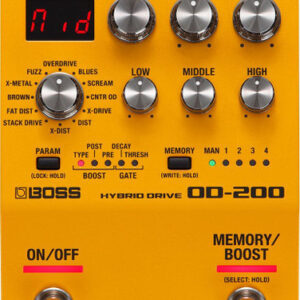
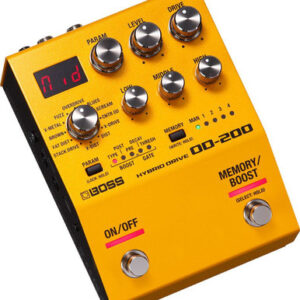
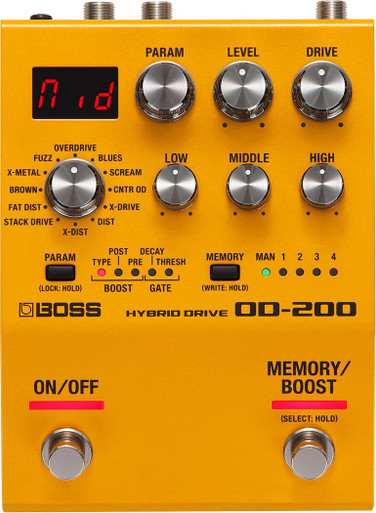
Overdrive uses soft or moderate clipping to add harmonics and compression while retaining more of the original note shape than heavy distortion. Some circuits emphasise the midrange and trim bass before clipping; others remain broad, transparent or amplifier-like. Gain, clipping arrangement, headroom and tone filtering decide whether it supplies a light edge, a saturated drive sound or extra push into another gain stage.
Tags
The signal is shaped by continuously varying electronic circuitry rather than being converted into a digital effect algorithm. Component choice, operating voltage and circuit tolerances influence headroom, noise, clipping texture and the small variations in response between designs.
Converts the signal or control process into numerical data for algorithmic processing. Digital designs can provide precise timing, long memory, complex routing and repeatable presets; sample rate, conversion, internal resolution and latency influence fidelity and response.
Clips the waveform firmly and adds a dense series of harmonics with compression and sustain. The clipping devices, gain stages and tone filters determine whether the result is tight, smooth, mid-focused, scooped, grainy or deliberately abrasive.
Combines analogue and digital stages within one signal or control design. A digital section may provide memory, routing or modelling while analogue circuitry supplies clipping, filtering or amplification, so the order and blend of the two domains shape the final response.
Stores complete groups of parameter values for later recall. The number of locations, switching time, spillover behaviour and whether presets include routing, expression and MIDI assignments determine how completely one sound can change into another.