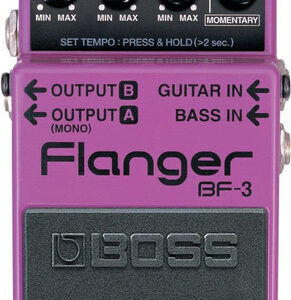
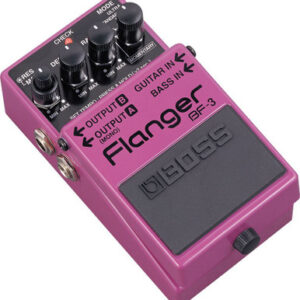
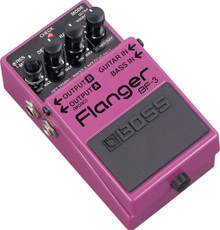

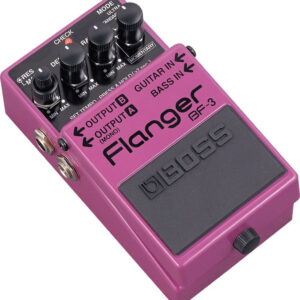
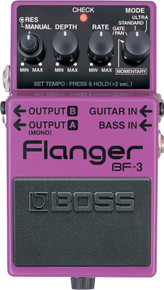
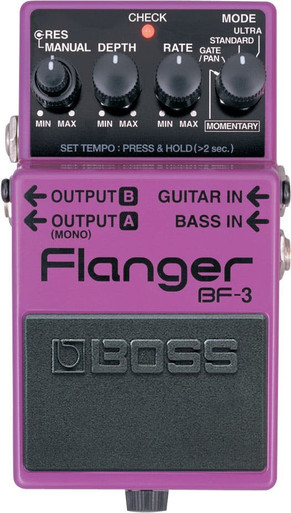
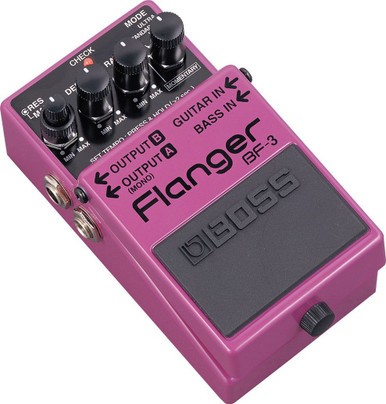
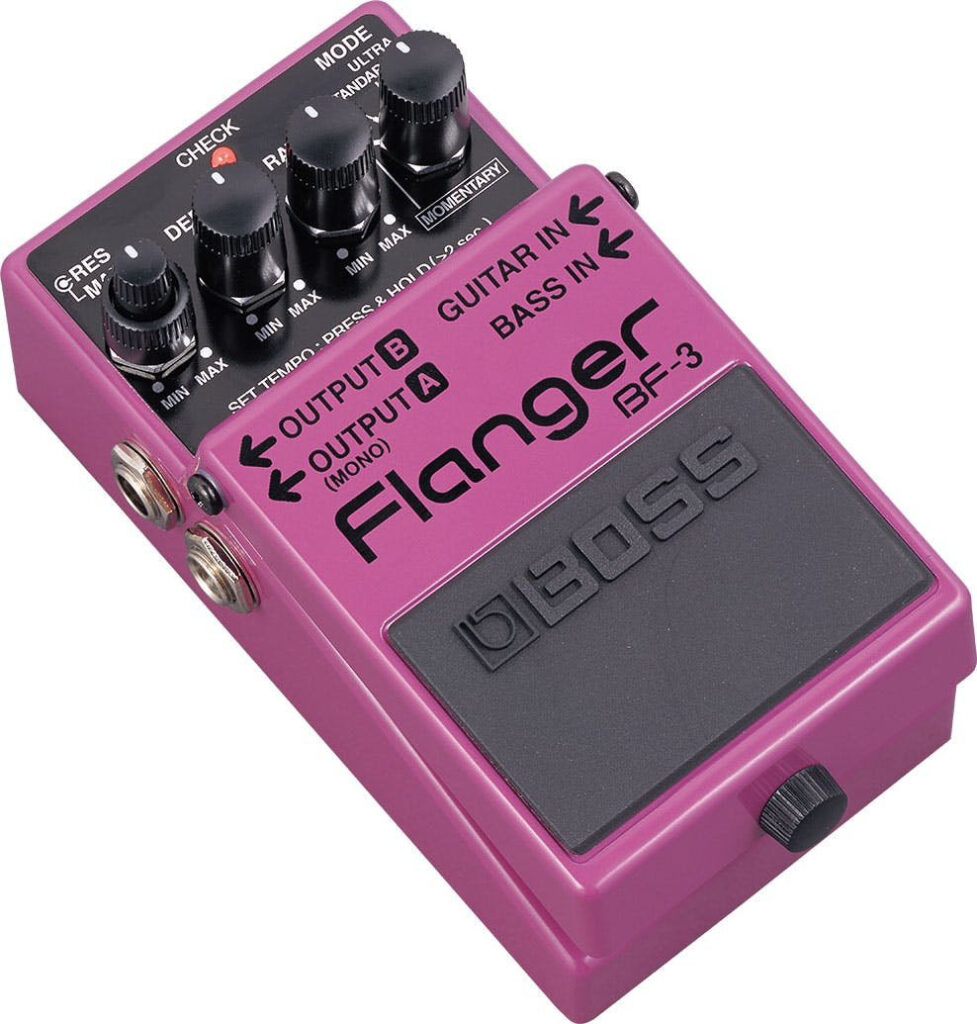
The BF-3 is a highly versatile flanger, delivering awesome effects ranging from a subtle, phaser-like swirl to a full on jet engine with just a twist of a few knobs. The BF3 is certainly no one trick pony! The stompbox improves on the legacy of the celebrated BF-2 with new ultra, gate and pan modes, able to create great stereo effects or choppy "slicer" effects. The BF-3 is built for bassists and guitarists with inputs for each – Boss know bassists love a few effects too!
Renowned Boss build quality
Boss pedals have a reputation for being built like tanks. You can be sure that however much you drop it, kick it, throw it and jump on it, it'll still come back for more. These pedals constantly survive the rigours of rock 'n' roll touring, and that's why they're seen at the feet of top touring pros everywhere.
Reliability really can be affordable to all. Boss are so sure their compact pedals last the test of time, they cover them with a full five year warranty.
Key Features
- BOSS' best flanging effects in a compact pedal
- New Ultra and Gate/Pan modes for ultra-fat flanging and futuristic slicer-type sounds, respectively
- Momentary mode turns flanging on instantly
- Tap tempo adjustable via pedal
- Independent Guitar and Bass inputs and stereo outputs
- BOSS 5-year warranty