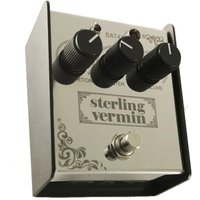
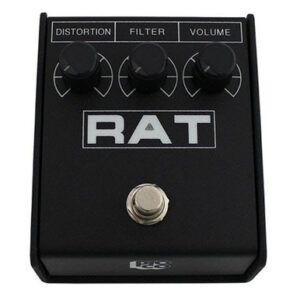
The Pro Co RAT Sterling Vermin is the latest hand-soldered variant of one of the most iconic distortion pedals of all time. Using premium components such as the LM741 Op-Amp chip its easy to dial in classic Rat tones. However the presence of selectable clipping diodes unlocks far more tonal versatility; the BAT41 option is much smoother and more balanced in its response to your playing. This allows the Sterling Vermin to deliver everything from articulate touch-sensitive drive through to fuzzed out aggressive distortion. The tonal dynamism this pedal offers separates it from its peers. The premium circuitry is housed in a stainless steel enclosure ensuring long-lasting durability. The CTS pots and oversized knobs were designed specifically to make dialling in tones feel responsive with a satisfying amount of tension. This means the pedal feels as luxurious as it sounds whilst the laser-annealed graphics means it stands up cosmetically as well. Its obvious every effort has been made to make sure this pedal feels and sounds like the premium version of the classic RAT you expect!
Pro Co RAT Sterling Vermin Boutique Distortion Pedal
This is a New Pro Co RAT Sterling Vermin Boutique Distortion Pedal from Pro Co is in our Distortion Pedals category on Just Pedals. Read More below.
As an affiliate partner, we may earn a small commission when you buy through our links — at no extra cost to you.
Related videos

Brand
Pro Co
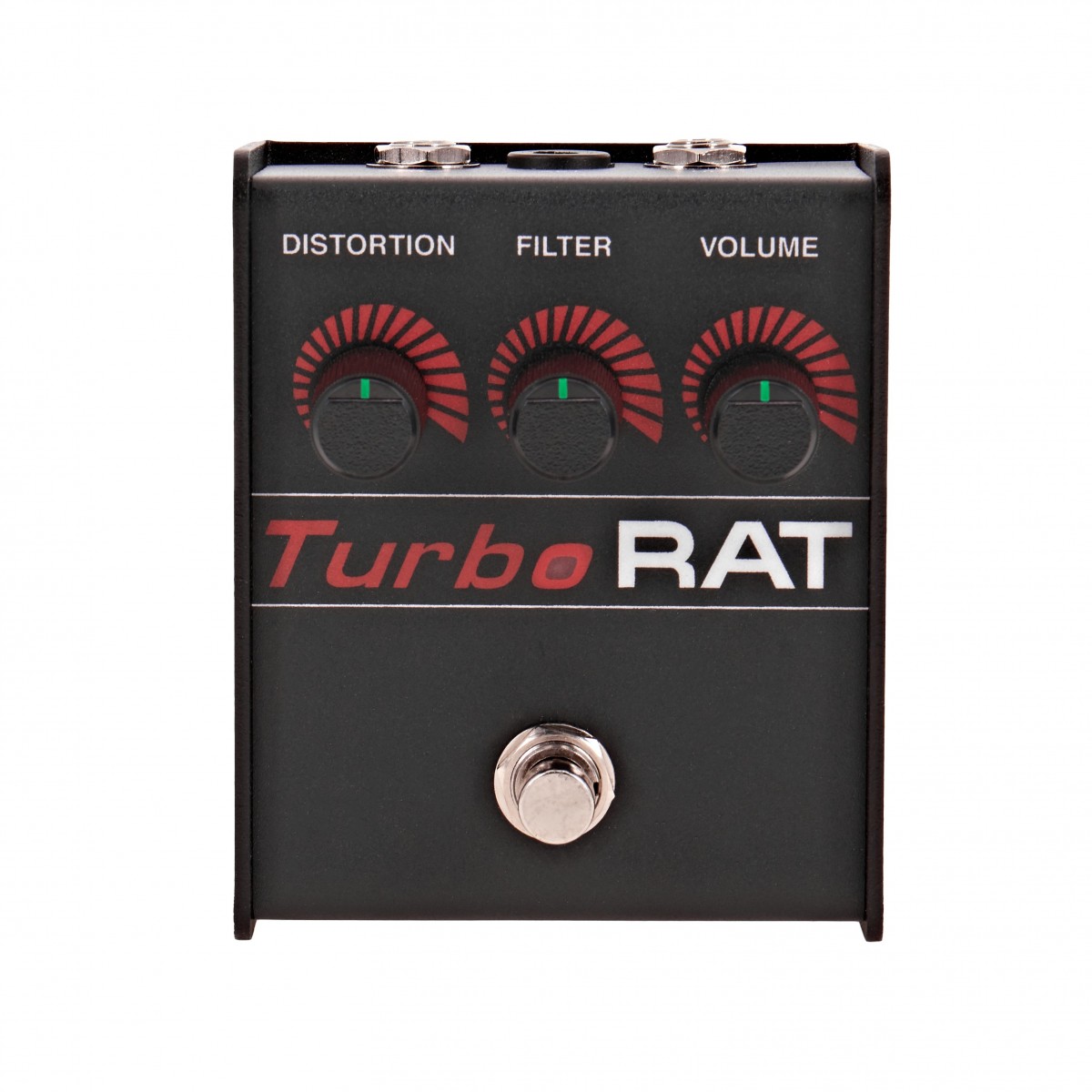
In the current JustPedals catalogue, Pro Co is represented by Distortion Pedals. Current listings include RAT 2 Distortion, LIL RAT Distortion and Turbo RAT Distortion. That makes the range relevant to players looking for drive, gain and clipping. Check each model for its exact circuit or processing platform, controls, power requirements and connections, particularly where the catalogue includes both pedals and supporting gear.
Category
Distortion Pedals
Distortion clips the waveform more firmly than overdrive, generating dense upper harmonics, longer sustain and a more compressed response. Circuit topology and filtering decide whether the sound is tight and focused, broad and aggressive, smooth or deliberately abrasive. Gain sets the amount of clipping, while pre- and post-distortion tone controls strongly influence low-end definition, midrange presence and high-frequency texture.
Others Just Ordered :
- I Love A Happy Accident… – Animals Pedal
- Animals Pedal Vintage Van Driving is Very Fun Overdrive
- Animals Pedal Sunday Afternoon Is Infinity Bender
- Ninevolt Pedals | Bath Time Reverb (Animals Pedal)
- This Fuzz Pedal Makes No Sense… But It Sounds Incredible

- ANIME Pedals | Animals Pedal Custom Illustrated Series