Brand
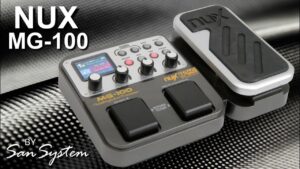
Nux pedals are known for delivering impressive sound quality and innovation at great value, making them a favourite among guitarists of all levels. Their range covers everything from warm analogue overdrives and dynamic delays to powerful multi-effects units packed with digital precision. Nux often blends modern tech like impulse responses and Bluetooth control with classic tones, offering versatility without breaking the bank. Reliable, creative, and constantly evolving, Nux pedals prove you don’t need to spend a fortune to sound fantastic.
Category
Tags
A buffer pedal protects your tone when your signal has a long journey to travel. As cables and multiple pedals build up, high frequencies can fade and your sound can lose clarity. A buffer restores strength and sparkle, keeping your signal full, punchy, and consistent from guitar to amp.
Use a buffer at the start of a large pedalboard, after vintage true-bypass chains, or anywhere your tone feels dull or weak. It doesn’t add gain or colour — it simply preserves what you already have, making sure your core sound arrives exactly as it should.
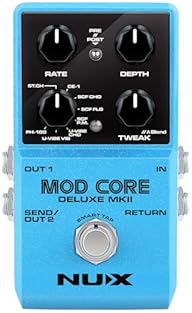
A chorus pedal thickens and widens your tone by subtly duplicating your signal and shifting it slightly out of tune and time. The result is movement — shimmering cleans, liquid arpeggios, and that unmistakable 80s swirl that makes single notes feel fuller and chords sound expansive. From gentle sparkle to deep, watery modulation, chorus adds dimension without overwhelming your core sound.
Use it to bring life to clean passages, soften driven tones, or create spacious textures that sit beautifully in a band mix. Whether you’re after subtle depth or bold, warbling character, a chorus pedal is a simple way to make your guitar sound bigger, richer, and more immersive.
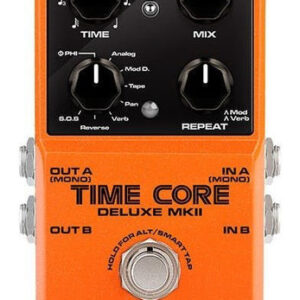
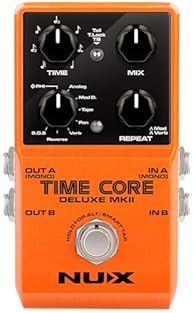
A delay pedal records your signal and plays it back after a set time, creating echoes that can range from tight, slapback repeats to long, atmospheric trails. It’s one of the most versatile effects, used to thicken tones, add rhythmic depth, or build spacious, ambient layers. Analogue delays offer warm, decaying repeats that blend naturally with your tone, while digital units provide pristine echoes with precise control over time, feedback, and mix levels.
From classic rockabilly and tape-style echoes to modern looping and shimmer effects, delay pedals have become essential tools for shaping sound. They can make solos soar, rhythms pulse, or transform simple chord progressions into cinematic textures. Whether used subtly to add dimension or boldly to create soundscapes, a good delay pedal can completely redefine the feel and atmosphere of your music.
This is brand new, fresh in, and a UK warranty is included. New Gear always comes from trusted UK music retailers.
An octave pedal shifts your guitar signal up or down by one or more octaves, blending the altered pitch with your original sound to create a fuller, more complex tone. It can add a deep, bass-like layer underneath your playing or a shimmering high octave on top for lead lines and solos. Classic analogue octave pedals often produce slightly gritty, organic sounds, while modern digital versions track more precisely and can offer multiple octave ranges.
Octave pedals are great for thickening single-note riffs, creating synth-style textures, or even mimicking bass parts when playing alone. They pair well with fuzz or overdrive pedals for massive, harmonically rich tones. Whether you’re after vintage Hendrix-style octave fuzz or a modern polyphonic sound that tracks chords cleanly, an octave pedal opens up a world of creative possibilities and adds real weight and character to your tone.
Pitch pedals alter the frequency of your guitar signal, changing the perceived note or adding harmony. They can shift notes up or down by fixed intervals, create harmonies, or produce dive-bomb and whammy-style effects without a tremolo arm. Pitch shifters and harmonisers are great for thickening solos, simulating multiple guitars, or experimenting with creative, otherworldly sounds that expand your tonal range.
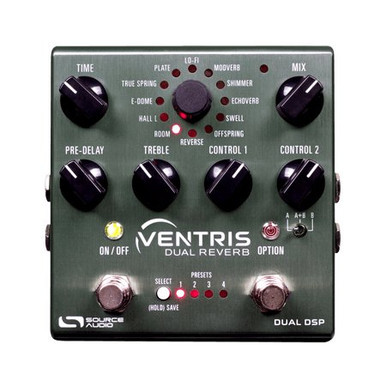
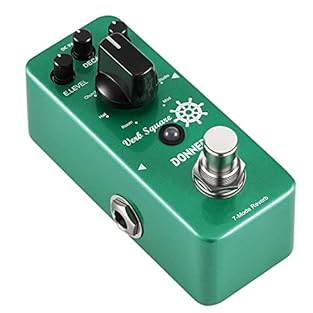
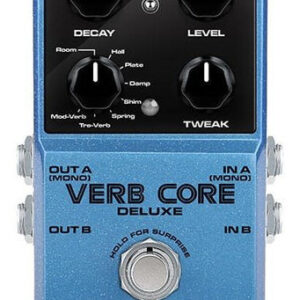
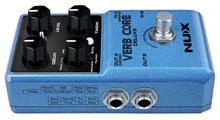
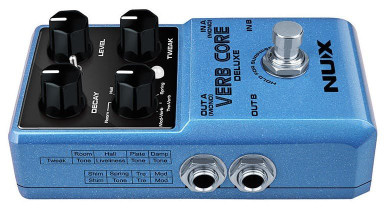
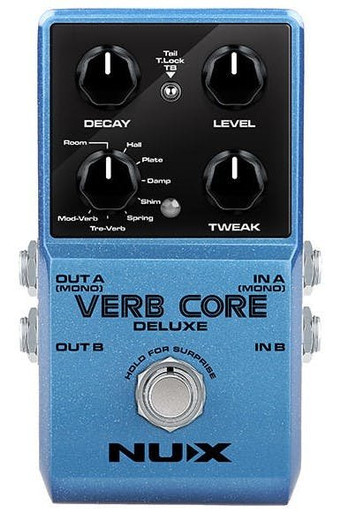
A reverb pedal is like the rich sauce that ties every flavour on the plate into one smooth experience. It adds depth, warmth, and atmosphere — the sonic equivalent of a perfectly reduced glaze that lingers on the tongue. Whether you’re after the subtle ambience of a cosy café (spring or plate reverb) or the grand echoes of a cathedral (hall or shimmer reverb), this is where your tone breathes and expands. A touch of reverb can turn a dry sound into something lush and inviting — but pour on too much, and it’s all you can taste. Used with finesse, it’s the finishing touch that transforms your tone from plain to unforgettable.
A tremolo pedal modulates the volume of your guitar signal up and down in a rhythmic pattern, creating a pulsing or wavering effect that can sound vintage and hypnotic or sharp and choppy depending on the settings. It’s one of the oldest effects in guitar history, famously used on classic amps from the 1950s and ’60s.
Most tremolo pedals let you control the speed, depth, and wave shape, allowing you to go from smooth, subtle swells to intense stuttering tones. It’s a simple but expressive effect that adds movement and character to your sound.