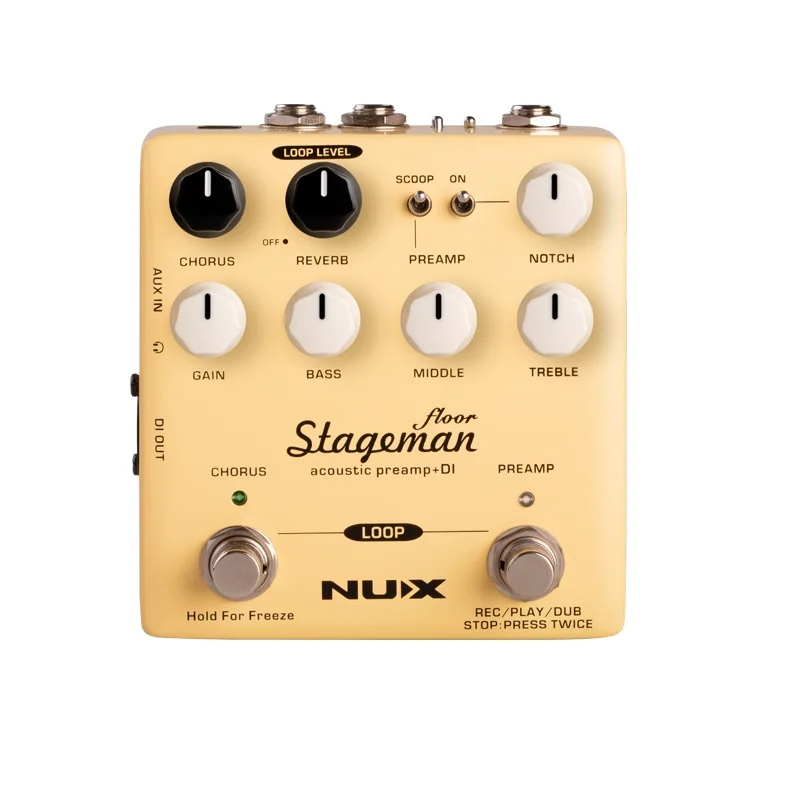
The NUX is a looper pedal. It is intended for recording and layering repeated performance phrases.
Key identified features include digital processing and EQ control.
- Brand: NUX
- Product type: Looper Pedals
- Features: Digital, EQ

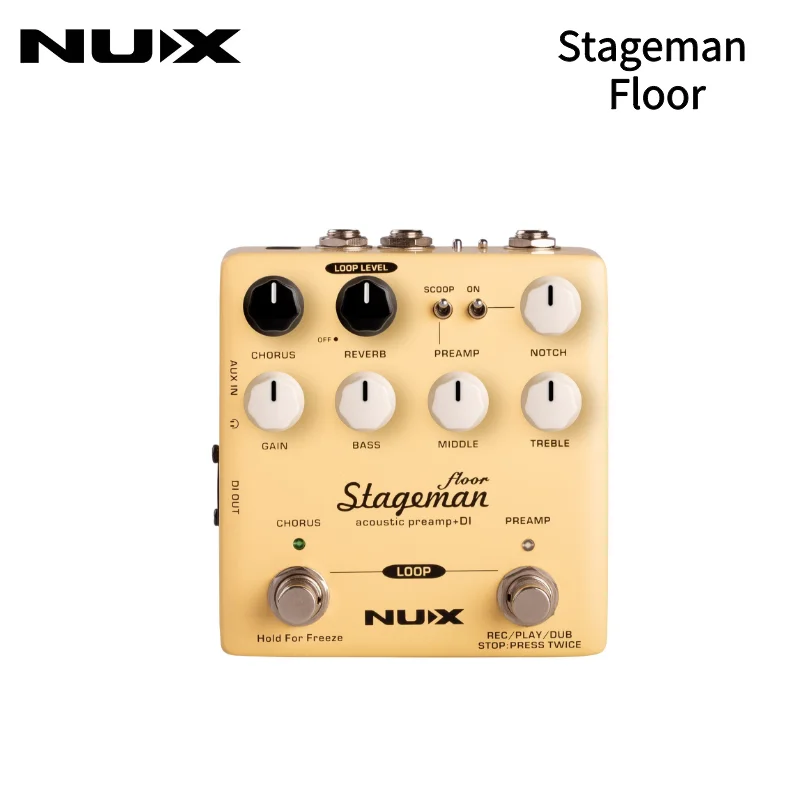
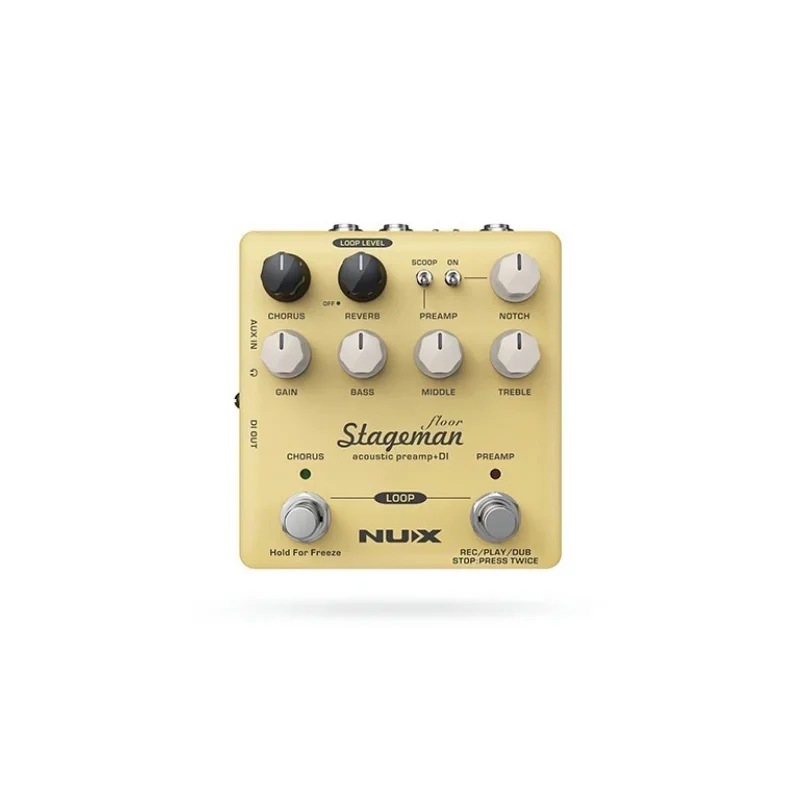
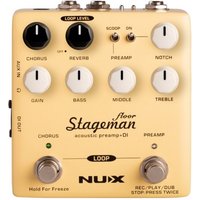
This is a New NUX Stageman Floor NAP-5 Pedal, Electric Guitar Effects, Digital Effects, Looper Function, Highly Sensitive, EQ, Natural Sound from NUX its found in our Looper Pedals on the Just Pedals menu. Read More below.
As an affiliate partner, we may earn a small commission when you buy through our links — at no extra cost to you.
The NUX is a looper pedal. It is intended for recording and layering repeated performance phrases.
Key identified features include digital processing and EQ control.
NUX made its industry debut in 2006 and is one of the brands owned by Cherub Technology. Its official catalogue ranges from analogue and digital stompboxes to multi-effects, amplifiers, wireless systems, drums, keyboards and recording gear. Cherub lists company locations in Guangdong, China, as well as overseas offices; that identifies the company base, not the factory for every NUX product. JustPedals listings include the NBP-5 Melvin Lee Davis bass preamp, NAI-5 Optima Air acoustic simulator and NDR-5 Atlantic delay and reverb. The range rewards model-by-model comparisons of signal path, presets and instrument-specific features.
A looper records a passage and plays it back repeatedly so additional parts can be overdubbed over the cycle. Loop length, audio quality, storage and the number of independent tracks define the basic capability. Undo, quantisation, synchronisation, rhythm guides, reverse and half-speed functions determine how recordings can be corrected, transformed and aligned with other equipment.
Converts the signal or control process into numerical data for algorithmic processing. Digital designs can provide precise timing, long memory, complex routing and repeatable presets; sample rate, conversion, internal resolution and latency influence fidelity and response.
Raises or lowers defined frequency regions. Fixed-band graphic controls provide direct visual shaping, while parametric controls vary centre frequency and bandwidth; the available range and filter width determine whether the change is broad tonal balance or narrow corrective filtering.