
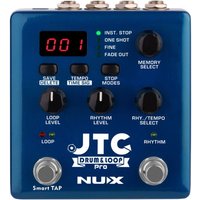
The NUX JTC Drum+Loop PRO Dual Pedal is built for guitarists solo performers and live loopers looking for complete loop and rhythm control in one unit. With up to 6 hours of recording time across 256 slots its ideal for storing ideas building live sets or looping full songs. Independent volume control helps you balance drum patterns and loops quickly while features like auto-stop and fade-out keep your transitions smooth. The pedal also includes 40 diverse drum grooves and a pre-count option to help you lock in tight starts. Stereo inputs and outputs suit more complex rigs and the external footswitch input adds hands-free flexibility for live use.
NUX JTC Drum+Loop PRO Dual Pedal
£131.50
This is a New NUX JTC Drum+Loop PRO Dual Pedal from NUX is in our Specialist Effects Pedals category on Just Pedals. Read More below.
View Just NUX
As an affiliate partner, we may earn a small commission when you buy through our links — at no extra cost to you.
Related videos

Brand
NUX
NUX made its industry debut in 2006 and is one of the brands owned by Cherub Technology. Its official catalogue ranges from analogue and digital stompboxes to multi-effects, amplifiers, wireless systems, drums, keyboards and recording gear. Cherub lists company locations in Guangdong, China, as well as overseas offices; that identifies the company base, not the factory for every NUX product. JustPedals listings include the NBP-5 Melvin Lee Davis bass preamp, NAI-5 Optima Air acoustic simulator and NDR-5 Atlantic delay and reverb. The range rewards model-by-model comparisons of signal path, presets and instrument-specific features.
Category
Specialist Effects Pedals
Specialist effects alter the signal in ways that do not sit cleanly inside one established family. They may use granular processing, frequency shifting, resonators, freeze or sustain, bit reduction, ring modulation, feedback networks or combinations of several techniques. The relevant distinction is the underlying process, its tracking or latency, and how completely the dry signal can be blended or replaced.
Tags
Stereo
Processes, creates or passes two audio channels. True stereo preserves separate left and right inputs, while mono-to-stereo effects generate spatial differences internally; routing, phase behaviour and whether trails remain stereo determine the resulting image. Some outputs sum to mono when only one socket is connected, which can change level or modulation depth.
Others Just Ordered :

- I Love A Happy Accident… – Animals Pedal

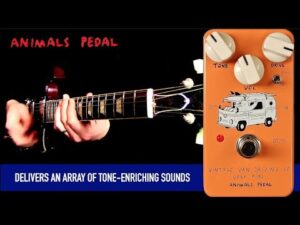
- Animals Pedal Vintage Van Driving is Very Fun Overdrive
- Animals Pedal Sunday Afternoon Is Infinity Bender

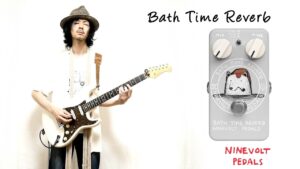
- Ninevolt Pedals | Bath Time Reverb (Animals Pedal)
- This Fuzz Pedal Makes No Sense… But It Sounds Incredible

- ANIME Pedals | Animals Pedal Custom Illustrated Series