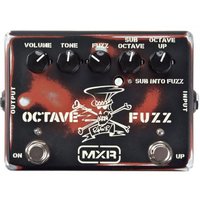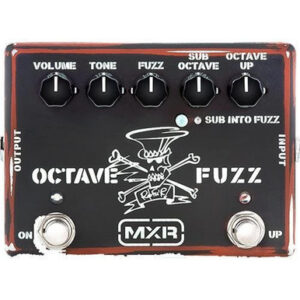
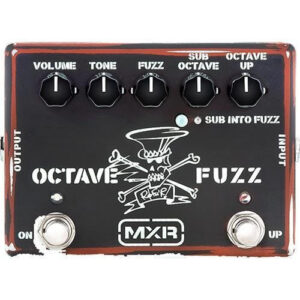
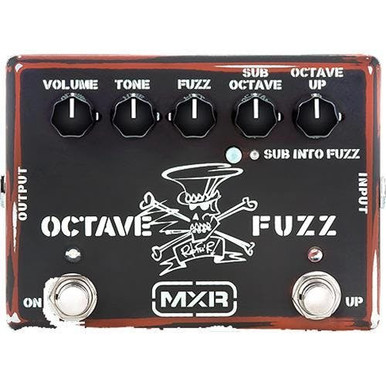
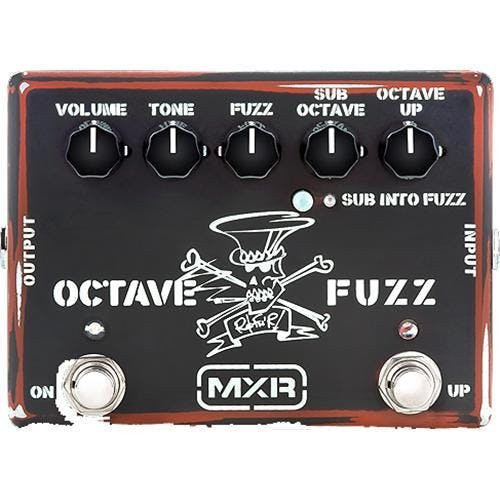
MXR SF01 Slash Octave Fuzz Pedal

£179.99

This is a New MXR SF01 Slash Octave Fuzz Pedal from MXR, listed in Octave Pedals on Just Pedals. Read More below.

View Just
more
and , ,

The MXR Slash Octave Fuzz offers up a plethora of gritty, nasty fuzz tones with an option of dialing in a buzzing up-octave and/or a sub thumping down-octave. Internal ‘set and forget’ controls are included for tone and gain to give you a chance to really personalise your pedal exactly as you like it!

Here’s what MXR Say about the Slash Fuzz Octave

Two legendary and timeless icons of rock music—Slash and MXR Innovations—have teamed up to deliver the Slash Octave Fuzz. It features a searing Fuzz tone coupled with a separate Sub Octave voice and an Octave Up Fuzz, all for thickening up your tone with a sinister growl. With an array of external and internal controls, there are numerous ways to combine the main Fuzz effect’s thick ’70s shag with the chainsaw grind of the Octave Up Fuzz and the warm growl of the Sub Octave. Internal Gain and Tone pots shape the Octave Up Fuzz effect. Featuring custom Slash artwork and a distressed hot-rod paintjob, the Slash Octave Fuzz features all analog circuitry, true hardwire bypass and comes in a heavy duty housing with durable jacks and switches.

Related videos

Brand

MXR

MXR’s first product was the Phase 90, released in 1972. Dunlop’s official MXR history traces the early line from that compact phaser to the Distortion+, Dyna Comp compressor and Blue Box octave fuzz—circuits that remain central reference points for the brand. JustPedals carries those classic families alongside the Carbon Copy analog delay, Micro Amp, Talk Box and bass effects. MXR’s range is deliberately broader than one effect category: compare the model number and version, especially where a classic circuit has later reissues, mini enclosures or expanded controls.

Category

Octave Pedals

An octave effect generates notes one or more octaves above or below the input. Analogue circuits often create raw monophonic sub-octaves, while digital pitch tracking can follow chords and provide several intervals with cleaner separation. Tracking speed, polyphonic accuracy, latency and the balance of dry, upper and lower voices determine whether the result feels tight, organ-like, synthetic or deliberately unstable.

Tags

Analogue

The signal is shaped by continuously varying electronic circuitry rather than being converted into a digital effect algorithm. Component choice, operating voltage and circuit tolerances influence headroom, noise, clipping texture and the small variations in response between designs.

Fuzz

Pushes the signal into extreme clipping, often approaching a square wave and producing dense harmonics. Transistor type, bias, input loading and filtering govern whether the texture is smooth, woolly, gated, spluttering, octave-rich or highly responsive to the instrument volume.

Vocal

Designed for microphone-level signals and the frequency, dynamics and feedback behaviour of the human voice. Input gain, balanced connections, phantom power and pitch tracking may be provided so effects respond correctly before the signal reaches a mixer or PA.