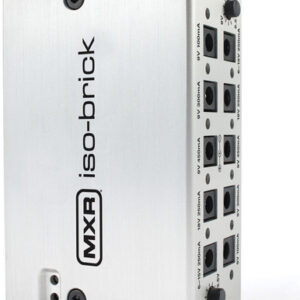
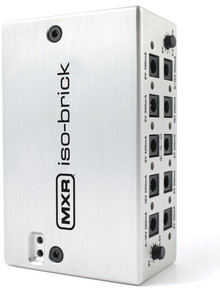
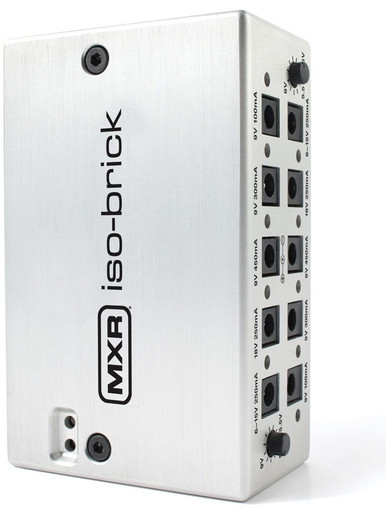
MXR M238 Iso-Brick Power Supply

£179.99

This is a New MXR M238 Iso-Brick Power Supply from MXR, listed in Specialist Effects Pedals on Just Pedals. Read More below.

View Just
more
and ,

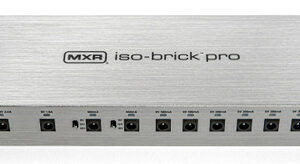
The MXR M238 Iso-Brick Power Supply is small and light with tons of quiet, noisefree DC power on tap to run a wide range of pedal types without crowding or weighing down your pedalboard. Stop relying on batteries that start to cause problems after a while and treat your pedalboard to a quality power supply

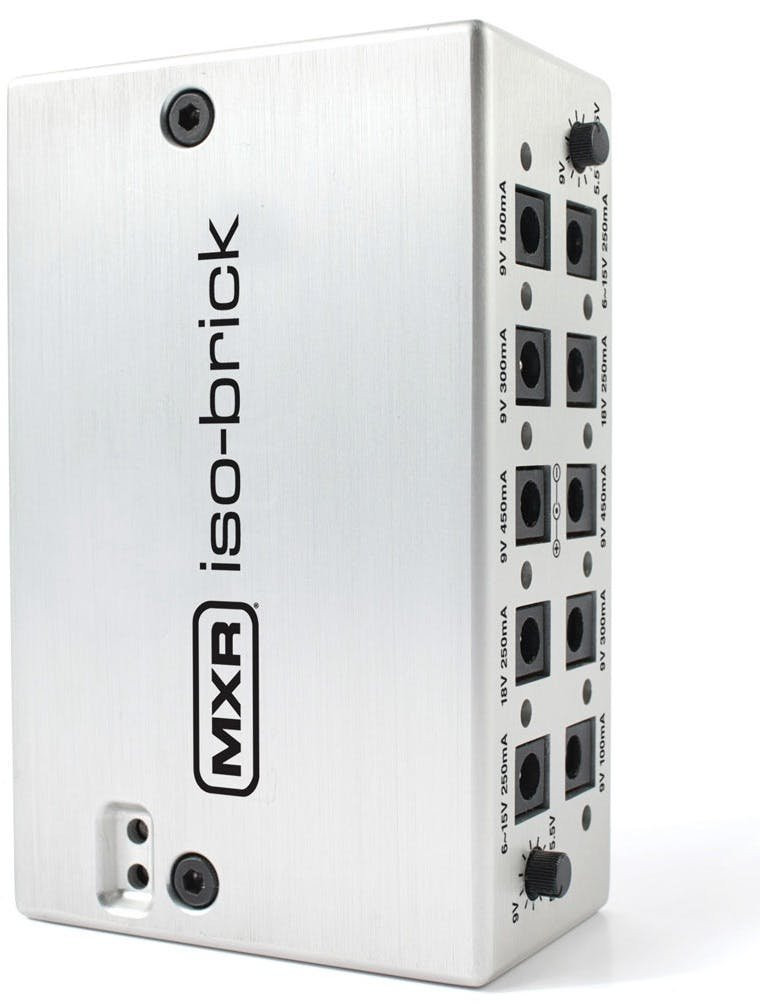
Each of the 10 outputs is fully isolated, eliminating gig-ending ground loop noise. Whether your pedals are analog or digital, positive or negative ground, this power box has you covered. Features six 9V outputs, two 18V outputs, and two variable 6V–15V outputs to accommodate a variety of voltage and current requirements.

Specifications

  • 10 fully-isolated outputs
  • Quiet, noise-free operation
  • Powers a wide range of pedal types—digital and analog, positive and negative ground (2) 9V outputs @ 100mA, (2) 9V @ 300mA, (2) 9V @ 450mA, (2) 18V @ 250mA, and (2) variable outputs adjustable from 6V to 15V @ 250mA
  • Variable outputs can be used to emulate drained battery effect
  • On/off and connection status LEDs

Related videos

Brand

MXR

In the current JustPedals catalogue, MXR is represented by Overdrive Pedals, Compressor Pedals and Chorus Pedals. Current listings include Bass Synth, M300 Reverb and M307 Layers. That makes the range relevant to players looking for drive, gain and clipping, plus time-based effects and ambience. Check each model for its exact circuit or processing platform, controls, power requirements and connections, particularly where the catalogue includes both pedals and supporting gear.

Category

Specialist Effects Pedals

Specialist effects alter the signal in ways that do not sit cleanly inside one established family. They may use granular processing, frequency shifting, resonators, freeze or sustain, bit reduction, ring modulation, feedback networks or combinations of several techniques. The relevant distinction is the underlying process, its tracking or latency, and how completely the dry signal can be blended or replaced.

Tags

Analogue

Analogue products use continuous audio circuitry for some or all of the signal path, so clipping, filtering or modulation arises from physical components rather than sampled algorithms. The label does not guarantee a particular tone; component choice, headroom, bias, noise and the surrounding gain stages still matter. Check whether the switching, presets, control section or cabinet stage is digital when the exact signal path is important.

Digital

Digital products use conversion and processing to create, store or control the effect. This can provide presets, complex routing, repeatable algorithms, USB, MIDI and firmware features, but conversion, latency, power requirements and clocking depend on the design. Check the input and output levels, sample or impulse-response support, bypass behaviour and current draw when combining a digital unit with analogue pedals or a direct recording setup.