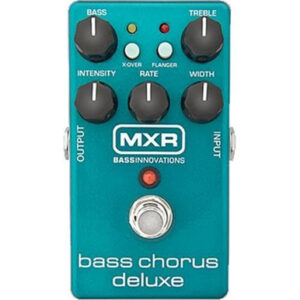
Brand
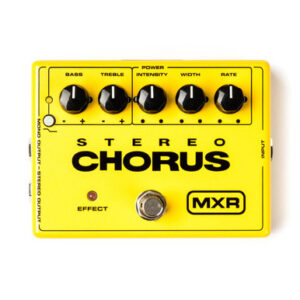
MXR’s first product was the Phase 90, released in 1972. Dunlop’s official MXR history traces the early line from that compact phaser to the Distortion+, Dyna Comp compressor and Blue Box octave fuzz—circuits that remain central reference points for the brand. JustPedals carries those classic families alongside the Carbon Copy analog delay, Micro Amp, Talk Box and bass effects. MXR’s range is deliberately broader than one effect category: compare the model number and version, especially where a classic circuit has later reissues, mini enclosures or expanded controls.
Category
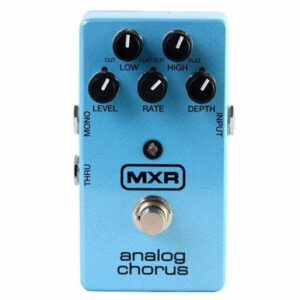
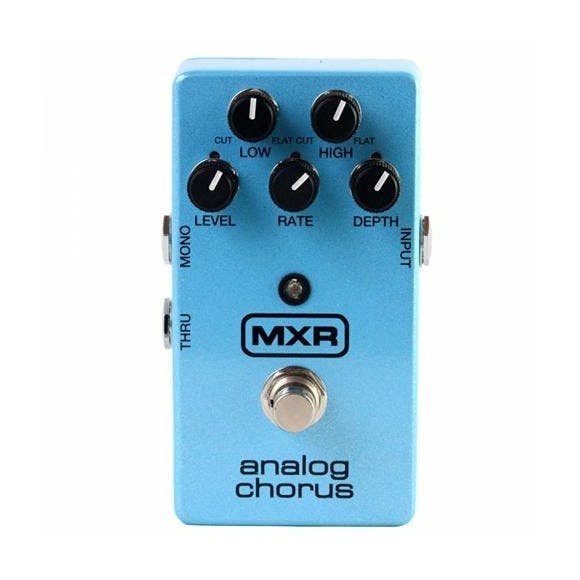
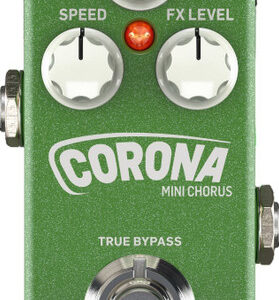
Chorus mixes the dry signal with one or more short, continuously modulated delays. The small pitch and timing movement between the paths creates width, shimmer and the impression of several instruments playing together. Rate controls the modulation speed, depth controls its excursion, and delay or mix settings determine whether the result is subtle thickening, a liquid wobble or a broad stereo image.
Tags
The signal is shaped by continuously varying electronic circuitry rather than being converted into a digital effect algorithm. Component choice, operating voltage and circuit tolerances influence headroom, noise, clipping texture and the small variations in response between designs.
Converts the signal or control process into numerical data for algorithmic processing. Digital designs can provide precise timing, long memory, complex routing and repeatable presets; sample rate, conversion, internal resolution and latency influence fidelity and response.