
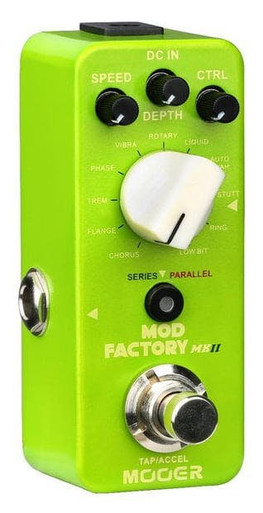
Mooer, kings of micro pedals, are back with an update to their whacky Mod Factory pedal in the MKII. Featuring a whole host of modulation effects, it's worth squeezing this small package into your pedalboard.
Loads of effects, little pedal
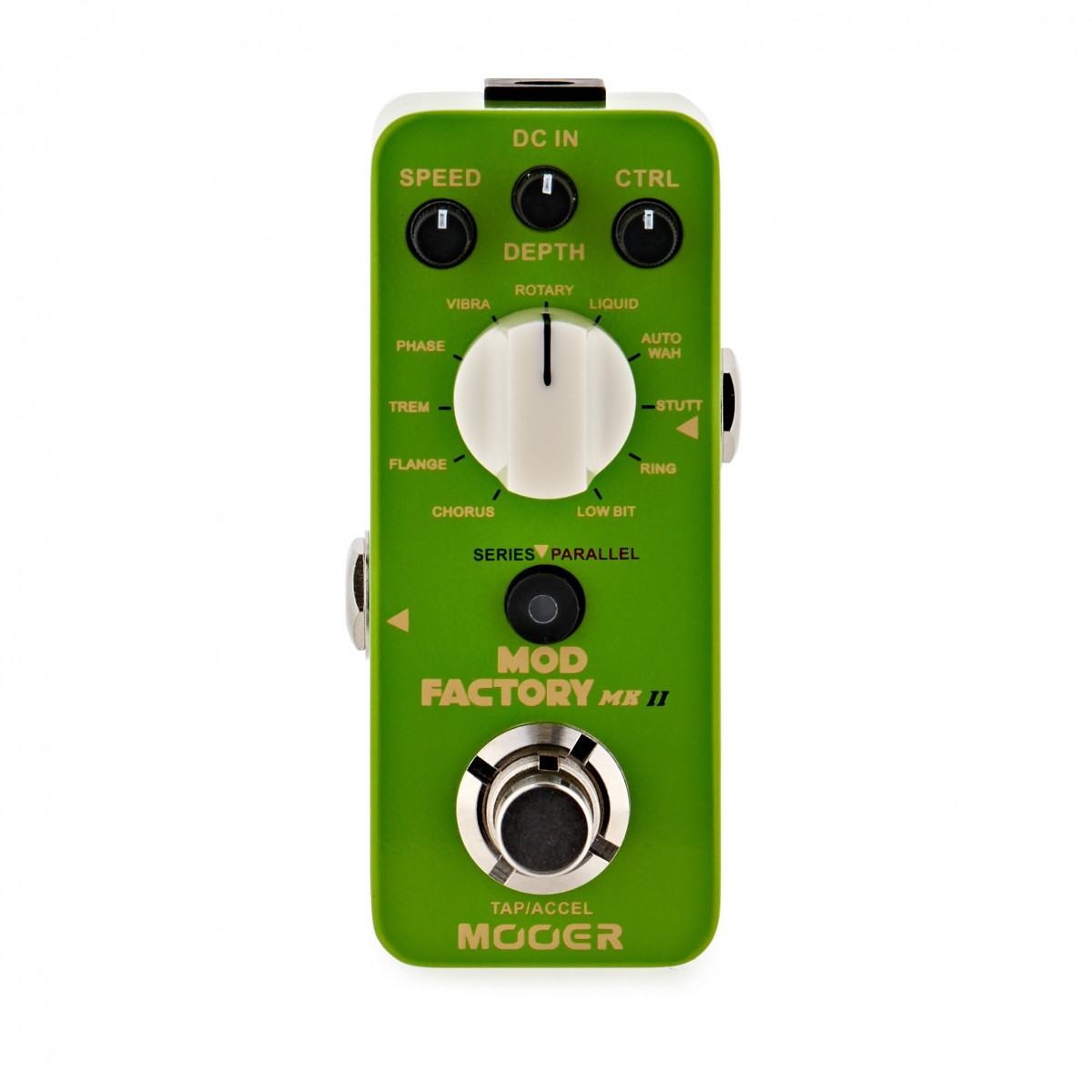
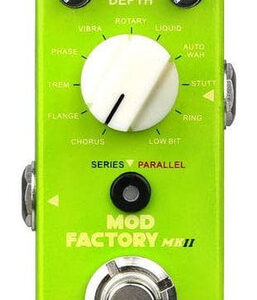
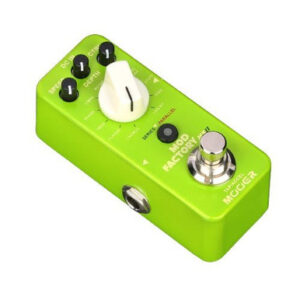
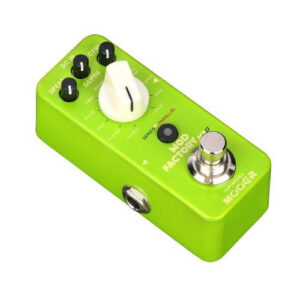
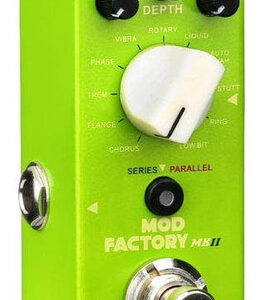
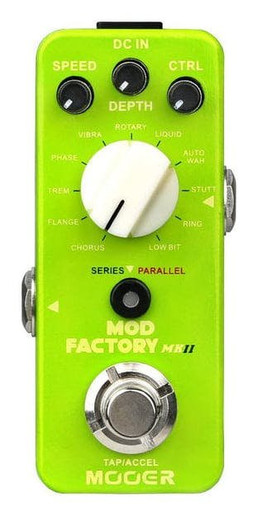
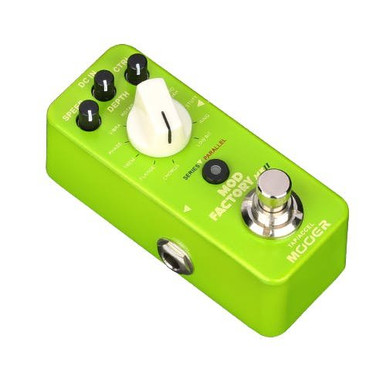
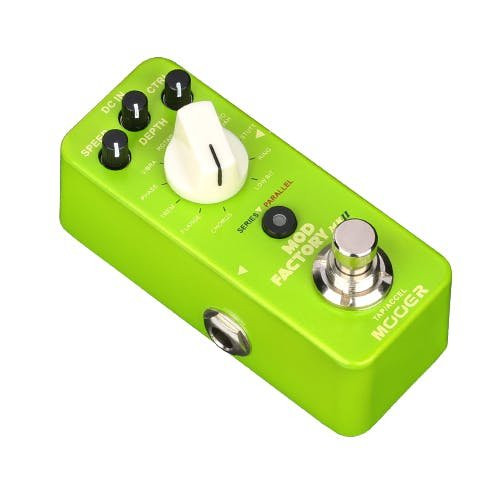
The MKII operates as a chorus, flanger, phaser and more, housing 11 effects across four dials for ultimate control. Using the main knob, select your desired sound, which includes unique liquid, rotary, stutt and auto-wah effects. The new low bit and ring settings are taken directly from the Mod Factory Pro, where they proved very popular choices. Using the dials at the top of the pedal, adjust the speed and depth of the modulation, while the CTRL knob will change the parameters of the chosen modulation.
Guitarists after something to experiment with will love the new acceleration and tap tempo to change the speed of the effects on the fly using the main on/off switch, great for wowing a crowd with big swells.
Clean and tidy
Another improvement over the original is that each effect is clearly printed out with its full name on the pedal rather than the previous model's abbreviations. This makes switching quicker and no longer do you have to study the manual to get an idea of what it does. Mooer has also adjusted the signal to noise ratio, so each effect is crisper and doesn't muddy the tone of the guitar. True bypass means turning on/off is a clean process too.
Here's what Mooer say about the Mod Factory MKII:
MOD FACTORY MKII contains 11 algorithms straight out of our award-winning MOD FACTORY PRO. All the usual suspects are there such as Chorus, Flange, Trem and Phase but it also sports a cool new low-bit effect and ring modulator that have proven very popular with the PRO version.
Following feedback from end users, the signal to noise ratio has been greatly improved over the original and your guitar tone will remain full and present when you turn the pedal on.
To enhance the experience even further, real-time tap tempo and acceleration functions have been added and can be accessed via the soft touch, momentary footswitch.
MOD FACTORY MKII also has an option for SERIES/PARALLEL. The SERIES/PARALLEL switch toggles between serial and parallel internal signal chain routing. This effectively provides 2 very different sounds from each modulation type.
Features
*Digital Multi Modulation pedal with 11 different algorithms
*SERIES/PARALLEL routing control
*TAP TEMPO control
*ACCELERATION feature
Specification
Input: 1/4” mono audio jack.(Impedance: 470Ω)
Output: 1/4” mono audio jack(Impedance: 100 Ω)
Power requirements: 9V DC
Current Draw: 160mA
Dimensions: 93.5mm(D) x 42mm(W) x 52mm(H)
Weight: 146g