
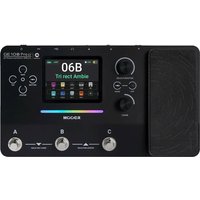
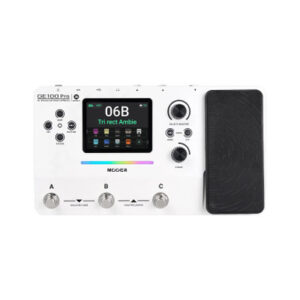
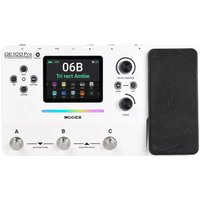
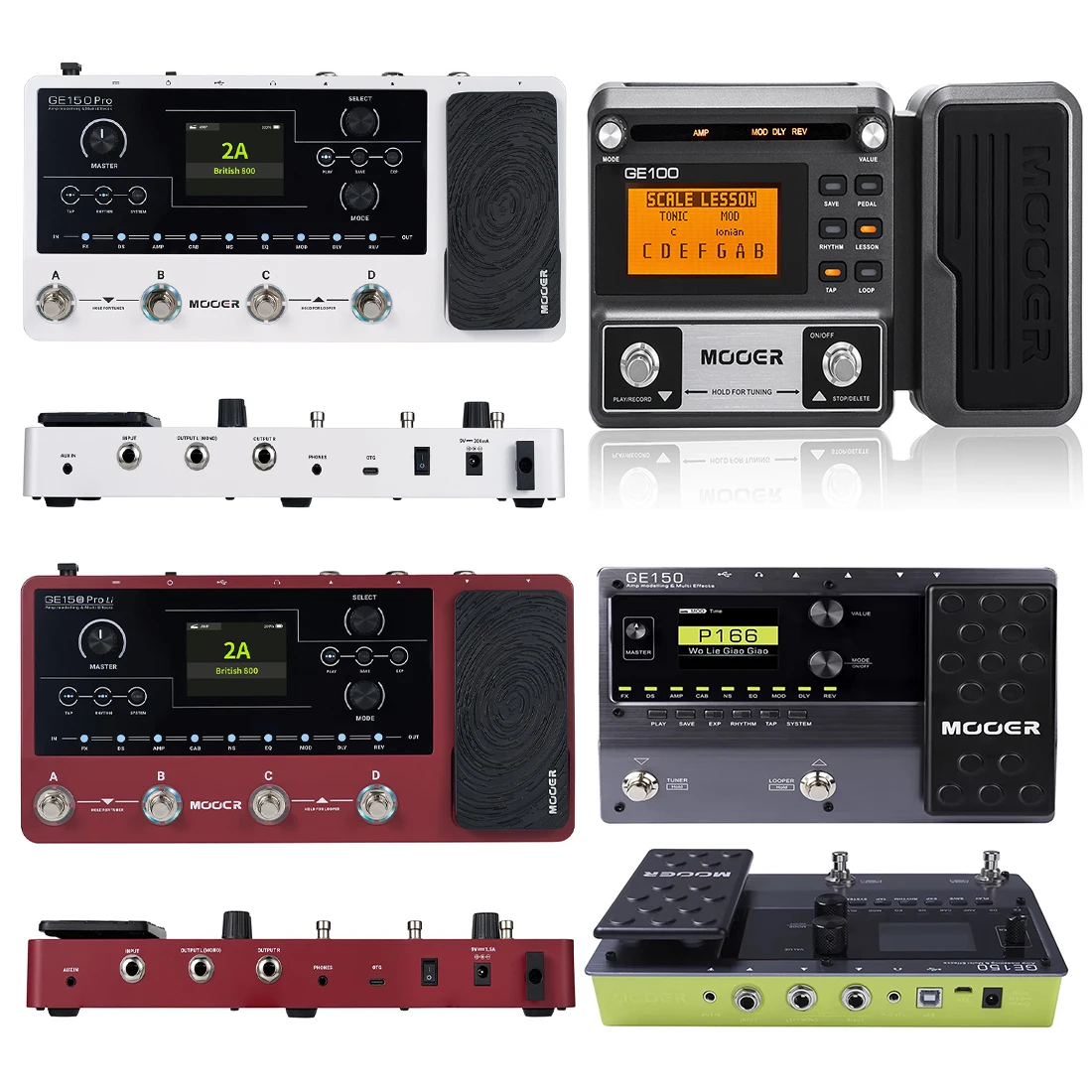
The Mooer GE100 Pro LI Multi-FX Processor builds on the legacy of the original GE100 bringing powerful modern features to players taking their first steps into the world of multi-effects. Powered by Mooers third-generation hardware platform it combines over 240 effects amp models and utility modules with support for MNRS 2.0 profiling NAM captures and third-party IR loading. A vibrant 3.5-inch colour display flexible signal-chain routing and intuitive controls make it easy to create professional-quality sounds for practice recording and performance. The GE100 Pro LI also introduces Mooers AI-powered StemLab ecosystem allowing users to isolate instruments and vocals for more effective practice sessions. AI Presets can generate custom tones based on simple text descriptions while Bluetooth audio playback USB connectivity a built-in expression pedal drum machine and stereo looper provide everything needed for learning creating and performing. The rechargeable lithium battery delivers up to nine hours of portable operation making the GE100 Pro LI an ideal all-in-one solution for musicians on the move.
Mooer GE100 Pro LI Multi-FX Processor
This is a New Mooer GE100 Pro LI Multi-FX Processor from Mooer Audio is in our Multi-Effects Pedals category on Just Pedals. Read More below.
As an affiliate partner, we may earn a small commission when you buy through our links — at no extra cost to you.
Related videos
Brand
Mooer Audio
In the current JustPedals catalogue, Mooer Audio is represented by Multi-Effects Pedals, Looper Pedals and Wah & Filter Pedals. Current listings include Baby Bomb 30, ABY and X2 Preamp. That makes the range relevant to players looking for drive, gain and clipping, plus time-based effects and ambience. Check each model for its exact circuit or processing platform, controls, power requirements and connections, particularly where the catalogue includes both pedals and supporting gear.
Category
Multi-Effects Pedals
A multi-effects processor combines several effect algorithms and signal-routing stages in one unit. Its sound depends not only on the individual models but on their order, parallel or serial routing, processing resolution and available control. Preset structure, switching gaps, foot control, expression assignment, amp or cabinet modelling, USB audio and MIDI determine how completely the processor can replace separate pedals.
Tags
Bluetooth
Provides a short-range wireless data or audio connection. Depending on the design it may carry backing audio, editing commands, preset management or MIDI rather than the live instrument signal; codec delay and supported Bluetooth profiles determine what the connection can do.
Presets
Stores complete groups of parameter values for later recall. The number of locations, switching time, spillover behaviour and whether presets include routing, expression and MIDI assignments determine how completely one sound can change into another.
Rechargeable
Contains a battery designed to be recharged inside the unit. Cell capacity determines operating time, while charging connector, charge-while-playing support, battery protection and eventual replacement access affect long-term use. Charging noise and the number of full cycles before capacity declines are additional design considerations.
Stereo
Processes, creates or passes two audio channels. True stereo preserves separate left and right inputs, while mono-to-stereo effects generate spatial differences internally; routing, phase behaviour and whether trails remain stereo determine the resulting image. Some outputs sum to mono when only one socket is connected, which can change level or modulation depth.
USB
Provides a Universal Serial Bus connection for power, audio, MIDI, firmware or editing data. The supported USB class and connector do not by themselves show its purpose; channel count, sample format, host compatibility and power demand define the actual function.
Others Just Ordered :
- I Love A Happy Accident… – Animals Pedal

- Animals Pedal Vintage Van Driving is Very Fun Overdrive

- Animals Pedal Sunday Afternoon Is Infinity Bender

- Ninevolt Pedals | Bath Time Reverb (Animals Pedal)

- This Fuzz Pedal Makes No Sense… But It Sounds Incredible

- ANIME Pedals | Animals Pedal Custom Illustrated Series
