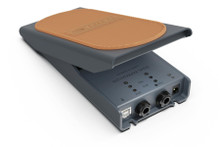
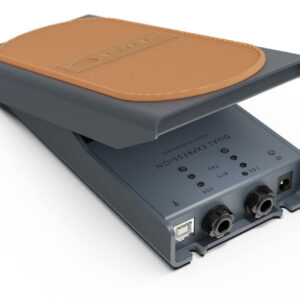
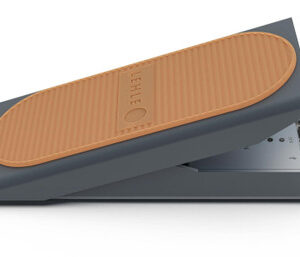
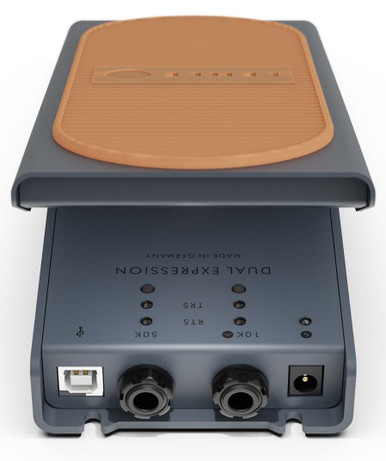
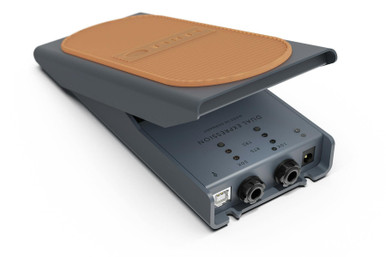
Lehle Dual Expression Pedal

£219.00

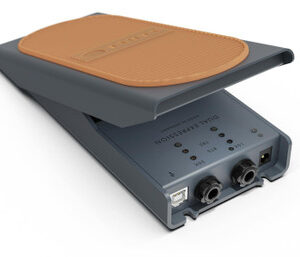
This is the Lehle Dual Expression Pedal from Lehle, listed in Expression Pedals on Just Pedals. Read More below.

View Just
more
and , , ,

Here's what Lehle say about the Dual Expression pedal:

Express yourself, twice! The LEHLE DUAL EXPRESSION is an active, wear-free expression pedal equipped with a precise magnetic sensor. Known from the LEHLE VOLUME pedals, this sensor uses the Hall effect, named after Edwin Hall, to measure the strength of magnetic fields.

In the LEHLE DUAL EXPRESSION the Hall sensor is accurately calibrated to the built-in magnet and the control range of the pedal – where the pedal moves only the magnet, whose distance is measured by the Hall sensor. Two digital potentiometers, working with analogue voltages, are used for the precise and reliable generation of the expression data.

Key Features

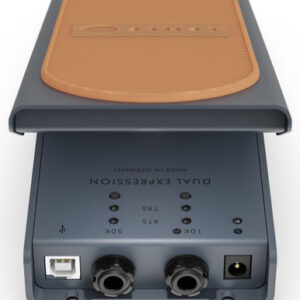
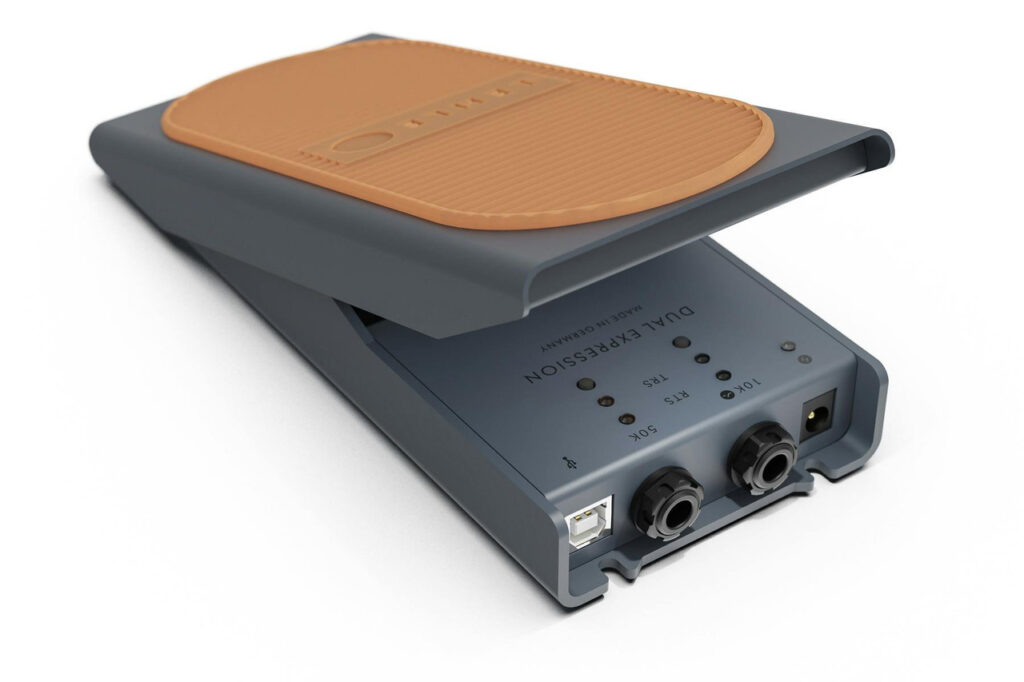
  • Expression Pedal with 2 outputs
  • Controls all common devices with expression inputs
  • Magnetic sensor technology, without mechanical wear
  • Precise control from digital potentiometers
  • MIDI via USB
  • Optimised size and weight

This technology allows distinctly more accurate operation than is offered by conventional expression pedals with mechanical potentiometers. There is no mechanical wear, avoiding the need for maintenance or complicated adjustments. Both outputs can control nearly all common devices with expression inputs from 5k to 100k, regardless if TS, TRS or RTS – the polarity can be switched and stored using the soft-push buttons.

Alternatively, the 10k output can be set to work as a latching or momentary switch, if the pedal is pushed in fully toe position. Then e.g. the channel of an amp can be changed or, connected to a switch-input of a digital device, any desired function can be controlled. Via the USB socket you can send MIDI data to a computer, in order to control midi compatible software.

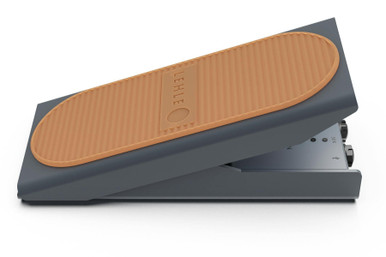
In use, the LEHLE DUAL EXPRESSION is extremely smooth and steady under foot, as it is equipped with low-friction bearings of a high-performance polymer. By means of an adjusting screw the mobility of the pedal can be modified with great precision. Compared to the LEHLE MONO VOLUME we were able to reduce the weight by 50% and the size by 35% – with the same rugged stability. It’s even 2 cm flatter, however the pedal range stays the same – just as comfortable and responsive as the larger models.

Light, small, and twice the precise expression: LEHLE DUAL EXPRESSION.

Related videos

Brand

Lehle

Lehle is a high-end manufacturer of guitar pedals, known for their precision engineering and sophisticated signal routing capabilities. The brand is highly regarded for its innovative designs, particularly in the realm of volume pedals and signal processors. Their products, such as the Lehle Mono Volume S and Lehle Parallel SW II, are favoured by musicians for their transparency, tonal clarity, and durability. The Mono Volume S, for example, offers a smooth operation with low friction bearings and a boost function that can enhance the gain for specific tones. It also features programmable presets, a USB-C socket for calibration and updates, and a buffered direct output, making it versatile and highly functional for modern pedalboards.

Lehle pedals are built with high-quality components, including discrete Class-A input stages, which contribute to their excellent dynamic range and ability to handle various instruments, from electric guitars to keyboards. Their use of true-bypass circuits and advanced switching technology ensures minimal signal loss, allowing musicians to maintain the integrity of their sound even when switching between effects.

Category

Expression Pedals

An expression pedal converts foot movement into a control signal rather than processing audio directly. It can sweep parameters such as delay time, modulation depth, pitch or volume on compatible equipment. Potentiometer value, wiring polarity, connector type and minimum-range controls must match the receiving device; some models provide multiple outputs or programmable MIDI control instead of a passive resistance.

Tags

Analogue

The signal is shaped by continuously varying electronic circuitry rather than being converted into a digital effect algorithm. Component choice, operating voltage and circuit tolerances influence headroom, noise, clipping texture and the small variations in response between designs.

Digital

Converts the signal or control process into numerical data for algorithmic processing. Digital designs can provide precise timing, long memory, complex routing and repeatable presets; sample rate, conversion, internal resolution and latency influence fidelity and response.

MIDI

Sends, receives or responds to Musical Instrument Digital Interface messages rather than carrying the instrument audio itself. Program changes recall presets, continuous controllers move parameters, and MIDI clock or transport messages synchronise timing between devices.

USB

Provides a Universal Serial Bus connection for power, audio, MIDI, firmware or editing data. The supported USB class and connector do not by themselves show its purpose; channel count, sample format, host compatibility and power demand define the actual function.