
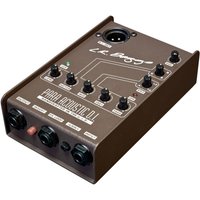
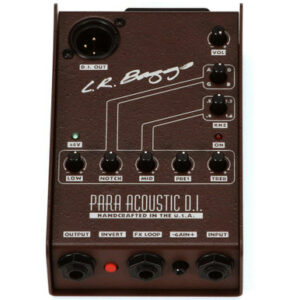
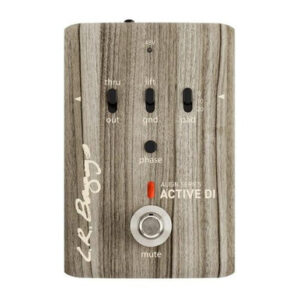
The Para DI from L.R. Baggs is a studio quality direct box engineered to bring out the best in any pickup.
L.R. Baggs Para DI Acoustic Pre-Amp with 5-band EQ
£249.00
This is a New L.R. Baggs Para DI Acoustic Pre-Amp with 5-band EQ from L.R. Baggs is in our Preamp & DI Pedals category on Just Pedals. Read More below.
View Just L.R. Baggs
As an affiliate partner, we may earn a small commission when you buy through our links — at no extra cost to you.
Brand
L.R. Baggs
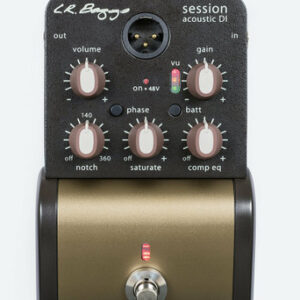
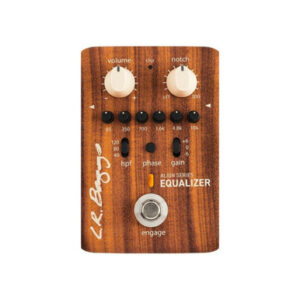
In the current JustPedals catalogue, L.R. Baggs is represented by Preamp & DI Pedals, EQ Pedals and Reverb Pedals. Current listings include Session DI, Venue DI Pre-Amp and Align Series Reverb. That makes the range relevant to players looking for time-based effects and ambience, plus modulation and movement. Check each model for its exact circuit or processing platform, controls, power requirements and connections, particularly where the catalogue includes both pedals and supporting gear.
Category
Preamp & DI Pedals
A preamp brings an instrument signal to a controlled level and shapes its impedance, gain and frequency balance before amplification or recording. A DI converts the signal for a balanced, low-impedance connection and may include ground lift, pad and transformer isolation. Combined units can add drive, cabinet filtering, effects loops and parallel outputs while keeping the direct path stable.
Tags
Acoustic
Voiced for the wider dynamics, strong transient detail and pickup characteristics of acoustic instruments. High input impedance, phase reversal, notch filtering and restrained processing help preserve body resonance while controlling piezo harshness and feedback. Balanced outputs may also carry the corrected signal directly to a mixer or interface.
EQ
Raises or lowers defined frequency regions. Fixed-band graphic controls provide direct visual shaping, while parametric controls vary centre frequency and bandwidth; the available range and filter width determine whether the change is broad tonal balance or narrow corrective filtering.
Others Just Ordered :
- I Love A Happy Accident… – Animals Pedal

- Animals Pedal Vintage Van Driving is Very Fun Overdrive

- Animals Pedal Sunday Afternoon Is Infinity Bender

- Ninevolt Pedals | Bath Time Reverb (Animals Pedal)

- This Fuzz Pedal Makes No Sense… But It Sounds Incredible

- ANIME Pedals | Animals Pedal Custom Illustrated Series
