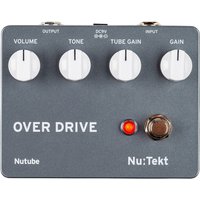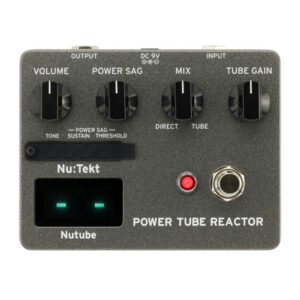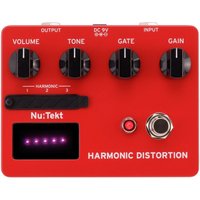
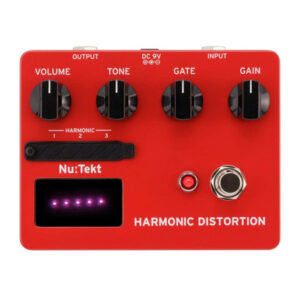
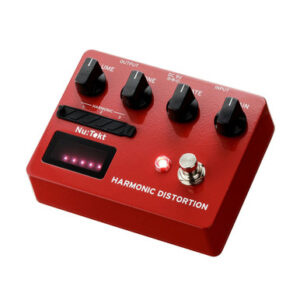

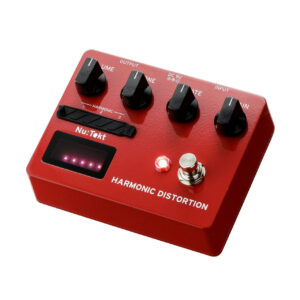
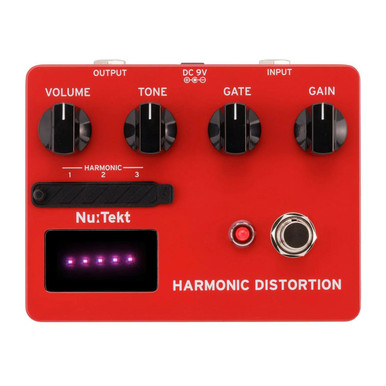
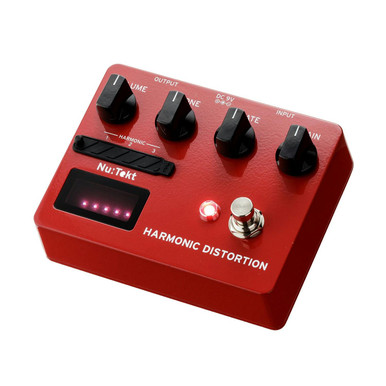
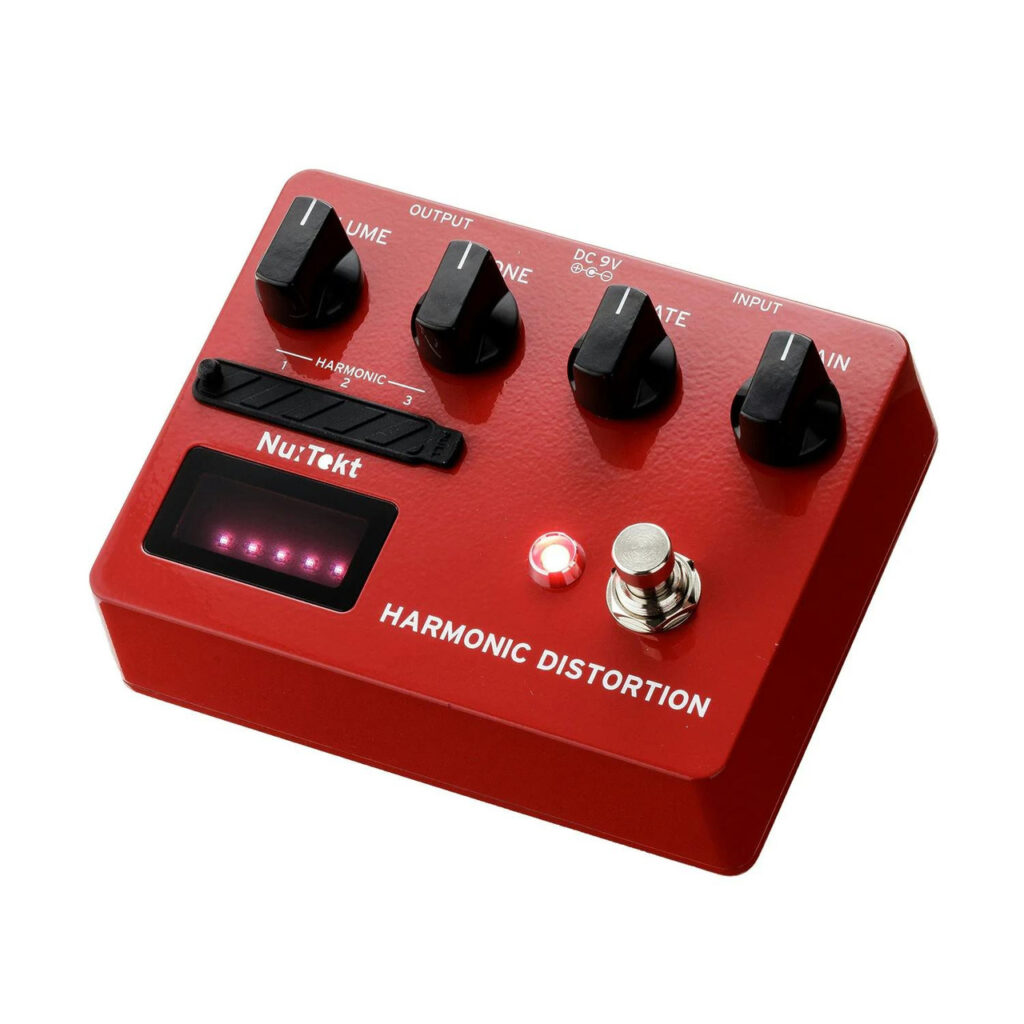
Created by legendary product visionary Fumio Mieda, the Nu:Tekt HD-S is a build-it-yourself pedal that combines three different distortion circuits to deliver never-before heard harmonic distortion. Create new and as-yet undiscovered sounds — from traditional fuzz, to out-of-this world distorted sounds — by mixing the different distortion circuits. A wide range of sonic possibilities means you can use HD-S with guitars, bass guitars, synths, and more. Anywhere you're looking for new and unique sounds!
One of the hallmarks of the Nu:Tekt Series is that they're assembled by you! The HD-S kit doesn't require soldering, and the necessary tools are included — making it easy to have the enjoyment and satisfaction of creating your own sound, from scratch.
The Power of Three
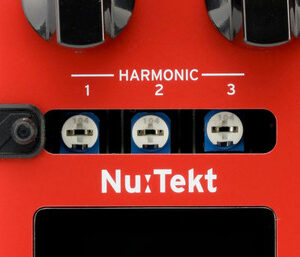
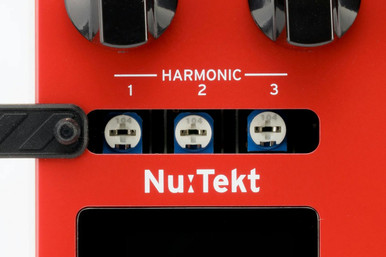
The HD-S reimagines the distortion pedal, with modulation and filter-like control over your sound. In addition to four control knobs on the panel, you can use three additional trimmer knobs to adjust the balance between each of the distortion circuits for sonic results as tame or as wild as you can imagine.
Easy Assembly
Assemble the HD-S with ease, just like a model kit — no soldering required. All necessary tools are included, along with a circuit diagram in the owner's manual. It's perfect for those who love building their own effect units with top-notch performance and sound.
The Brainchild of Fumio Mieda
Fumio Mieda is a legend of the electronic music world. After creating the Uni-Vibe (most famously used by Jimi Hendrix), Mieda-san was employed by Korg founder Tsutomu Katoh in 1976 and has been responsible for countless innovations since.
In his own words: "As of 2023, 61 years have passed since the first compact effects unit, the Maestro Fuzz-Tone, was released. Even nowadays, distortion-based effects including overdrive and distortion are the mainstay for guitar effects units, and the vast majority of these effects units are simply rehashing the sounds of the past. For this reason, we've developed a new kind of distortion based on harmonic synthesis that covers both traditional and all-new sounds."
Specifications
- Vacuum Tube: Nutube.6P1
- Power: 9V Battery or DC 9V AC Adapter (Sold Separately)
- Battery Life: Approx. 10 Hours
- Current Consumption: 45mA
- Dimensions: 122 x 96 x 55 mm
- Weight: 340g