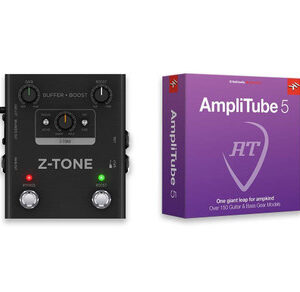
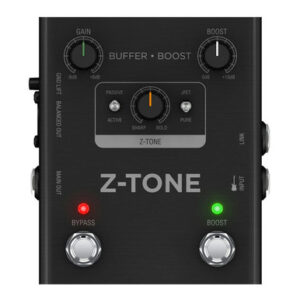
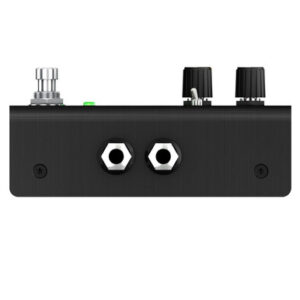

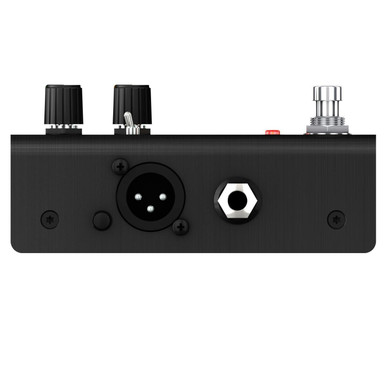
For expanding the capabilities of your pedalboard, take a look at the IK Multimedia Z-Tone pedal, featuring buffer, boost, preamp, and DI functionality. Shape your tone with the preamp, hit the front of your amp/pedals harder with the boost, use the buffer to keep your signal strong on long signal chains, and play straight into a mixer or PA using the additional outputs.
Preamp
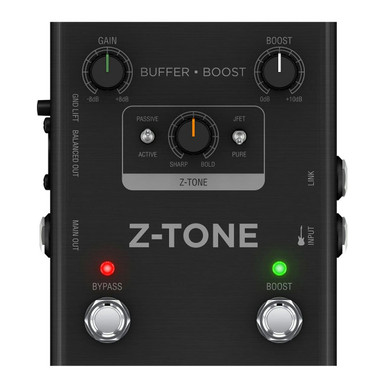
The preamp functionality on the Z-Tone pedal provides options for shaping and colouring your tone – controllable via the two mini switches and central control knob. The left switch features "Active" and "Passive" options to use depending on which type of pickups are in your guitar. The Passive option is designed to accommodate all passive pickups from low-output single-coils, to high-output modern humbuckers. The Active option is for active pickups, bypassing unnecessary gain stages for a more direct and transparent signal path. The right switch changes the tonal characteristics of the preamp – "Pure" is a transparent and accurate preamp that won't colour the tone, and "JFET" is a Class A JFET input buffer that provides a warmer tone with more midrange focus and subtle harmonic enhancement.
The central control knob is a variable impedance control – by increasing the impedance you get a sharper, tighter tone, but when you increase the load you get a thicker, bolder sound. You can make noticeable differences to the tone and characteristics of your rig with just a simple turn of the impedance control.
Boost
Sometimes you just need to give your sound a little more oomph, and you can do so with the Boost switch on the Z-Tone pedal. Boost is a useful thing to have in your signal chain, whether you want to push the front of your amp into natural overdrive or need a volume to boost to cut through the mix and launch into a solo, boosts can come in handy. The Z-Tone pedal has adjustable Gain and Boost controls so you choose just how loud and how dirty you want your sound to be when you stomp on that Boost switch.
Buffer
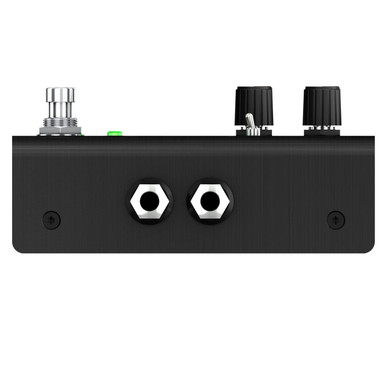
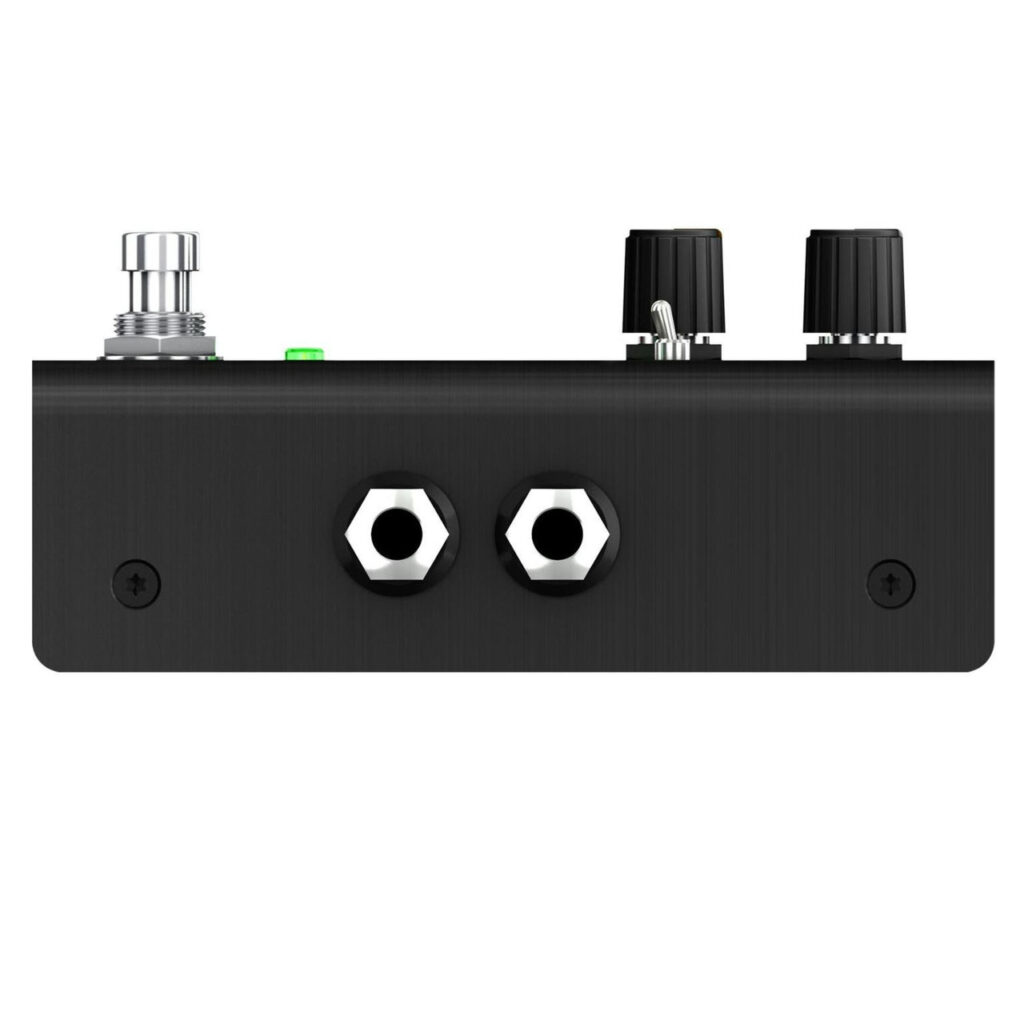
If you're a bit of a pedal enthusiast you might have a large pedalboard with quite a long signal chain. The downside to this is that the impedance of the pedals weaken your signal – and that becomes especially noticeable in a long signal chain. The transparent output buffer in the Z-Tone pedal helps counteract this by keeping your signal strong. And the Z-Tone pedal has true bypass so when you're not using it it won't affect your tone.
Direct Input
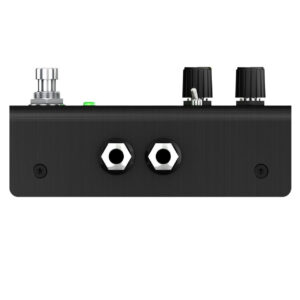
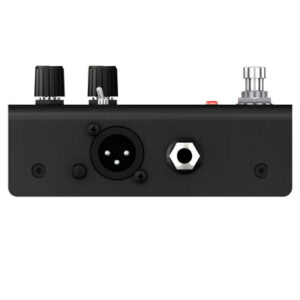
The Z-Tone pedal can of course be used as a normal pedal in the chain, but it also has a balanced output for connecting straight to a mixer or PA system. Using the preamp controls and balanced output together means you can forego an amp completely and still get great tone. When you're going straight into the mixer you have the option of powering the pedal via +48v phantom power, otherwise the Z-Tone pedal runs on a standard 9V battery or a 9V power supply (not included).
Specifications
Audio specs
- I/O Gain: Unitary, from 1/4” input JACK to both 1/4” and XLR outputs when GAIN is at 0dB and Z-TONE at the SHARP position.
- Gain Range: From -8dB to +8dB
- Boost range: From 0dB to +10dB
- Input impedance – Z-TONE set on PASSIVE mode: Variable from 1MΩ down to 2.2kΩ
- Input impedance – Z-TONE set on ACTIVE mode: Approx 20kΩ
- Output impedance, unbalanced out: 56Ω
- Output impedance, balanced out: 600Ω
- Max input level before clipping: +13dBm when powered by 48V phantom,+9dBm when powered by 9V battery
- Dynamic Range: better than 114dB(A) for both outputs, input gain at 0dB
- Total Harmonic Distortion, balanced output, 1kHz, +4dBm input: 0.0033% (PURE), 0.2% (JFET)
- Total Harmonic Distortion, unbalanced output, 1kHz, +4dBm input: 0.00055% (PURE), 0.2% (JFET)
- Frequency response: from 5Hz to 30kHz -1dB
- Phase deviation: 0° +/-10° from 20Hz to 20kHz
Power
- Phantom power: +48V phantom on Balanced output.
- Battery power: 9V
- External DC power: 9VDC, positive outside – not included
- Current consumption from P48 phantom power source: 6.5mA
Dimensions
- Size: 10.8cm/4.25" x 12cm/4.72" x 5.8cm/2.28"
- Weight: 600g