Brand
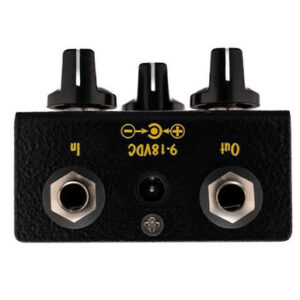
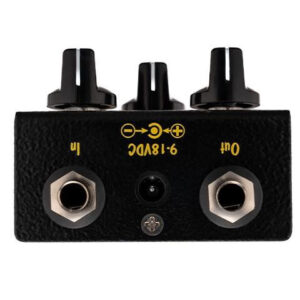
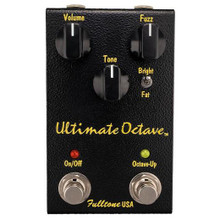
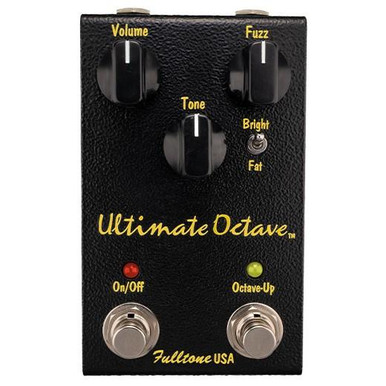
Fulltone is a boutique guitar effects pedal manufacturer known for its high-quality, hand-built pedals designed to replicate vintage tones while incorporating modern features and reliability. Founded by musician and engineer Michael Fuller in 1991, Fulltone initially gained recognition with its flagship product, the Full-Drive overdrive pedal, which offered players a versatile range of overdriven tones inspired by classic tube amplifiers.
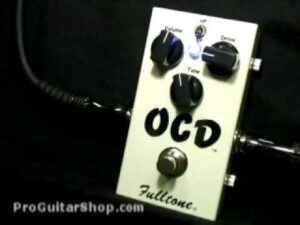
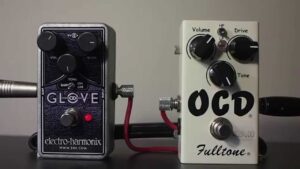
Since then, Fulltone has expanded its product line to include a variety of effects pedals such as fuzz, distortion, delay, modulation, and more. Each Fulltone pedal is meticulously crafted using top-quality components and circuit designs, resulting in pedals that are celebrated for their rich sound, responsiveness, and durability. Notable offerings include the OCD (Obsessive Compulsive Drive) overdrive/distortion pedal, the ’69 fuzz, and the TTE (Tube Tape Echo) tape echo emulator.
Fulltone’s commitment to excellence and its dedication to preserving the sonic legacy of vintage gear have made it a favorite among discerning guitarists and musicians seeking premium effects pedals. With a reputation for delivering exceptional tone and craftsmanship, Fulltone continues to be a prominent player in the boutique pedal market.
Category
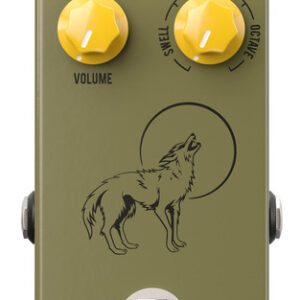
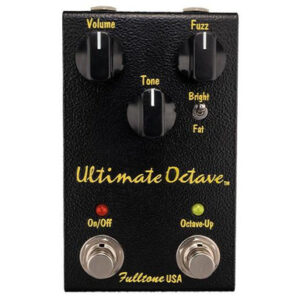
An octave effect generates notes one or more octaves above or below the input. Analogue circuits often create raw monophonic sub-octaves, while digital pitch tracking can follow chords and provide several intervals with cleaner separation. Tracking speed, polyphonic accuracy, latency and the balance of dry, upper and lower voices determine whether the result feels tight, organ-like, synthetic or deliberately unstable.
Tags
Voiced or equipped to retain low-frequency fundamentals and the higher headroom of a bass signal. Clean blends, crossovers and bass-specific filter ranges can preserve weight and articulation while the effected portion adds harmonics, movement or ambience.
Pushes the signal into extreme clipping, often approaching a square wave and producing dense harmonics. Transistor type, bias, input loading and filtering govern whether the texture is smooth, woolly, gated, spluttering, octave-rich or highly responsive to the instrument volume.
Connects input directly to output through mechanical or relay switching when the effect is off, removing the active circuit from the audio path. It avoids buffer colour but leaves cable capacitance and switching design to influence high-frequency loss and possible switching noise.
Designed for microphone-level signals and the frequency, dynamics and feedback behaviour of the human voice. Input gain, balanced connections, phantom power and pitch tracking may be provided so effects respond correctly before the signal reaches a mixer or PA.