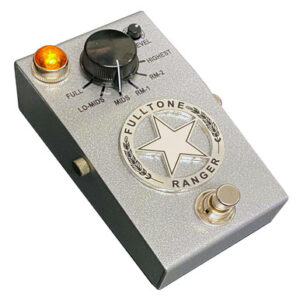
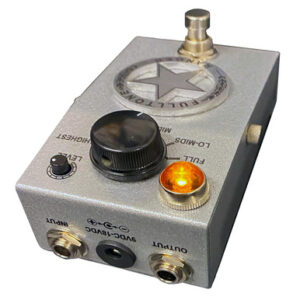
Fulltone Custom Shop Ranger Frequency Boost Pedal

£259.00

This is the Fulltone Custom Shop Ranger Frequency Boost Pedal from Fulltone, listed in Boost Pedals on Just Pedals. Read More below.

View Just
more
and

Fulltone are regarded as one of the first brands to produce true "boutique" stompboxes. Known for their analogue circuits, Fulltone's Custom Shop Ranger is a frequency boost pedal that emulates the classic Dallas Rangemaster Treble Booster – with a few more tricks up its sleeve.

6-Position Rotary Switch

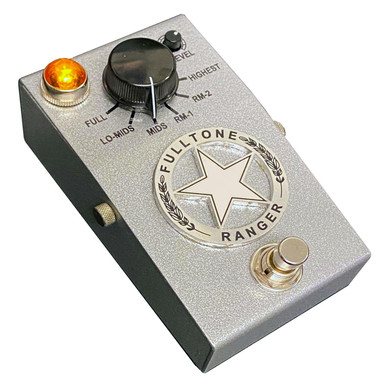
Designed to increase the signal strength of your guitar going into your amp, the Fulltone Custom Shop Ranger features a 6-position rotary switch that not only allows you to recapture the sweet treble-raising sounds of the original Rangemaster 1 and 2 units ('RM-1' and 'RM-2' modes), but also offers additional frequency bands to boost; 'Full', 'Lo-Mids', 'Mids' and 'Highest'. This means that if there are any deficiencies in your guitar tone – the Fulltone Ranger can compensate!

Frequencies Over Volume

While most guitarists believe that extra volume will help them cut through in a mix, it's actually more effective to use a pedal such as this to help your solos slice through; especially by boosting the mid-range and treble frequencies. You can dictate just how much of those frequencies you'd like to boost, via the small 'Level' control on the front panel.

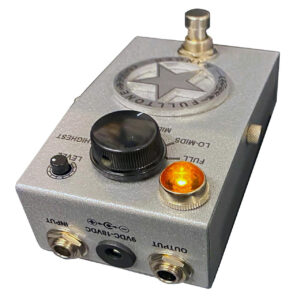
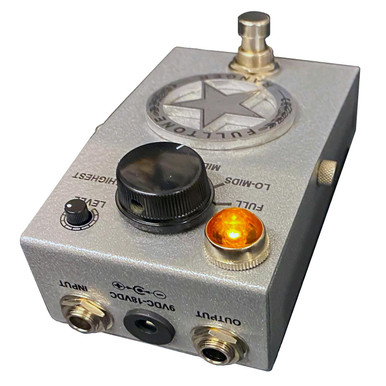
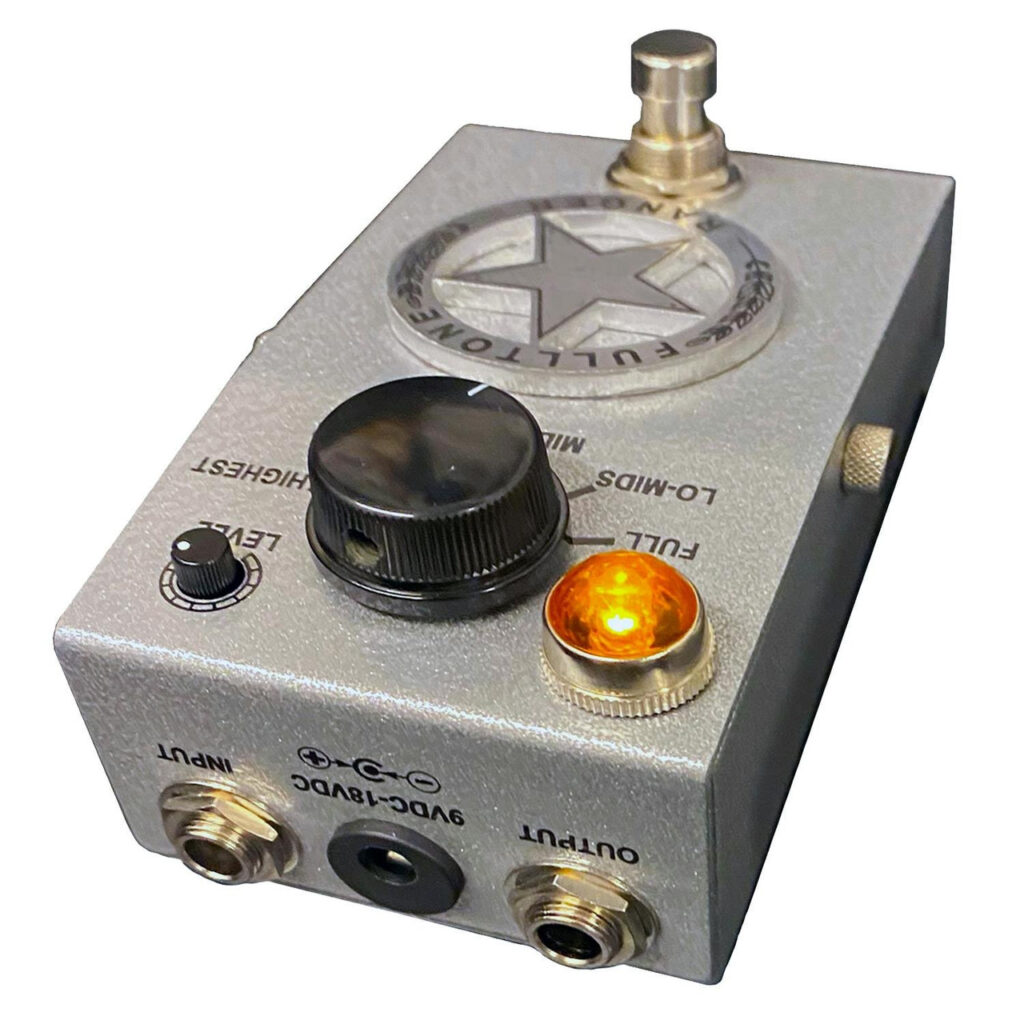
Other features include a small, pedalboard-friendly 4.75" x 2.9" enclosure with top-mounted jacks, as well as a bright amber light jewel that will always be seen onstage!

Key Features

  • Proprietary power supply design allows this PNP (positive-to-ground) germanium pedal to be powered by any standard NPN (negative-to-ground) power supply.
  • 6-position rotary switch, 6 different sounds, including Rangemaster 1 and Rangemaster 2.
  • Sexy amber light jewel.
  • Top-mounted jacks & DC port.
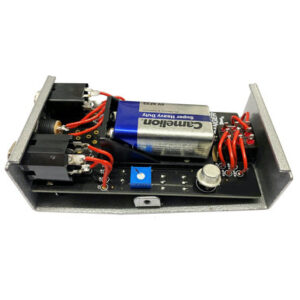
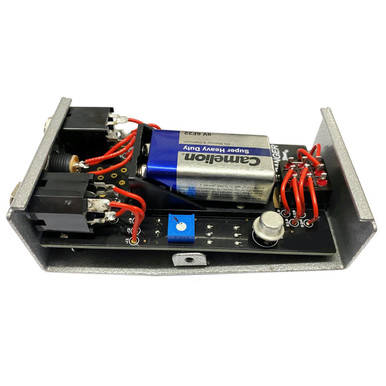
  • Adjustable transistor bias trimmer. Want it soft? Want is hard? Want more or less chime? Just turn it and adjust by ear, there is no wrong setting.
  • It's a tiny pedal (4.75" x 2.9") yet there's a battery in it too. The perfect grab-and-go pedal!
  • 100% hand-made in Los Angeles using full-sized components.
Related videos

Brand

Fulltone

Fulltone is a boutique guitar effects pedal manufacturer known for its high-quality, hand-built pedals designed to replicate vintage tones while incorporating modern features and reliability. Founded by musician and engineer Michael Fuller in 1991, Fulltone initially gained recognition with its flagship product, the Full-Drive overdrive pedal, which offered players a versatile range of overdriven tones inspired by classic tube amplifiers.

Since then, Fulltone has expanded its product line to include a variety of effects pedals such as fuzz, distortion, delay, modulation, and more. Each Fulltone pedal is meticulously crafted using top-quality components and circuit designs, resulting in pedals that are celebrated for their rich sound, responsiveness, and durability. Notable offerings include the OCD (Obsessive Compulsive Drive) overdrive/distortion pedal, the ’69 fuzz, and the TTE (Tube Tape Echo) tape echo emulator.

Fulltone’s commitment to excellence and its dedication to preserving the sonic legacy of vintage gear have made it a favorite among discerning guitarists and musicians seeking premium effects pedals. With a reputation for delivering exceptional tone and craftsmanship, Fulltone continues to be a prominent player in the boutique pedal market.

Category

Boost Pedals

A boost raises signal level without deliberately creating a new effect waveform. Clean boosts emphasise level and headroom, while coloured boosts reshape bass, midrange or treble and may add mild clipping at higher settings. Placed before a gain stage, the extra level changes how that stage distorts; placed later, it can provide a volume lift if sufficient headroom remains.

Tags

Analogue

The signal is shaped by continuously varying electronic circuitry rather than being converted into a digital effect algorithm. Component choice, operating voltage and circuit tolerances influence headroom, noise, clipping texture and the small variations in response between designs.