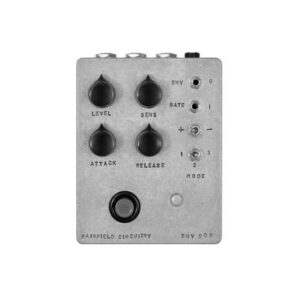
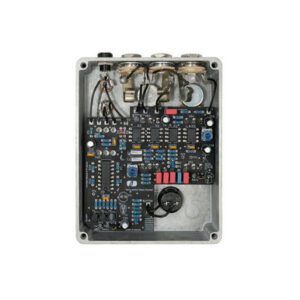
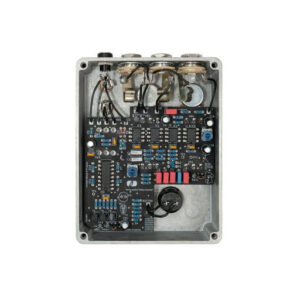
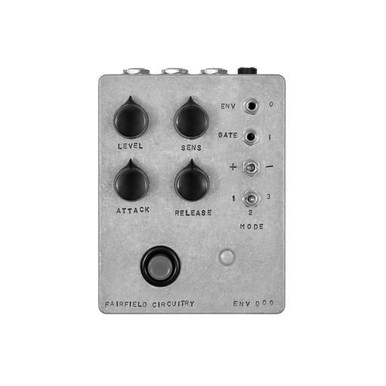
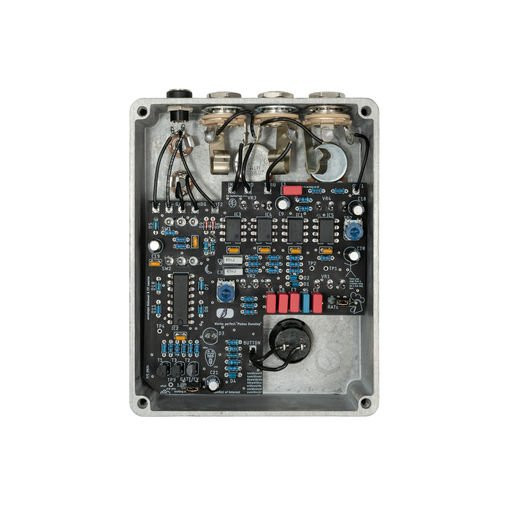
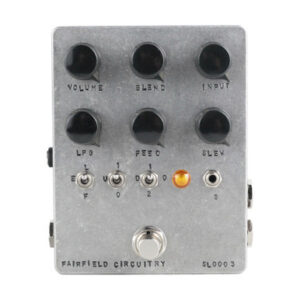
Fairfield Circuitry Utility Series Conflict of Interest envelope generator and follower pedal

£179.99

This is the Fairfield Circuitry Utility Series Conflict of Interest envelope generator and follower pedal from Fairfield Circuitry, listed in Specialist Effects Pedals on Just Pedals. Read More below.

View Just
more

Envelope Generator & Follower:

This pedal produces no sound. Instead, the signal passes through to generate a control voltage that can be used to breathe life into other pedals. The dynamics of your instrument translate to fluid and expressive movement.

Versatile CV source; envelope follower and generator, LFO, slew limiter. Compatible with either 1/8″ or 1/4″ expression/control voltage inputs

“We open in order to listen to the world as a field of possibilities and we listen with narrowed attention for specific things of vital interest to us in the world” – Pauline Oliveros
Brand

Fairfield Circuitry

Fairfield Circuitry is a boutique pedal company based in Hull, Quebec, Canada, known for its unique and innovative effects pedals designed for guitarists and bassists. Founded by Guillaume Fairfield, the company has gained recognition for its commitment to craftsmanship, creativity, and sonic excellence.

Fairfield Circuitry pedals are revered for their distinctive designs, offering musicians a wide range of effects to explore and incorporate into their music. Each pedal is meticulously handcrafted using high-quality components and features intuitive controls, allowing musicians to easily dial in their desired tones.

One of Fairfield Circuitry’s most acclaimed pedals is the Shallow Water, a dynamic tremolo pedal that simulates the unpredictable behaviour of vintage magnetic tape machines and tube amplifiers. The Shallow Water offers a unique and organic tremolo effect with a touch of modulation, creating lush, swirling textures reminiscent of ocean waves.

Category

Specialist Effects Pedals

Specialist effects alter the signal in ways that do not sit cleanly inside one established family. They may use granular processing, frequency shifting, resonators, freeze or sustain, bit reduction, ring modulation, feedback networks or combinations of several techniques. The relevant distinction is the underlying process, its tracking or latency, and how completely the dry signal can be blended or replaced.